

Please note: This website contains affiliate links. As an Amazon Associate, we earn from qualifying purchases at no additional cost to you.
Have you ever had one of those stretches where your body just feels… off?
Muscles cramping for no obvious reason. Exhausted all day but wide awake at midnight. Shoulders permanently living somewhere near your ears. Eyelid doing its own little Morse code situation.
For a long time, I chalked all of it up to “being busy” or “just getting older” or the general chaos of modern life. But one thing kept showing up in every conversation about sleep, stress, muscle tension, and low energy:
Magnesium.
And honestly? The more I looked into it, the more it made sense.
Magnesium is one of those quiet, behind-the-scenes nutrients that does an enormous amount of work in the body — supporting muscles, nerves, sleep, energy production, blood sugar regulation, and even mood. It’s involved in hundreds of processes, and when levels start running low, the body sends some surprisingly easy-to-miss signals.
The tricky part is that most magnesium deficiency symptoms look a lot like just… life. Stress. Tiredness. Tension. The kind of stuff we’ve all been trained to push through.
But what if your body isn’t just being dramatic? What if it’s actually asking for something specific?
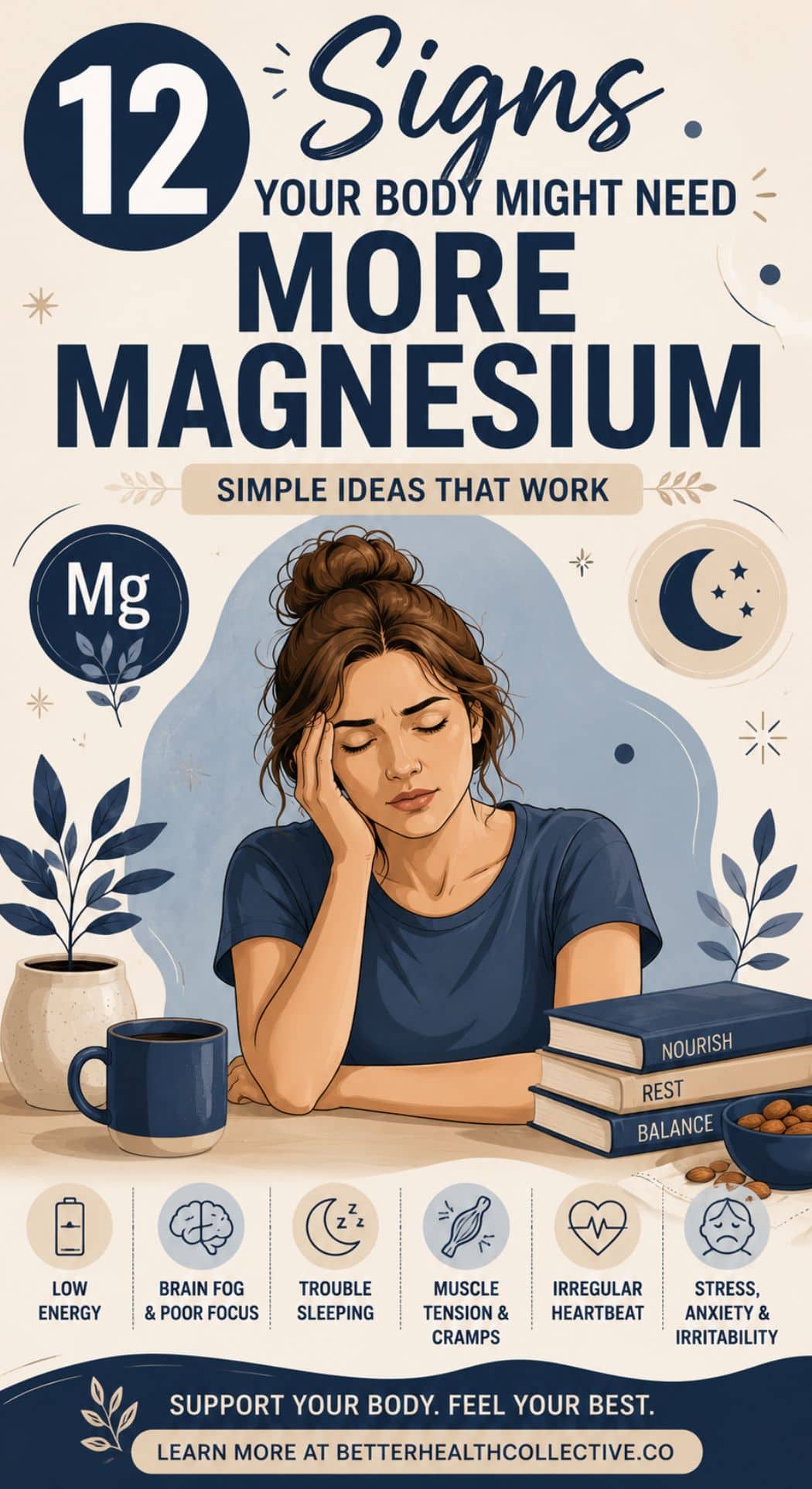
Here are 12 signs your body might be nudging you toward a little more magnesium.
Why Magnesium Deficiency Is So Common (It’s Not Just You)
According to a recent study, more than 50% of Americans have a magnesium deficiency. That is
Before we get into the symptoms, it helps to understand why so many people are running low in the first place. A few things that can quietly deplete magnesium levels:
- Highly processed diets — magnesium lives in whole foods like leafy greens, nuts, seeds, and beans. If most of your meals come in a package, your intake is probably lower than you think.
- Chronic stress — stress doesn’t just feel draining, it literally increases the rate at which your body burns through magnesium, which then makes you more stressed, which depletes more magnesium. Fun cycle.
- Poor sleep — low magnesium affects sleep quality, and poor sleep affects magnesium levels. Again: lovely loop.
- Certain medications — some common medications can affect magnesium absorption.
- Heavy sweating — if you exercise frequently or sweat a lot, you lose minerals faster than you might realize.
The result? A lot of people walking around with low-grade magnesium deficiency, attributing the symptoms to stress or aging or just “how they are now.”
12 Signs Your Body Might Need More Magnesium
1. Your Muscles Cramp or Feel Tight — Especially at Night
If you’ve ever been jolted awake by a calf cramp so intense you briefly questioned all your life choices, this one’s for you.
Magnesium helps muscles relax after they contract. When levels are low, muscles can stay tense longer than they should — which often shows up as cramping, tightness, or that constant knot-in-the-shoulder feeling that never quite goes away.
Common spots people notice it:
- Calves and feet (especially overnight)
- Shoulders and neck
- Jaw (clenching, anyone?)
- General full-body tension that won’t release
2. Your Legs Won’t Settle Down at Night
You’re finally in bed, lights off, ready to sleep — and suddenly your legs have other plans.
That restless, uncomfortable, need-to-move sensation is something a lot of people deal with, and magnesium comes up frequently in conversations about nighttime muscle relaxation. Many people find that magnesium supplements or a topical magnesium product before bed makes a noticeable difference.
3. You’re Exhausted But Can’t Fall Asleep
The cruelest symptom on this list.
You’re tired all day. Tired at dinner. Tired on the couch. But the second your head hits the pillow, your brain decides it’s the perfect time to replay that awkward thing you said in 2014, start an imaginary argument, and mentally reorganize your entire life at 1:12 AM.
Magnesium plays a direct role in calming the nervous system and helping the body shift into sleep mode. Low magnesium can make it genuinely harder for your brain to power down — which means you’re not just tired, you’re wired and tired, which is its own special kind of miserable.
4. Your Headaches Are Getting More Frequent
Headaches have a lot of potential triggers — stress, dehydration, poor sleep, eye strain, hormones, that one coworker.
But magnesium is also involved in nerve function and blood vessel regulation, which is why it keeps showing up in research around headaches and migraines. If headaches have quietly become a more regular part of your week, magnesium intake is worth a look.
5. You Feel Stressed and Tense Even When Nothing’s Wrong
You know that feeling where your body is stuck in high gear for no particular reason?
Shoulders tense. Mind racing. Jaw tight. That low-level hum of anxiety that you can’t quite explain or turn off.
Magnesium helps support the nervous system and plays a direct role in the body’s stress response. When levels dip, it can feel like the body is missing one of the ingredients it needs to hit the calm down button — because, well, it is.
6. You’re Always Drained — Even After Sleeping
This isn’t normal end-of-day tiredness. This is that heavy, bone-deep fatigue where even small tasks feel like they require more effort than they should.
Magnesium helps produce energy at the cellular level. When levels are low, the body can feel like it’s constantly running on 15% battery, regardless of how much sleep you’re technically getting. If you’re waking up tired more often than not, magnesium is worth putting on your radar.
7. Your Eye Keeps Twitching
If your eyelid has ever developed a personality and started twitching involuntarily for days on end, you already know how oddly maddening this is.
Small muscle twitches — especially around the eyes — can pop up when mineral levels are out of balance. Magnesium’s role in nerve signaling is why eye twitching consistently shows up in deficiency discussions. Annoying? Yes. Also potentially informative.
8. You’re More Irritable Than Usual
Has everything just been getting on your nerves lately? More than normal? Like, unreasonably so?
Magnesium supports brain chemistry and nervous system balance. When levels are low, emotional resilience tends to drop — things feel louder, more annoying, harder to brush off. Mood swings, irritability, and feeling emotionally overwhelmed more easily can all be part of the picture.
It doesn’t mean magnesium is the only factor. But it’s part of the bigger conversation.
9. Your Chocolate Cravings Have Become Aggressive
This one surprises people every time — and then immediately makes sense.
Dark chocolate actually contains magnesium, which is part of why intense, persistent chocolate cravings sometimes get jokingly described as your body “asking” for it. Magnesium also plays a role in blood sugar regulation, which can influence cravings for sweets and carbs when levels are low.
To be very clear: wanting brownies during a stressful week does not automatically mean you’re deficient. But if the cravings are consistent and unexplained, it might be worth paying attention to.
10. Your Shoulders and Neck Are Permanently Tense
Stress loves to settle into the shoulders and neck — most of us know this firsthand.
But magnesium specifically supports muscle relaxation, so when levels are low, those areas may stay chronically tense in a way that doesn’t respond well to stretching or massage alone. If you’ve been carrying a knot in your shoulders for so long it feels like a permanent resident, magnesium could be part of the conversation.
11. You’re Dealing With Brain Fog
Magnesium supports brain function and nerve signaling, and when levels are low, some people notice trouble focusing, slower thinking, or that frustrating “I know this but I can’t access it” foggy feeling.
Brain fog has plenty of causes — sleep, hydration, hormones, stress — but magnesium deficiency is one of the more commonly overlooked ones.
12. You Can Never Fully Relax
Sometimes the most telling sign is the quietest one.
You’re tired. You want to unwind. You’re trying to relax. But your body never quite settles. Your mind keeps running. Your sleep feels lighter than it should. Your shoulders creep back up the moment you stop consciously pushing them down.
Magnesium plays a direct role in helping the body shift into rest and recovery mode — which is why its deficiency can feel less like a dramatic symptom and more like a general inability to fully power down.
You may also want to try a DIY Magnesium Body Scrub. It’s a super simple recipe and is perfect for a “calm down” night time routine.
Easy Magnesium-Rich Foods to Add to Your Routine
Before jumping straight to supplements, it’s worth looking at what’s already on your plate (or… not on it).
Some of the best dietary sources of magnesium:
- Pumpkin seeds
- Almonds and cashews
- Spinach and leafy greens
- Chia seeds
- Black beans and edamame
- Avocado
- Dark chocolate (see — justified)
- Oatmeal
- Salmon
- Bananas
You don’t have to overhaul your entire diet overnight. Small, consistent upgrades add up more than you’d think. Learn more about the best food sources in our guide: 25 Magnesium Rich Foods Your Body Will Thank You For.
Should You Consider a Magnesium Supplement?
If several of the signs above feel uncomfortably familiar, it might be worth looking into supplementation — but here’s where it gets a little confusing, because there are about ten different forms of magnesium and they’re not all used for the same thing.
A quick breakdown of the most common types:
| Type | Commonly Used For |
|---|---|
| Magnesium Glycinate | Relaxation, sleep support, stress — gentle on the stomach; a popular starting point |
| Magnesium Citrate | Digestive support and occasional constipation relief |
| Magnesium Malate | Energy production and muscle support |
| Magnesium Threonate | Brain health, memory, and cognitive function |
| Magnesium Oxide | General supplementation — widely available but lower absorption than other forms |
If you’re just starting out and not sure where to begin, magnesium glycinate is one of the most commonly recommended options because it tends to be well-tolerated and versatile.
Best Seller

Pure Encapsulations Magnesium (Glycinate)
Shop on Amazon
$20.80
Supplement to Support Stress Relief, Sleep, Heart Health, Nerves, Muscles, and Metabolism
We earn a commission if you make a purchase, at no additional cost to you.
11/30/2025 08:40 am GMT

But choosing the right form really depends on your goals and what you’re hoping to support — which is exactly why I’m putting together a full guide breaking down each type in detail. Stay tuned for that one.
As always, if you’re thinking about adding a new supplement — especially if you have health conditions or take medications — it’s worth a conversation with your healthcare provider first.
Final Thoughts
Magnesium is one of those quiet nutrients that does an enormous amount of work behind the scenes — and when levels start running low, the body usually tells you. Not always dramatically. Often in small, easy-to-dismiss ways that feel a lot like stress, aging, or just life being life.
Muscle tension. Restless sleep. Fatigue that sleep doesn’t fix. Headaches. Irritability. The inability to fully unwind.
Sometimes the answer really is simpler than we think.
And sometimes a nervous system running on caffeine, stress, and four hours of sleep just needs a little more support — not another productivity hack.
Recognize yourself in more than a few of these? Save this for later and share it with the person in your life who definitely needs to read it.
Other Articles You Might Like:
- DIY Magnesium Body Butter – Easy Homemade Recipe
- Easy Magnesium Deodorant Spray Recipe
- Magnesium-Rich Foods List
- Easy Electrolyte Drink Recipes
- Signs Your Cortisol Is Out of Control
- Better Sleep Starts Here: Magnesium Body Scrub
Get More Science-Backed Research on Low Magnesium Symptoms at Healthline.com
SHARE THIS WITH SOMEONE YOU CARE ABOUT!
Please note: This website contains affiliate links. As an Amazon Associate, we earn from qualifying purchases at no additional cost to you.