Please note: This website contains affiliate links. As an Amazon Associate, we earn from qualifying purchases at no additional cost to you.
Dry brushing is one of those wellness habits that sounds suspiciously simple.
You take a brush, use it on dry skin, move in gentle strokes, and suddenly the internet is acting like you’ve unlocked an ancient spa secret that will make you glow, de-puff, detox, levitate, and possibly answer emails faster.
So… what’s actually true?
Dry brushing can be a lovely, low-cost self-care ritual. It may help exfoliate dry skin, temporarily boost circulation at the skin’s surface, and encourage a “wake up your body” feeling that makes it especially appealing in the morning. But dry brushing for lymph drainage is not a magic fix, a weight-loss trick, or a substitute for medical lymphatic drainage therapy.
The key is knowing how to do it gently, what it may realistically help with, and when to skip it completely. Because your skin barrier deserves better than being attacked like a dirty cast iron skillet.
What You’ll Learn
- What dry brushing for lymph drainage actually means
- Surprising benefits of dry brushing
- How it connects to lymphatic wellness
- A beginner-friendly dry brushing routine
- Common mistakes to avoid
- Who should skip dry brushing or check with a doctor first
- Simple habits that support lymph flow beyond brushing
What Is Dry Brushing?
Dry brushing is a body-care technique where you use a dry, firm-but-not-scratchy brush on dry skin, usually before a shower. The goal is to lightly exfoliate the skin while using gentle, intentional strokes.
Cleveland Clinic explains that dry brushing is often used for exfoliating rough, dry skin and may also increase blood circulation and promote lymph flow or drainage. The most evidence-supported benefit is exfoliation, while many of the bigger wellness claims should be kept realistic.
Think of dry brushing as a simple skin and body ritual — not a miracle detox machine with bristles.
How Dry Brushing Connects to Lymph Drainage
Your lymphatic system helps your body maintain fluid balance, move lymph fluid, support immune function, and clear cellular debris from tissues. The National Cancer Institute describes the lymphatic system as part of the immune system and notes that it plays an important role in healthy fluid levels and removing cellular debris and harmful substances from tissues.
Lymph fluid does not move through the body with a central pump like the heart. Movement, muscle contractions, breathing, and gentle manual techniques can all support lymph movement. Cancer Research UK explains that exercise helps lymph move through the lymphatic system because muscle contractions push lymph through lymph vessels.
Dry brushing is sometimes used as part of a lymph-supportive routine because the gentle brushing motion may encourage superficial circulation and a light massage-like effect. But it should be seen as one supportive habit — not the main event.
The boring-but-true lymphatic support crew is still:
- walking
- stretching
- hydration
- deep breathing
- sleep
- gentle movement
- avoiding long periods of sitting
Dry brushing can join the group chat, but it does not get to run the whole meeting.
JUMP TO: How to get started with your dry brushing routine
Potential Benefits of Dry Brushing for Lymph Drainage
It May Help Exfoliate Dry Skin
This is the clearest, most realistic benefit. Dry brushing physically removes dead skin cells from the surface of your skin, which may leave your skin feeling smoother and softer. Cleveland Clinic notes that the mechanical action of dry brushing can be helpful for exfoliating rough, dry skin.
This is especially appealing if your skin feels dull, flaky, or rough on areas like:
- legs
- arms
- elbows
- knees
- thighs
Just remember: exfoliation should feel gentle, not like you’re sanding a deck.
It May Temporarily Increase Circulation
Dry brushing may create a temporary warming or flushed feeling because it stimulates the skin’s surface. That does not mean it is dramatically changing your body from the inside out, but it can feel energizing and refreshing.
This is one reason many people like doing a dry brushing routine before a morning shower.
It May Support a Gentle Lymphatic Wellness Routine
Dry brushing may be used as part of a broader lymphatic wellness routine because it involves light, repetitive strokes across the skin. However, the most reliable ways to support lymph movement are still movement, muscle contraction, and breathing mechanics. Cancer Research UK notes that exercise helps encourage lymph flow, and muscle contraction helps push lymph through lymph vessels.
So if you’re deciding between dry brushing and walking?
Do both if you enjoy both.
But if you only have time for one, the walk is probably doing more heavy lifting.
It Can Become a Calming Self-Care Habit
There is something nice about a simple ritual that takes five minutes and doesn’t require a subscription, charger, password, or app update.
For some people, dry brushing becomes a grounding routine before a shower — a quick moment to reconnect with your body, wake up your skin, and transition into the day.
And honestly, we support any habit that makes you feel like a functioning adult before coffee.
What Dry Brushing Cannot Do
This is where we lovingly take the internet’s glitter pen away.
Dry brushing cannot:
- melt fat
- permanently reduce cellulite
- cure swelling
- replace lymphatic drainage massage
- treat lymphedema
- detox your body overnight
- replace exercise
- replace medical care
- permanently sculpt your body
Temporary changes in how your skin looks or feels can happen because of exfoliation and increased surface circulation. That is very different from fat loss, medical treatment, or permanent body reshaping.
If you have true swelling, lymphedema, unexplained fluid retention, pain, one-sided swelling, or post-surgical swelling, dry brushing is not the place to guess. Cleveland Clinic describes lymphatic drainage massage as a gentle treatment used to move excess fluid away from tissues when illness or medical treatment disrupts lymph flow, and medical swelling should be handled with professional guidance.
The Best Brush to Use for Beginners
For a beginner dry brushing routine, look for:
- natural bristles or soft plant-based bristles
- a brush that feels firm but not scratchy
- a long handle if you want to reach your back
- a handheld strap if you want better control
- bristles that do not scrape or sting
Skip anything that feels painfully stiff. If your first thought is, “This feels like a medieval punishment tool,” it is not the one.
You want a brush that feels stimulating, not aggressive. This is one that I’ve been using for the last 6 months and it works really well…

POPCHOSE Dry Brushing Body Brush
Shop on Amazon
Natural Bristle Dry Skin Exfoliating Brush Body Scrub, Cellulite Reduction, Lymphatic Drainage and Circulation Improvement
We earn a commission if you make a purchase, at no additional cost to you.

How Often Should You Dry Brush?
Start with one to two times per week.
That gives your skin time to adjust and helps you see whether your skin actually likes it. If your skin handles it well, you can slowly increase to a few times per week.
More is not automatically better.
Daily dry brushing may be too much for people with sensitive, dry, reactive, or easily irritated skin. Dry brushing can irritate skin when done too often or too aggressively, especially for people with sensitive skin.
Your skin should feel gently stimulated afterward — not raw, red, itchy, or angry enough to file a complaint.
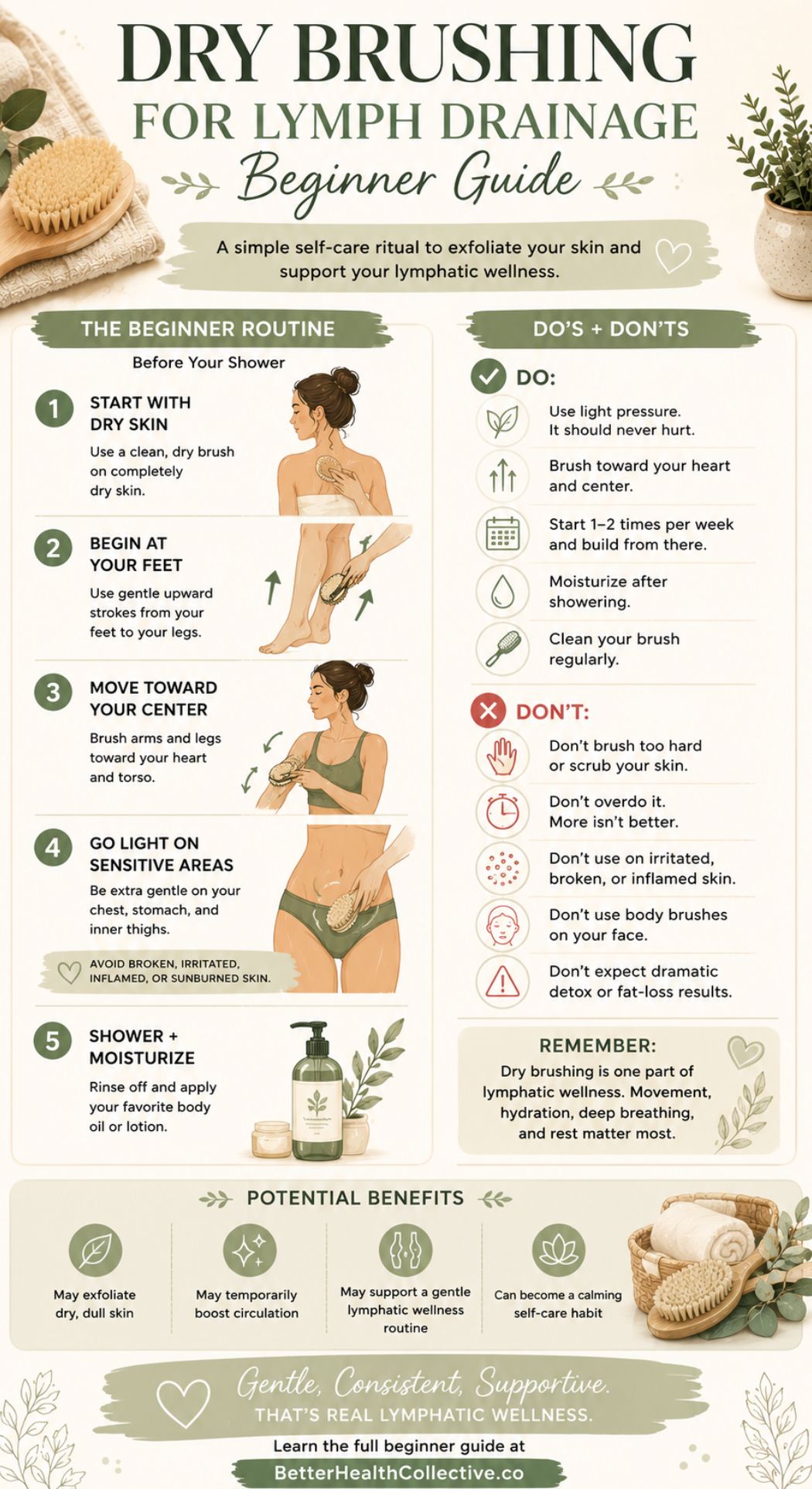
Dry Brushing for Lymph Drainage: Beginner Routine
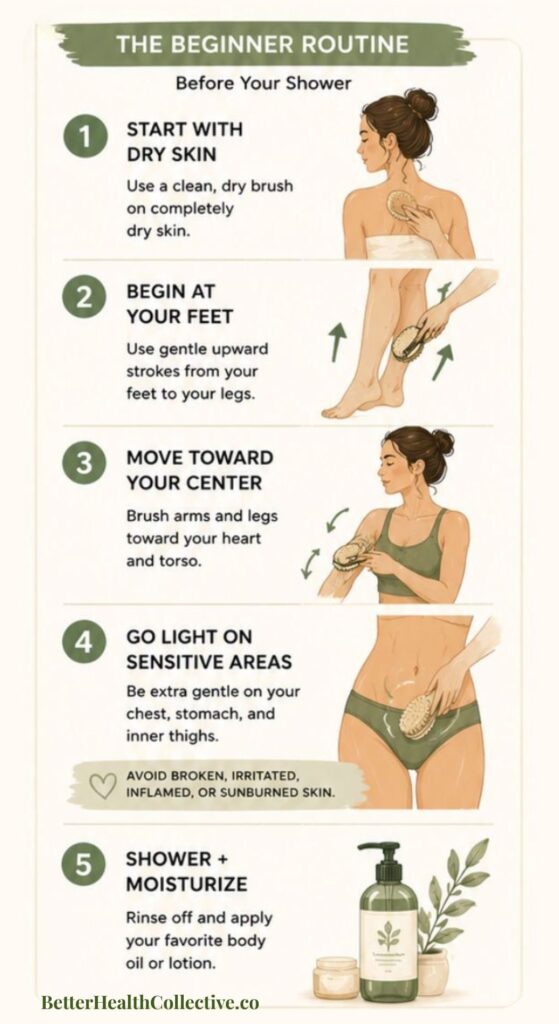
This is a gentle beginner routine you can do before a shower.
Keep the pressure light. Your lymphatic system is close to the skin’s surface, so this is not a “press harder for better results” situation.
Step One: Start With Dry Skin
Dry brushing is usually done before showering, while your skin and brush are both dry.
Avoid applying oil or lotion beforehand because the brush may drag, pull, or irritate the skin.
Step Two: Begin at Your Feet
Start at your feet and brush upward using gentle strokes.
Move from:
- feet to ankles
- ankles to calves
- calves to thighs
Use light pressure and slow strokes. You do not need to scrub.
Step Three: Brush Toward the Center of the Body
A common dry brushing technique is to brush from the outer areas of the body toward the center of the body.
For legs and arms, think:
- upward from feet toward hips
- upward from hands toward shoulders
- inward from outer body toward the torso
Keep it gentle and rhythmic.
Step Four: Use Extra Care Around Sensitive Areas
Be especially gentle around:
- inner thighs
- chest
- underarms
- stomach
- neck
- any thin or sensitive skin
Avoid the face unless you have a brush specifically designed for facial use and your skin tolerates it well. Many dermatology sources caution that facial skin is often too sensitive for body dry brushing.
Step Five: Brush the Arms
Start at your hands and brush upward toward your shoulders.
Use gentle strokes on:
- hands
- forearms
- upper arms
Again, light pressure is the goal.
Step Six: Use Gentle Circular Motions on the Stomach
If you brush your stomach, keep the pressure very light.
Some people prefer gentle circular strokes. If it feels uncomfortable, skip it. Your body is allowed to opt out.
Step Seven: Shower and Moisturize
After dry brushing, shower as usual and apply a moisturizer or body oil while your skin is still slightly damp.
The American Academy of Dermatology recommends applying moisturizer after bathing to help relieve dry skin, and creams or ointments tend to be more effective than lotions for very dry skin.
This step matters because dry brushing without moisturizing afterward can leave skin feeling drier.
Beginner Dry Brushing Routine at a Glance
Before Your Shower
- Use a clean, dry brush
- Start at your feet
- Brush upward with gentle strokes
- Move toward the center of your body
- Avoid broken, irritated, or inflamed skin
- Keep pressure light
- Shower afterward
- Moisturize well
That’s it. No 47-step wellness ceremony required!
Common Dry Brushing Mistakes
Brushing Too Hard
This is the biggest mistake. Dry brushing should not hurt.
If your skin is bright red, scratched, burning, or irritated afterward, you’re using too much pressure. Think “gentle stimulation,” not “revenge exfoliation.”
Doing It Too Often
Dry brushing every day may be too much for beginners. Start slowly and see how your skin responds.
If your skin starts feeling itchy, dry, tight, or irritated, scale back.
Using It on Sensitive or Broken Skin
Do not dry brush over:
- cuts
- scrapes
- rashes
- sunburn
- active irritation
- open wounds
- inflamed skin
- infected areas
Dermatology guidance commonly recommends avoiding dry brushing over cuts, scrapes, infections, warts, moles, and irritated skin because it can worsen irritation or spread infection.
Expecting Dramatic Detox Results
Dry brushing may support exfoliation and temporarily increase surface circulation, but your body’s detox systems are already handled by organs like your liver and kidneys. Dry brushing is not a shortcut around basic biology.
Your brush is helpful.
It is not a tiny wellness wizard.
Forgetting to Clean the Brush
Your brush touches dead skin cells, body oils, and bathroom air. It needs to be cleaned regularly.
Wash it according to the manufacturer’s instructions, let it dry completely, and replace it when the bristles become worn, dirty, or too stiff.
Who Should Avoid Dry Brushing?
Dry brushing is not ideal for everyone.
You may want to skip it or ask a healthcare professional first if you have:
- eczema
- psoriasis
- rosacea
- very sensitive skin
- open wounds
- active rashes
- sunburn
- skin infections
- unexplained swelling
- lymphedema
- recent surgery
- cancer treatment history
- blood clot history
- severe varicose veins
- painful swelling
People with open or inflamed skin, including eczema or psoriasis, are often advised to avoid brushing over those areas because it can worsen irritation or introduce bacteria into broken skin.
And if your reason for dry brushing is swelling, pain, or fluid buildup that feels unusual, please check with a medical professional before trying to DIY your way through it.
Is Dry Brushing the Same as Lymphatic Drainage Massage?
Not exactly. Dry brushing is a surface-level body-care practice using a brush. It may support exfoliation and a gentle stimulation effect.
Lymphatic drainage massage is a specific gentle manual technique designed to move excess fluid toward working lymph vessels and lymph nodes. The Cleveland Clinic explains that lymphatic drainage massage involves gently manipulating areas of the body to move excess fluid away from tissues and toward working lymph vessels and lymph nodes.
So while both are often discussed in the lymphatic wellness world, they are not the same thing.
Dry brushing is more like a simple at-home body care ritual.
Manual lymphatic drainage is a specialized technique, especially when used for medical swelling or lymphedema.
What to Do After Dry Brushing
After dry brushing, your skin may feel warm, smooth, or lightly energized.
Good follow-up habits include:
- taking a lukewarm shower
- moisturizing well
- drinking water
- going for a short walk
- stretching for a few minutes
- avoiding harsh scrubs or exfoliating acids the same day
If your skin feels irritated afterward, skip dry brushing until it calms down and use a gentle moisturizer.
What Actually Supports Lymph Flow Besides Dry Brushing
If your goal is lymphatic wellness, dry brushing is only one piece of the puzzle.
The bigger habits matter more.
Move Your Body Daily
Walking, stretching, light strength training, rebounding, and mobility work all encourage muscle contraction, which helps lymph move through lymph vessels.
Breathe Deeply
Deep breathing supports natural movement through the chest and abdomen. It’s simple, free, and does not require purchasing a single wellness object from Instagram.
Stay Hydrated
Lymph is fluid, so staying hydrated supports your body’s normal fluid balance. Cleveland Clinic describes lymph as watery fluid that moves through the lymphatic system and helps collect fluid from tissues and return it to the blood.
Avoid Sitting for Hours Without Moving
Long periods of sitting can leave your body feeling stiff, heavy, and sluggish. Even small movement breaks can help.
Prioritize Sleep and Recovery
Your body does a lot of repair and regulation while you sleep. Dry brushing cannot out-brush chronic exhaustion, unfortunately.
Final Thoughts
Dry brushing for lymph drainage can be a simple, satisfying wellness habit when you keep your expectations realistic.
It may help your skin feel smoother, support surface circulation, and make you feel a little more awake and connected to your body. It can also be a lovely part of a broader lymphatic wellness routine that includes movement, hydration, deep breathing, stretching, and rest.
But it is not a magic detox treatment. It is not a fat-loss tool. And it should never hurt.
Start gently. Use light pressure. Avoid irritated skin. Moisturize afterward. And remember that the most powerful lymphatic support habits are usually the least dramatic ones.
A brush can be helpful.
A walk, a glass of water, and not sitting like a folded lawn chair for six hours can also do wonders.
Medical Disclaimer
This article is for informational and educational purposes only and is not medical advice. Dry brushing may not be appropriate for everyone, especially if you have sensitive skin, eczema, psoriasis, open wounds, infection, unexplained swelling, lymphedema, recent surgery, blood clot history, or other medical conditions. Always check with a qualified healthcare provider before starting dry brushing or any new wellness practice if you have health concerns.
Dry Brushing: FAQ
What is dry brushing for lymph drainage?
Dry brushing for lymph drainage is a body-care routine that uses gentle strokes with a dry brush on dry skin. It is often used to exfoliate skin and may support surface circulation and a lymph-friendly self-care routine.
Does dry brushing really help lymph drainage?
Dry brushing may support superficial circulation and gentle stimulation, but strong scientific evidence for major lymphatic benefits is limited. Movement, muscle contraction, breathing, and professional lymphatic drainage massage are more directly connected to lymph movement.
Should dry brushing hurt?
No. Dry brushing should never hurt, burn, scratch, or leave your skin irritated. Use light pressure and stop if your skin feels uncomfortable.
How often should beginners dry brush?
Beginners can start with one to two times per week. If your skin tolerates it well, you can slowly increase frequency, but more is not always better.
Should I dry brush before or after showering?
Dry brushing is usually done before showering on dry skin. Afterward, shower and apply moisturizer to support your skin barrier.
Can I dry brush my face?
Most people should avoid using a body dry brush on the face because facial skin is more delicate. If you want to try facial brushing, use a brush made specifically for the face and proceed carefully.
Who should not dry brush?
People with eczema, psoriasis, rashes, sunburn, open wounds, skin infections, very sensitive skin, or unexplained swelling should avoid dry brushing or speak with a healthcare professional first.
Related Articles:
- Complete Guide to Lymph Drainage Massage: Benefits, Myths, and What Actually Helps
- 8 Signs Your Lymph System Needs More Movement
- Rebounding for Lymphatic Drainage (coming soon!)
- Lymph Drainage Massage Face Guide for Puffiness (coming soon!)
SHARE THIS WITH A FRIEND!
Please note: This website contains affiliate links. As an Amazon Associate, we earn from qualifying purchases at no additional cost to you.