


Please note: This website contains affiliate links. As an Amazon Associate, we earn from qualifying purchases at no additional cost to you.
Lymph drainage massage is having a moment. One scroll through Pinterest or TikTok and suddenly everyone is talking about de-puffing, draining, sculpting, flushing, bouncing, brushing, massaging, and somehow becoming a brand-new human by Friday.
And listen, I love a good wellness ritual as much as the next person who owns three water bottles and still somehow forgets to drink enough water. But lymph drainage massage is one of those topics where the internet can get a little… dramatic.
So let’s make this simple.
Lymph drainage massage can be a helpful, gentle technique for supporting fluid movement, especially in certain situations where swelling or fluid buildup is an issue. But it is not a magic detox button, a fat-loss shortcut, or a replacement for medical care.
The good news? When you understand what lymph drainage massage can actually do, what it probably cannot do, and what habits truly support lymphatic health, it becomes much easier to use it in a realistic, helpful way.
What You’ll Learn
- What lymph drainage massage actually is
- The real lymph drainage benefits worth knowing
- What the lymphatic system does in your body
- What current research says about lymph drainage techniques
- Common myths about lymph massage
- Simple habits that may support lymphatic flow naturally
- When to be careful or talk to your healthcare provider first
What Is Lymph Drainage Massage?
Lymph drainage massage is a gentle massage technique designed to help move excess fluid away from tissues and toward working lymph vessels and lymph nodes. It is usually done with very light, rhythmic movements rather than deep pressure or intense muscle work. Cleveland Clinic describes lymphatic drainage massage as a technique that can help relieve swelling when illness or medical treatment disrupts normal lymph flow.
This matters because your lymphatic system is part of your immune and fluid-balance system. The National Cancer Institute defines the lymphatic system as tissues and organs that help the body fight infection and disease, including lymph nodes, lymph vessels, bone marrow, spleen, thymus, tonsils, and other lymph tissues.
Basically, your lymphatic system is one of your body’s quiet behind-the-scenes workers. It helps move lymph fluid, supports immune function, filters substances through lymph nodes, and helps maintain fluid balance. The NCI explains that lymphatic fluid carries white blood cells, nutrients, and other substances, and as it flows, it collects extra fluid, cellular debris, and harmful substances from tissues before being filtered by lymph nodes.
A little underappreciated, honestly. Very “does all the group project work and gets none of the credit.”
Why People Are So Interested in Lymph Drainage Massage Right Now
Lymph drainage massage has become popular because so many people are looking for help with things like:
- puffiness
- swelling
- bloating
- heavy legs
- post-workout soreness
- fluid retention
- facial puffiness
- feeling sluggish
- recovery routines
- self-care rituals
Some of this interest is practical. Some of it is beauty-driven. And some of it is because the wellness internet loves giving old concepts dramatic new branding.
But underneath the trend, there is a legitimate reason lymph drainage massage gets attention: the lymphatic system does play an important role in fluid balance, and gentle movement-based techniques may help support fluid movement in certain situations.
The key is keeping the claims realistic.
Lymph Drainage Benefits: What It May Actually Help With
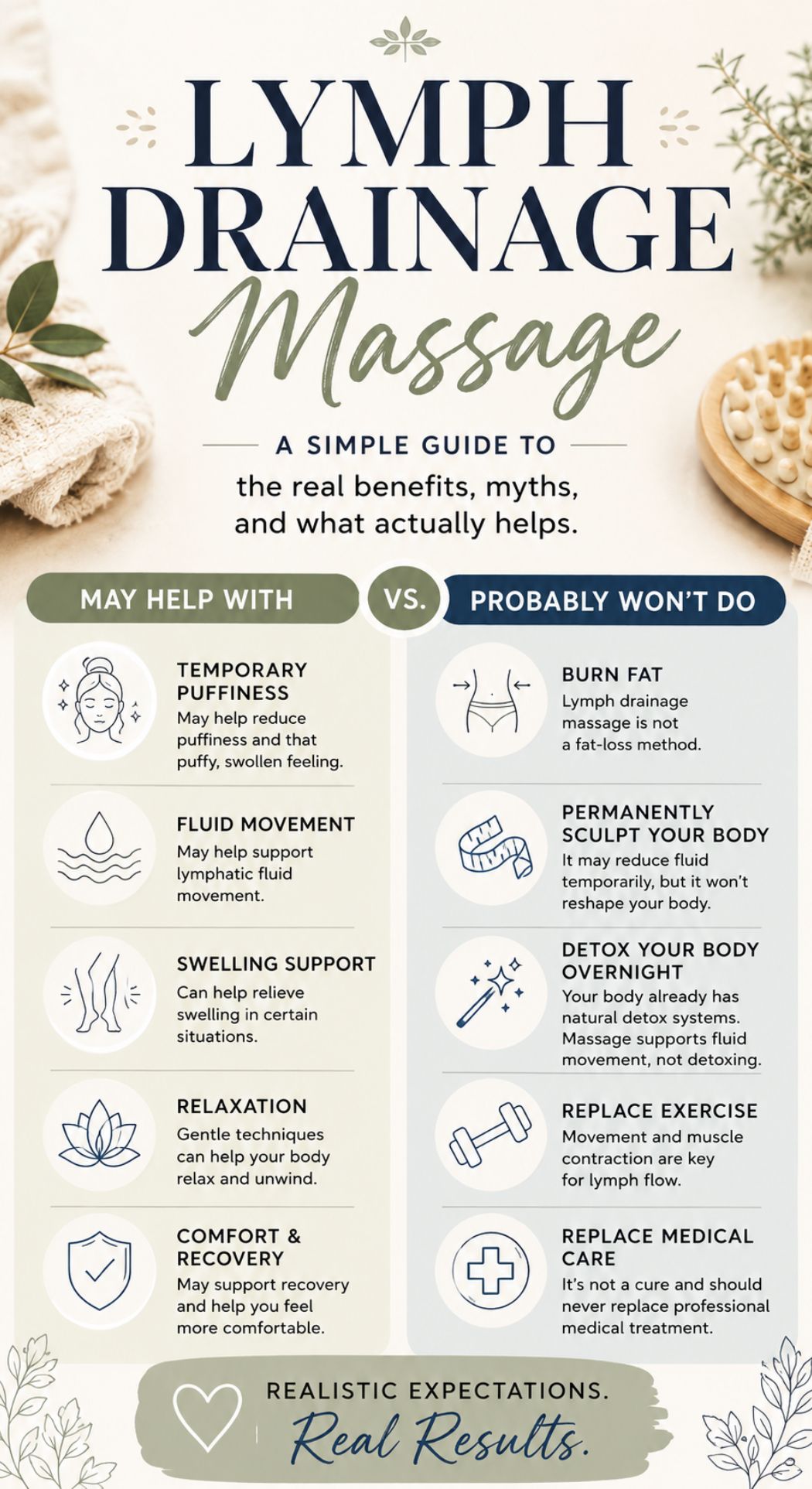
The most evidence-supported lymph drainage benefits are related to swelling, fluid buildup, and comfort, especially when the lymphatic system has been affected by illness, surgery, cancer treatment, or lymphedema.
Cleveland Clinic notes that lymphatic drainage massage is often used to relieve swelling caused when illness or medical treatment clogs or disrupts the lymphatic system.
Memorial Sloan Kettering Cancer Center also describes decongestive exercises as an important part of lymphedema management because they help move lymph fluid around the body and may help improve movement.
So, when people ask, “Does lymph drainage massage work?” the more accurate answer is:
It may help in specific situations, especially related to swelling and lymphatic fluid movement, but it is not a miracle cure for every puffy, tired, bloated feeling.
What Recent Research Says About Lymph Drainage Techniques
This is where the topic gets really interesting.
A 2025 meta-analysis looked at lymphatic drainage techniques for carpal tunnel syndrome across 12 studies with 479 participants. The analysis found that lymphatic drainage techniques significantly reduced pain and improved some median nerve conduction measures, although functional outcomes were more mixed and the authors noted study heterogeneity.
That does not mean lymph drainage massage magically fixes carpal tunnel syndrome. But it does suggest researchers are paying attention to how these techniques may support pain, swelling, and nerve-related measures in certain conditions.
Another 2025 randomized sham-controlled trial studied manual lymphatic drainage in women with fibromyalgia. The study reported improvements in pain intensity, disease impact, and health-related quality of life when manual lymphatic drainage was added to medical treatment.
Again, this does not mean lymph massage is a stand-alone cure. But it does support a more balanced message:
Lymph drainage techniques may have legitimate supportive uses, especially for comfort, swelling, pain, and quality-of-life support in certain groups.
And that is much more trustworthy than “drain toxins and lose five pounds by dinner.”
Lymph Drainage Massage vs. Regular Massage
This is where a lot of confusion happens.
A regular massage often focuses on muscles, knots, tension, and deeper pressure. Lymph drainage massage is typically much lighter and more rhythmic.
The goal is not to dig into sore muscles. The goal is to gently encourage lymph fluid movement.
Cleveland Clinic describes manual lymph drainage as a very light-touch technique used by trained therapists to stimulate lymphatic channels and move fluid out of tissues and back toward circulation.
So if someone is pressing so hard you’re questioning your life choices, that’s probably not lymph drainage massage.
What Lymph Drainage Massage Cannot Do
Let’s clear this up before the internet starts selling us a $400 “lymph sculpting spoon.”
Lymph drainage massage does not directly:
- burn fat
- permanently sculpt your body
- replace exercise
- cure chronic illness
- flush “toxins” in the dramatic way influencers claim
- replace medical treatment for swelling, pain, or lymphatic conditions
Temporary changes in puffiness can happen because of fluid movement. That is very different from fat loss or permanent body reshaping.
This distinction matters because it keeps your content trustworthy and helps readers avoid disappointment. Feeling less puffy after a lymph massage can be real. Assuming that means fat disappeared is where the wellness math starts wearing glitter and making bad decisions.
Myth: Lymph Drainage Massage Detoxes Your Body
The word “detox” gets thrown around constantly, but it is often misleading.
Your body already has built-in systems for processing and removing waste, including your liver, kidneys, lymphatic system, digestive system, lungs, and skin.
Lymph drainage massage may support fluid movement, especially when excess fluid is collecting in tissues. But saying it “detoxes your body” is usually too vague and often overpromises.
A better way to say it:
Lymph drainage massage may help support lymphatic fluid movement and reduce certain types of swelling or puffiness.
That’s accurate, helpful, and far less likely to make a doctor throw their coffee across the room.
Myth: You Need Expensive Tools to Support Lymph Flow
You do not need a luxury spa membership, a celebrity-approved roller, or a bathroom counter full of tools that look like they belong in a medieval skincare museum.
Tools can be nice. Gua sha, dry brushing, massage devices, and professional massage can all have a place depending on your goals.
But the basics still matter most:
- gentle movement
- walking
- hydration
- breathing
- stretching
- sleep
- regular meals
- reducing long sitting periods
Exercise and movement are especially important because the lymphatic system does not have a central pump like the heart. Research has noted that muscle contraction and breathing can help promote lymphatic flow.
Cancer Research UK also explains that exercise helps lymph move through the lymphatic system because muscle contractions push lymph through lymph vessels.
So yes, lymph massage can be helpful.
But so can a 10-minute walk.
Rude that the boring answer is often the best one, but here we are.
What Actually Helps Support Lymphatic Flow
If your goal is to support lymphatic health naturally, think less “extreme detox” and more “consistent body support.”
Gentle Daily Movement
Walking, stretching, mobility work, light strength training, and rebounding may all support circulation and lymph movement. Movement helps muscles contract, which can help move lymph through lymph vessels.
This is why sitting all day can leave your body feeling stiff, heavy, puffy, or sluggish.
Deep Breathing
Breathing mechanics may also play a role in lymph movement. Research notes that exercise involving breathing and muscle contraction can promote lymphatic flow.
This does not mean you need to become a breathwork influencer with linen pants and a sunrise routine. It just means taking a few slow, deep breaths throughout the day may be a simple supportive habit.
Hydration
Lymph is fluid, so hydration matters. While water alone will not magically “drain” your lymphatic system, dehydration can make your body feel more sluggish overall.
Professional Support When Needed
If you have true swelling, lymphedema, post-surgical swelling, cancer-treatment-related swelling, unexplained swelling, pain, or one-sided swelling, it is worth talking to a healthcare provider.
MD Anderson explains that manual lymph drainage can be used by physical therapists to help people with lymphedema, and that certain exercises may also support fluid movement.
Compression When Recommended
For some people with swelling or circulation concerns, compression garments may be part of a treatment plan. Cleveland Clinic notes that compression therapy is commonly used to help improve blood flow in the lower legs and help prevent fluid from building up.
This is not something everyone needs, but it can be helpful when recommended by a professional.
When to Be Careful With Lymph Drainage Massage
Lymph drainage massage is gentle, but that does not mean it is right for everyone.
Cleveland Clinic lists several situations where lymphatic drainage massage should be avoided, including blood clots, cellulitis, deep vein thrombosis, fever, heart disease, infection, kidney failure, stroke, and certain areas affected by cancer or radiation therapy.
You should check with a healthcare provider first if you have:
- unexplained swelling
- swelling on only one side of the body
- heart disease
- kidney disease
- a history of blood clots
- active infection
- fever
- cancer treatment history
- recent surgery
- severe pain
- sudden swelling
This is one of those “please do not let Pinterest be your doctor” moments.
How to Use Lymph Drainage Massage Realistically
Lymph drainage massage works best when you view it as one supportive tool, not the entire wellness plan.
A realistic approach might look like:
- gentle lymph massage when appropriate
- walking most days
- stretching after sitting
- staying hydrated
- getting enough sleep
- using compression if recommended
- seeing a trained specialist if swelling is persistent or medical
That combination is much more grounded than trying to “detox” your way through every symptom with one massage technique.
Who Might Benefit From Learning More About Lymph Massage?
Lymph massage may be worth learning more about if you deal with occasional puffiness, fluid retention, heavy-feeling limbs, or post-sitting sluggishness.
It may also be part of a medical plan for people with lymphedema or swelling related to certain treatments, surgeries, or health conditions. In these cases, it is best to work with a trained professional, such as a certified lymphedema therapist or qualified physical therapist. Cleveland Clinic notes that lymphedema treatment often includes physical therapy and garments or bandaging to help move fluid from affected areas.
For everyday wellness, though, you do not need to overcomplicate it. Gentle movement and consistency still matter.
SHARE THIS WITH A FRIEND!
Final Thoughts
Lymph drainage massage is one of those wellness topics that deserves a calm, realistic conversation.
It can be helpful. It can feel good. It may support fluid movement, reduce certain types of swelling, and play a role in comfort and recovery for some people.
But it is not a fat-loss shortcut. It is not a magic detox switch. And it works best when paired with the unglamorous basics your body actually loves: movement, hydration, breathing, sleep, and gentle consistency.
If your body feels puffy, sluggish, stiff, or heavy lately, lymph drainage massage may be one helpful piece of the puzzle.
Just don’t forget the walk, the water, and the part where you stop sitting like a shrimp over your laptop for seven consecutive hours.
Medical Disclaimer
This article is for informational and educational purposes only and is not medical advice. Lymph drainage massage may not be appropriate for everyone, especially if you have swelling, heart disease, kidney disease, blood clots, active infection, cancer treatment history, or other medical conditions. Always check with a qualified healthcare provider before starting lymphatic drainage massage or any new wellness practice.
Lymph Drainage Massage: FAQs
What is lymph drainage massage?
Lymph drainage massage is a gentle massage technique that helps move excess fluid away from tissues and toward working lymph vessels and lymph nodes. It is usually much lighter than traditional massage.
What are the main lymph drainage benefits?
The most realistic lymph drainage benefits include support for fluid movement, swelling relief in certain situations, comfort, and relaxation. It may also be used as part of lymphedema care under professional guidance.
Is lymph drainage massage the same as manual lymph drainage?
Manual lymph drainage is a specialized form of lymphatic massage often used by trained professionals. Everyday lymph massage techniques may be more general and should not replace professional care when swelling or lymphedema is involved.
Can lymph drainage massage help with weight loss?
Lymph drainage massage is not a fat-loss method. It may temporarily reduce puffiness or fluid-related swelling, but that is not the same as losing body fat.
Can I do lymph drainage massage at home?
Some gentle self-massage techniques can be done at home, but it is best to learn from a qualified source. If you have medical swelling, lymphedema, recent surgery, blood clot risk, heart or kidney disease, or unexplained swelling, talk with a healthcare provider first.
What helps lymph flow naturally?
Gentle movement, walking, stretching, deep breathing, hydration, sleep, and reducing long periods of sitting may all help support lymphatic flow naturally.
Related Articles:
- Lymph Drainage 101: How Your Lymph System Actually Works
- Manual Lymph Drainage Explained Simply: What It Can and Can’t Do
- Simple Lymph Drainage Exercise Ideas You Can Do at Home
- 8 Signs Your Lymph System Needs More Movement
- Dry Brushing for Lymph Drainage 101
- Facial Lymph Drainage Massage for Puffiness
- Rebounding for Lymphatic Drainage
- Things That May Be Slowing Your Lymphatic System
Please note: This website contains affiliate links. As an Amazon Associate, we earn from qualifying purchases at no additional cost to you.