
Please note: This website contains affiliate links. As an Amazon Associate, we earn from qualifying purchases at no additional cost to you.
Have you ever looked in the mirror and thought… what is happening to my face right now?
Maybe it’s breakouts that showed up uninvited (and refused to leave). Or dryness that laughs in the face of your moisturizer. Or that dull, tired look—even when you’re eating your vegetables and getting your eight hours like a responsible adult.
It’s tempting to blame your products, your hormones, or just the general chaos of being alive. But here’s something worth knowing: your skin is often the first place your body waves a little red flag.
And one of the biggest flag-wavers? Cortisol.
When your cortisol levels are out of balance—from chronic stress, poor sleep, or just a season of too much—it can show up all over your skin in ways that feel confusing and frustrating. Not because your skin is dramatic. But because it’s connected to everything happening inside your body.
Here’s what it might be trying to tell you.
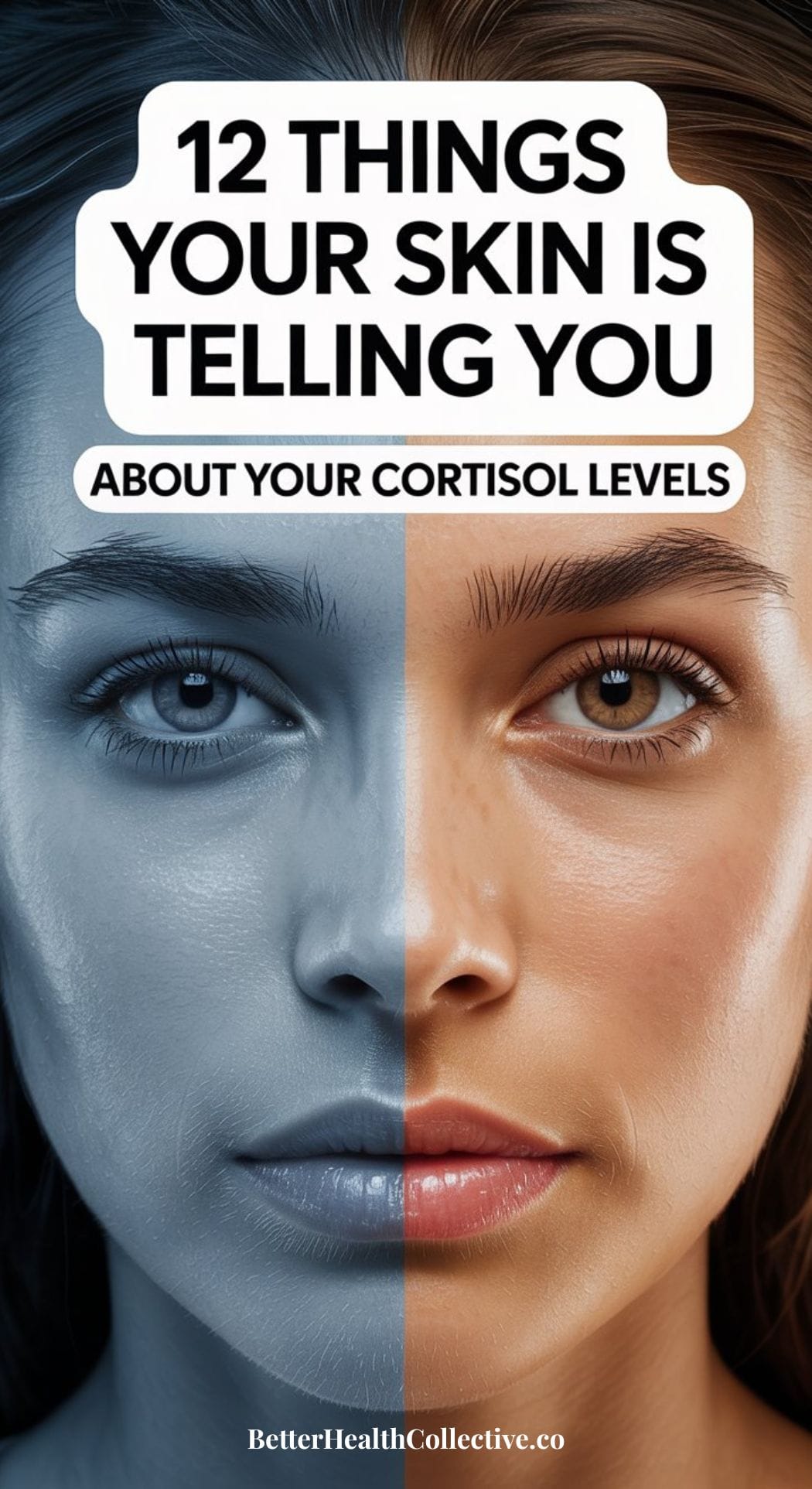
12 Things Your Skin Is Telling You About Your Cortisol Levels
1. Breakouts That Won’t Quit → Elevated Cortisol + Inflammation
Persistent breakouts—especially along your jawline or chin—are a classic cortisol calling card. Elevated cortisol ramps up oil production and inflammation, which basically rolls out the welcome mat for acne to move in and get comfortable.
What actually helps:
- Prioritize sleep (yes, it counts as skincare)
- Manage daily stress where you can
- Resist the urge to pile on more products—less is genuinely more here
2. Suddenly Oilier Skin → Cortisol Stimulating Your Sebaceous Glands
If your skin went from normal to shiny practically overnight and your routine hasn’t changed—cortisol may be over-stimulating your oil glands. It’s not you. It’s your stress hormones.
What actually helps:
- Keep your routine simple and consistent
- Support your body with balanced meals (blood sugar swings don’t help)
- Skip the harsh, stripping cleansers—they tend to make oil production worse
3. Dry, Dehydrated Skin That Drinks Moisturizer and Asks for More → Compromised Skin Barrier
On the flip side, cortisol can also weaken your skin barrier, making it harder for your skin to hold onto moisture. The result: that tight, flaky, “something is off” feeling no matter what you put on it.
What actually helps:
- Hydrate consistently throughout the day (not just a big glass before bed)
- Reach for gentle, hydrating formulas
- Add healthy fats to your diet—they matter more than most people think
4. Dull, Flat-Looking Skin → Poor Sleep + Disrupted Cortisol Rhythm
If you’ve lost your glow and can’t figure out why, your sleep-cortisol relationship might be the culprit. When cortisol stays elevated at night, it interferes with deep sleep—which is exactly when your skin does its best repair work.
No deep sleep. No glow. It’s a rude deal.
What actually helps:
- Build a consistent wind-down routine
- Cut the screen time before bed (you already know this, but here’s your reminder)
- Aim for consistent sleep timing, not just duration
5. Dark Circles That Won’t Budge → Sleep Disruption + Poor Circulation
Dark circles aren’t always genetic destiny. Chronic stress and broken sleep can make them more pronounced by affecting circulation and your skin’s ability to repair overnight.
What actually helps:
- Focus on sleep quality, not just hours logged
- Reduce late-night stimulation
- Stay hydrated—dehydration makes everything look worse
If your skin issues feel connected to that “wired-but-tired” feeling, check out our cortisol reset guide.
6. Suddenly Sensitive Skin → Weakened Skin Barrier
If your skin is reacting to products it used to love, stress might be why. A compromised skin barrier lets irritants in more easily—leading to unexpected redness, stinging, or just general skin grumpiness.
What actually helps:
- Simplify your routine ruthlessly
- Pause on introducing anything new
- Look for calming, barrier-supporting ingredients (ceramides, oat extract, niacinamide)
7. Everything Takes Forever to Heal → Elevated Cortisol Slowing Repair
Breakouts that stick around for weeks. Irritation that just… lingers. If your skin’s healing process feels sluggish, cortisol may be interfering with your body’s natural repair systems.
What actually helps:
- Support your immune system through nutrition
- Reduce stress where it’s actually possible (not just in theory)
- Hands off—picking and over-treating slow healing down significantly
8. More Redness or Flushing → Stress Inflammation
Stress increases blood flow and drives inflammation, which can show up as unexpected flushing or redness—especially across the cheeks. Your face is basically broadcasting your nervous system’s current status.
What actually helps:
- Identify your personal stress triggers (and take them seriously)
- Build in genuinely calming habits—walks, breathing, actual quiet time
- Use soothing, anti-inflammatory skincare ingredients
9. Fine Lines Looking More Noticeable → Cortisol Breaking Down Collagen
Here’s the one nobody loves to hear: chronic elevated cortisol can break down collagen over time, making fine lines appear more prominent. It’s not just aging—it’s stress aging.
What actually helps:
- Sleep and recovery aren’t optional—they’re your anti-aging strategy
- Stay hydrated
- Nourish your skin from the inside out with whole, nutrient-dense foods
10. Puffy Face, Especially in the Morning → Cortisol + Fluid Retention
If you wake up looking puffier than you went to bed, stress and poor sleep may be messing with your fluid balance and inflammation levels. Cortisol has a lot of influence over how your body manages both.
What actually helps:
- Work on sleep quality, not just quantity
- Hydrate well during the day
- Ease up on the salty processed foods, especially in the evenings
11. Eczema, Rosacea, or Chronic Flare-Ups Getting Worse → Stress as a Trigger
If you manage a skin condition like eczema or rosacea, you’ve probably noticed that stress makes flares worse. This isn’t in your head—cortisol actively triggers inflammatory responses that can intensify these conditions.
What actually helps:
- Get proactive about stress management (reactive doesn’t work as well here)
- Stick to a consistent, minimal routine
- Know your triggers and protect your peace around them
12. Your Skin Just Feels… Off → Your Body Needs a Reset
Sometimes it’s not one specific thing. It’s just that your skin doesn’t feel like yours. That vague “off-ness” is often your body’s way of saying that something internally is out of balance—and your skin is the messenger.
What actually helps:
- Consistency over perfection, always
- Simple daily habits done regularly beat complicated routines done sporadically
- Give your body time—it’s slower to recover than we’d like, but it does recover
What Your Skin Is Really Trying to Tell You
Your skin isn’t working against you. It’s responding to what’s happening inside your body—and cortisol has more influence over that picture than most people realize.
When cortisol stays elevated for long periods, your body shifts into survival mode. And unfortunately, “glowing skin” is not high on survival mode’s priority list.
So instead of asking “why is my skin like this?”—try asking “what might my body be dealing with right now?”
That shift in perspective? It changes everything.
If your skin issues feel connected to that wired-but-tired feeling, check out our cortisol reset guide here. Noticing other symptoms like fatigue, cravings, or stubborn weight? This article on cortisol signs is a good next read. And if you’re ready for a structured plan to help your body recalibrate, the 72-hour cortisol reset is waiting for you].
What Your Skin Is Telling You About Your Cortisol Levels: FAQs
Can stress really affect your skin that much? More than most people expect. Chronic stress impacts oil production, inflammation, hydration levels, and how quickly your skin heals—all at once.
How long does it take for skin to improve after cortisol levels come down? It varies, but many people notice real changes within a few weeks of consistently improving sleep, nutrition, and stress management. Consistency is the key word there.
Can skincare alone fix stress-related skin problems? It helps—but it won’t fully solve an internal problem. Supporting your body from the inside is just as important as what you put on it.
Why does my skin always get worse when I’m stressed? Because cortisol affects oil production, inflammation, your skin barrier, and your body’s repair processes—all simultaneously. Your skin is just honest about it.
Please note: This website contains affiliate links. As an Amazon Associate, we earn from qualifying purchases at no additional cost to you.