

Please note: This website contains affiliate links. As an Amazon Associate, we earn from qualifying purchases at no additional cost to you.
If you’ve been feeling puffy, sluggish, heavy, stiff, or just… weirdly off lately — I want you to know something important before you fall down a rabbit hole of expensive wellness trends.
Your body probably doesn’t need a 14-day cleanse, a $60 detox tea, or a stranger yelling about toxins on Instagram.
It might just need you to get up and walk around for a few minutes.
I know. Anticlimactic. But hear me out.
Your lymphatic system is one of those things nobody really talks about until something feels wrong — and by then you’re already three pages deep into WebMD at 11pm. It plays a major role in fluid balance, immune support, and clearing waste from your body. And unlike your heart, which has its own built-in pump, the lymphatic system basically runs on you. It needs movement, muscle contractions, hydration, and deep breathing to actually do its job.
Which is… unfortunate news for those of us whose daily movement currently looks like:
Chair → Car → Couch → Repeat
If that felt uncomfortably personal, you’re in the right place. Let’s talk about what your body might actually be trying to tell you.
What Does the Lymphatic System Even Do?
Think of it as your body’s built-in cleanup crew. The lymphatic system is a network of vessels, nodes, and tissues that helps move fluid throughout your body and keeps your immune system running.
Unlike your circulatory system (powered by your heart), lymphatic fluid doesn’t have a dedicated pump. It moves through:
- Physical movement and walking
- Muscle contractions
- Deep breathing
- Hydration
- Stretching
That’s why you often feel noticeably better after a walk, a good stretch session, or really any movement that gets you off the couch. Your body isn’t lying to you — it genuinely functions better when it’s moving regularly.
And no, you don’t need to become a triathlete. More on that later.
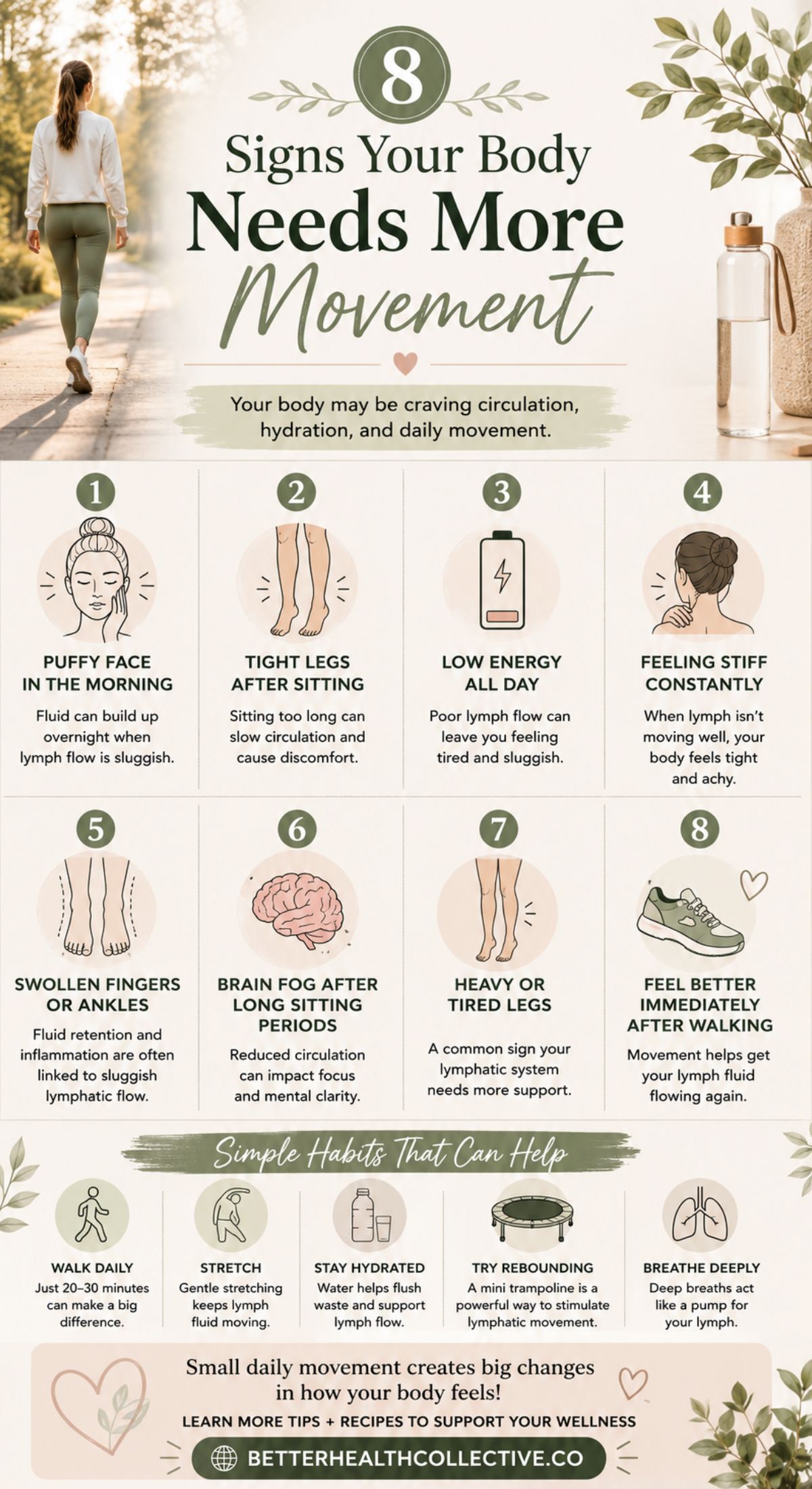
8 Signs Your Lymphatic System Needs More Movement
1. You Feel Puffy or Swollen More Often Than Usual
Not just “I ate a whole bag of salt and vinegar chips” puffy. We’re talking:
- Swollen fingers (rings feeling tight?)
- Puffy face when you wake up
- That heavy, bloated feeling that sticks around
- Sock marks on your ankles at the end of the day
- Legs that feel like they belong to someone twice your age
Lots of things can contribute to fluid retention — hormones, hydration, sodium, stress, sleep. But sitting for long periods without movement? Absolutely makes it worse. If you’re living a largely sedentary life and feeling chronically puffy, your body may simply be asking for more circulation.
2. Your Body Feels Like It Aged 40 Years After Sitting at Your Desk
You know that moment. You’ve been heads-down working for two hours, you finally stand up, and suddenly you’re making old person noises just getting out of your chair.
Stiff hips. Tight legs. That achy, heavy, stuck feeling like your joints filed a formal complaint while you weren’t paying attention.
This is your body’s very unsubtle way of saying it needs more movement throughout the day — not just one big workout, but consistent circulation-supporting activity. Even a two-minute walk around your house counts.
3. You Rarely Break a Sweat (Or Move Much at All)
Here’s the honest truth: your body was designed to move. Not necessarily in a “run a 10K every morning” way, but definitely more than the modern default of sitting under fluorescent lighting for 8+ hours while stress-eating something from your desk drawer.
Long stretches of inactivity can contribute to:
- Sluggish circulation
- Low energy
- Stiffness and fluid retention
- That general feeling of being physically heavy
If a typical day doesn’t involve much deliberate movement beyond walking to the kitchen and back, this might be worth paying attention to.
4. You’re Exhausted, But You Haven’t Done Anything
This one feels like a cruel joke. You’re tired. You haven’t done anything particularly strenuous. And yet — the couch is winning.
Here’s the irony: movement actually supports energy levels, even when your motivation is at rock bottom. The less you move, the more sluggish your circulation gets, and the more tired you feel. It’s a lovely little cycle that nobody asked for.
You don’t need an intense workout to break it. Sometimes your body just needs a short walk, some sunlight, and a little bit of consistent movement to start feeling human again.
5. Your Legs Feel Heavy and Tired by the End of the Day
Heavy, achy, swollen-feeling legs are one of the most common complaints after long periods of sitting or standing without movement. If your legs regularly feel like they’re made of wet cement by evening, it might be less about your legs specifically and more about overall circulation and fluid movement throughout the day.
Gentle movement — even just walking around the block or doing some light stretching — often makes a noticeable difference in how your legs feel.
6. You Sit for Most of the Day (And “Most” Is an Understatement)
Okay, real talk — this one alone is worth taking seriously.
Modern life has made prolonged sitting completely normal. But your body genuinely functions better with regular movement, posture changes, and muscle engagement throughout the day. The good news: you don’t have to overhaul your entire life.
Even standing up and walking around for a few minutes every hour can help support circulation. Set a timer if you have to. Your hips will thank you.
7. You Wake Up Puffy, Stiff, and Generally Unimpressed
Morning puffiness can get worse after:
- Salty meals the night before
- Poor sleep
- Dehydration
- Stress
- Long days of inactivity
If you consistently wake up feeling like a slightly inflated version of yourself, it’s worth looking at your hydration and movement habits throughout the day — not just the morning. How you feel when you wake up is often a pretty honest reflection of how you lived the previous day.
8. You Feel Dramatically Better After a Walk (Like, Almost Immediately)
This is honestly one of the most telling signs. If you consistently notice:
- Better mood within minutes
- Reduced stiffness
- Less puffiness
- Clearer head
- Just… better in a general, hard-to-explain way
…after walking or moving your body, that’s your system telling you loud and clear what it needs.
Sometimes the body isn’t asking for anything complicated. It just wants you to walk around the block.
Gentle Ways to Support Lymphatic Flow (No Extreme Anything Required)
Here’s what I love about this: you don’t need a detox program, a special supplement stack, or a $200 lymphatic massage to feel better. (Though if you want the massage, no judgment whatsoever.)
Simple habits that may help support lymphatic flow naturally:
- Daily walks — even 10–20 minutes makes a difference
- Stretching — especially for your hips, legs, and upper body
- Staying hydrated — lymphatic fluid needs water to move
- Deep breathing — diaphragmatic breathing actually helps move lymphatic fluid
- Dry brushing — a gentle pre-shower ritual that many people swear by
- Rebounding — gentle bouncing on a mini trampoline (sounds silly, works great)
- Strength training — muscle contractions support lymphatic circulation
- Getting outside regularly — sunlight + movement is genuinely powerful
Consistency matters more than intensity here. A 15-minute walk every day beats one intense gym session a week when it comes to keeping things flowing.
PERSONAL NOTE: A few weeks ago I ordered a mini trampoline (aka “rebounder”). I’ve only been bouncing for about 3 to 10 minutes a day and WOW, what a difference a few minutes makes!
I feel more perky awake in the morning, I’ve definitely been in a better mood (because it’s FUN) and I think I’ve noticed a difference in my puffy morning face.
I’ll definitely keep you updated on my journey, but wanted to let you know this is a real option for your lymphatic heath!
“Movement Snacks”: The Low-Commitment Way to Move More
Not a morning workout person? Same. Here’s where “movement snacks” come in — tiny pockets of movement throughout the day that add up to a lot.
Some easy ones to try:
- 10-minute walk after a meal (great for blood sugar and circulation)
- Stretching while your coffee brews — you’re just standing there anyway
- Walking during phone calls — you look productive AND you’re moving
- Standing up every hour — set a timer, make it non-negotiable
- Gentle morning mobility before you look at your phone (controversial, but life-changing)
- Parking farther away — the oldest trick in the book, still works
- Dancing while making dinner — absolutely counts, zero notes
The goal isn’t perfection. The goal is less stagnation. Most of us don’t need a dramatic wellness overhaul — we just need to interrupt the sitting more often.
The Bottom Line
Your body is designed for movement, circulation, flexibility, and recovery. It is not designed for eight-hour stretches of sitting under fluorescent lighting while mentally composing strongly-worded emails you’ll never send.
If you’ve been feeling puffy, sluggish, stiff, swollen, or just physically off, the answer is probably less complicated than the internet wants you to believe.
More movement. More hydration. More consistency. Less sitting.
Sometimes the most powerful wellness habits are the least dramatic ones — and your lymphatic system has been trying to tell you that for a while now.
Feeling like this article described you a little too accurately? Pin it for later, share it with your group chat, or start with a 10-minute walk today. Small steps, literally.
Signs Your Lymphatic System Needs More Movement: FAQs
What does the lymphatic system do?
The lymphatic system helps move fluid throughout the body and supports immune function and circulation.
Can sitting too much affect lymphatic flow?
Long periods of inactivity may contribute to sluggish circulation, stiffness, puffiness, and fluid retention.
What are simple ways to support lymphatic movement?
Walking, stretching, hydration, rebounding, dry brushing, deep breathing, and regular movement throughout the day may help support circulation naturally.
Do you need a detox to support your lymphatic system?
No. Most people benefit more from consistent daily movement, hydration, sleep, and healthy lifestyle habits than extreme detox routines.
Does walking help lymphatic flow?
Walking encourages muscle contractions and circulation, which may help support lymphatic movement naturally.
Please note: This website contains affiliate links. As an Amazon Associate, we earn from qualifying purchases at no additional cost to you.