
Please note: This website contains affiliate links. As an Amazon Associate, we earn from qualifying purchases at no additional cost to you.
We’ve all been there: you’re having a high-stress day, and suddenly that familiar wave of anxiety hits.
You start wondering what’s wrong with your brain, but sometimes, the culprit is actually just your daily routine.
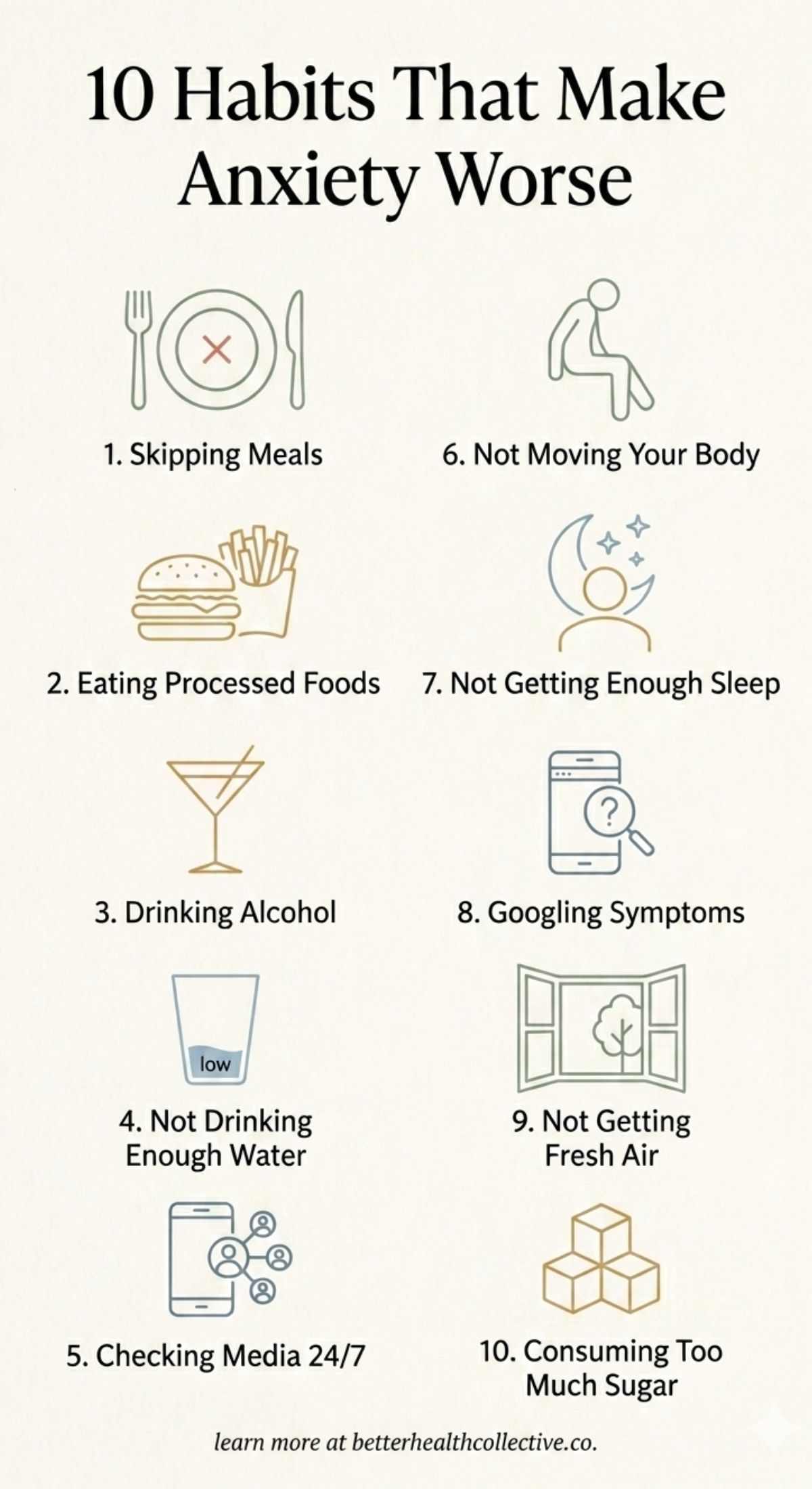
Life is messy and schedules are hectic, but these 10 common habits might be “feeding” your anxiety without you even realizing it. Here is how to spot them—and how to fix them.
1. The “I’m Too Busy to Eat” Trap
We’ve all had those days where you look at the clock and realize it’s 3:00 PM and all you’ve had is a coffee. Your body starts to panic when it’s running on empty. You might get shaky or feel your heart racing, and your brain immediately labels that as “anxiety” when it’s actually just hunger.
- The Science: Low blood sugar triggers a release of cortisol (the stress hormone), which mimics the physical feeling of a panic attack.
- Try This Instead: Keep a “stash” of high-protein snacks (like almonds or a protein bar) in your car or desk for those days when a real lunch isn’t happening.
2. Living on “Easy” Food
When life gets crazy, a bag of chips or a drive-thru burger is the path of least resistance. We do it for comfort, but “junk” food often leaves us feeling sluggish and irritable an hour later. It’s hard to feel mentally calm when your body is dealing with a “food hangover.”
- The Science: Processed foods can cause neuroinflammation, which interferes with the brain chemicals that keep your mood stable.
- Try This Instead: The “Plus-One” Rule. Keep your easy meal, but add one “real” thing, like an apple or a handful of spinach, to give your brain some actual fuel.
3. The “Nightcap” That Backfires
A glass of wine after a long day feels like the ultimate “off switch” for a racing mind. But have you ever noticed that you wake up at 3:00 AM with your heart pounding? That’s the alcohol wearing off. It feels like relaxation now, but you’re often “borrowing” peace from tomorrow.
- The Science: As alcohol leaves your system, your brain experiences a glutamate rebound, which puts your nervous system into overdrive.
- Try This Instead: Swap the wine for a tart cherry juice or a fancy herbal tea. You still get the “ritual” of winding down without the 3:00 AM panic.
4. Forgetting Your Water Bottle
It sounds so simple, but most of us are walking around at least a little bit dehydrated. When you’re parched, you get “brain fog,” and it’s way harder to handle a stressful email or a difficult conversation when your brain feels like a dried-out sponge.
- The Science: Dehydration reduces blood flow to the brain, making it harder for your neurons to communicate and regulate your emotions.
- Try This Instead: Drink a full glass of water before your morning coffee. It “wakes up” your brain before the caffeine hits.
5. The Infinite Scroll
You sit down for a “five-minute break” on social media and suddenly an hour has passed. Between “perfect” lives and scary headlines, scrolling is a workout for your stress levels. Your brain never gets a chance to just be.
- The Science: Constant digital stimulation keeps your amygdala (the brain’s fear center) on a loop, looking for threats and comparisons.
- Try This Instead: Set a “Screen Sunset.” Put your phone in a different room 30 minutes before bed to let your brain finally go “off the clock.”
6. The “Desk-to-Couch” Cycle
When you’re exhausted, the last thing you want to do is go for a walk. But “stress energy” is physical. If you don’t move, that nervous energy just sits in your chest and shoulders, making you feel like a coiled spring ready to snap.
- The Science: Exercise helps your body complete the stress response cycle, physically “burning off” the chemicals that make you feel tense.
- Try This Instead: The “2-Minute Stretch.” If you can’t get to the gym, just stand up and reach for the ceiling for two minutes. It tells your nervous system you aren’t “trapped.”
7. Sacrificing Sleep to “Catch Up”
We stay up late because it’s the only time the house is quiet or we’re finally catching up on a show. But this “Revenge Bedtime Procrastination” is a trap. Everything feels like the end of the world when you’re sleep-deprived.
- The Science: Lack of sleep weakens the connection between your logic center and your emotion center, making you more reactive to small stresses.
- Try This Instead: Aim for the “15-Minute Shift.” Go to bed just 15 minutes earlier than usual tonight. It’s a small win that adds up.
8. The “Dr. Google” Rabbit Hole
You have a weird twitch or a dull headache, so you search it. Three clicks later, you’re convinced of a dire diagnosis. It’s an easy habit to fall into when you’re worried, but it turns a small worry into a full-blown crisis instantly.
- The Science: This creates a feedback loop of uncertainty, which is the primary driver of health-related anxiety.
- Try This Instead: Set a “Waiting Period.” If a symptom isn’t an emergency, wait 24 hours before Googling. Often, the symptom (and the anxiety) will vanish on its own.
9. Forgetting What the Sun Looks Like
If you spend your whole day under fluorescent lights and breathing recirculated air, your brain starts to feel boxed in. We aren’t meant to live in cubicles 24/7. Just a few minutes of fresh air can act like a “reset” button for a mental spiral.
- The Science: Natural light regulates your circadian rhythm, which controls the production of serotonin (the “feel-good” hormone).
- Try This Instead: Drink your morning coffee or take one work call while standing outside. Even five minutes of fresh air counts.
10. The Sugar Rollercoaster
That mid-afternoon candy bar or sugary latte gives you a great 20-minute boost, but the “crash” is brutal. That sudden drop in energy can feel like a sudden drop in mood, making you feel jittery, “hangry,” and anxious all at once.
- The Science: Rapid spikes and drops in insulin can cause your brain to release adrenaline, which triggers a “fight or flight” sensation.
- Try This Instead: Pair your sweet treat with a fat or protein (like peanut butter or yogurt). This slows down the sugar hit so you don’t crash and burn.
The Takeaway
If you recognized yourself in a few of these, don’t stress. Life is hard enough without feeling guilty about your habits.
The goal isn’t to be perfect; it’s just to be aware. Pick one “Try This Instead” tip to focus on this week. Your “Better Health” starts with being kind to yourself, one small shift at a time.
Please note: This website contains affiliate links. As an Amazon Associate, we earn from qualifying purchases at no additional cost to you.