
Please note: This website contains affiliate links. As an Amazon Associate, we earn from qualifying purchases at no additional cost to you.
If you are on a GLP-1 medication like Wegovy, Zepbound, or Ozempic, you’ve likely heard the “Fiber Talk” from your doctor.
But there is a massive difference between knowing you need fiber and knowing how to actually eat it when your digestion has been medically slowed down.
When you’re on these medications, fiber isn’t just a “nice-to-have” nutrient—it is the primary tool for managing side effects and ensuring the scale keeps moving.
In this guide, we’re breaking down the science of “fiber-maxing” specifically for the GLP-1 user.
Why Fiber is the “Secret Sauce” for GLP-1 Success
GLP-1 medications work by mimicking a hormone that slows down gastric emptying. This makes you feel full longer, but it also creates a unique digestive environment. Fiber acts as the perfect partner to this process for three reasons:
- Combating the “Big C”: Constipation is the most common side effect of Zepbound and Wegovy. Fiber adds the necessary bulk and moisture to keep things moving. (If you’re already struggling, see our best foods for constipation relief).
- Blood Sugar Stability: Fiber prevents glucose spikes, which helps eliminate that lingering “food noise” that can sometimes creep back in as your dose wears off.
- The Satiety Multiplier: When you combine a GLP-1 with a high-fiber meal, you are effectively doubling down on fullness. This makes it much easier to stick to your goals even with a small appetite.
Soluble vs. Insoluble: Know the Difference
Not all fiber is created equal, especially when your stomach is moving at a snail’s pace.
- Soluble Fiber: This type dissolves in water to form a gel-like substance. It is gentle on the gut and helps stabilize blood sugar. Think oats, beans, and the flesh of fruit.
- Insoluble Fiber: This is the “roughage” found in skins of fruit and whole grains. While important, too much insoluble fiber too fast can feel like a “brick” in the stomach for GLP-1 users.
The goal is a balance, leaning heavily into soluble sources during your first few weeks of a dose increase.
The “Low and Slow” Protocol
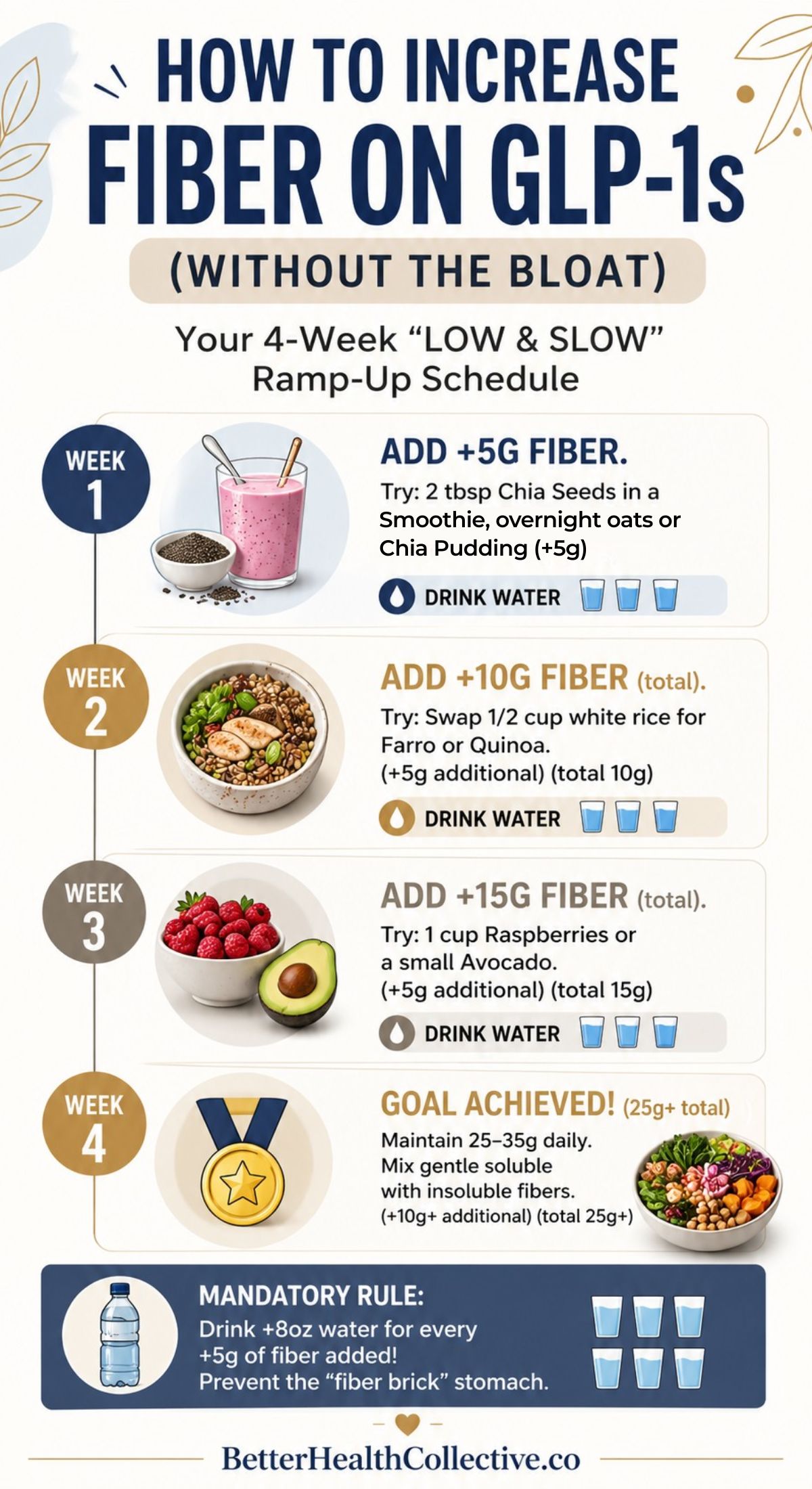
One of the biggest mistakes people make is trying to hit 30g of fiber in a single day after months of low intake. This leads to intense bloating and gas. Instead, follow our “Low and Slow” protocol:
- Increase by 5g per week: Give your gut bacteria time to adjust.
- Hydration is Mandatory: Fiber needs water to work. If you add fiber without extra fluids, you will likely become more constipated. Use our healthy hydration drink recipes to keep your fluid levels up.
- Watch the Signs: If you start feeling overly bloated, you may be not eating enough fiber—or you may be increasing it too quickly.
How to “Fiber-Max” Every Meal
To reach the recommended 25–35g of fiber per day while maintaining high protein, you have to be strategic. You don’t have to eat bowls of plain beans to get there.
High-Fiber Breakfasts
Start your day with a high-fiber breakfast to set the tone for your blood sugar.
- The Power of Oats: Try Tiramisu Overnight Oats or an Oatmeal Protein Smoothie.
- Chia Seeds: Adding two tablespoons of chia seeds to your high-protein chia pudding or overnight oats adds a massive 10g of fiber.
- Flax Seeds: While not as high in fiber as chia seeds, these are really easy to hide in almost anything you make. Two tablespoons bring you 3g of fiber (plus 3g protein!).
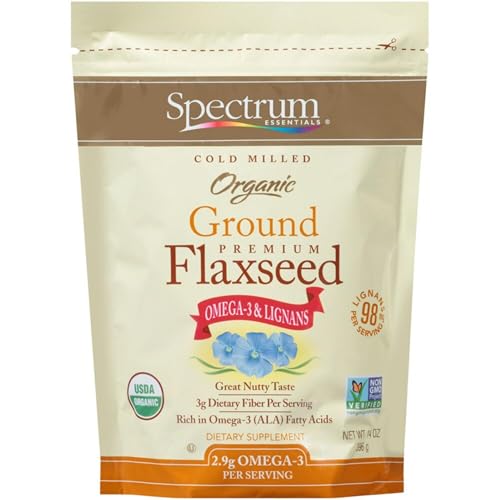
Spectrum Essentials Organic Ground Flaxseed
Shop on Amazon
Boost the fiber and protein in any meal with this ground flaxseed - 3g fiber and 3g protein for just 2 tbsp!
We earn a commission if you make a purchase, at no additional cost to you.

Fiber-Rich Lunches and Dinners
At lunch and dinner, look for “hacks” to swap low-fiber carbs for high-fiber ones.
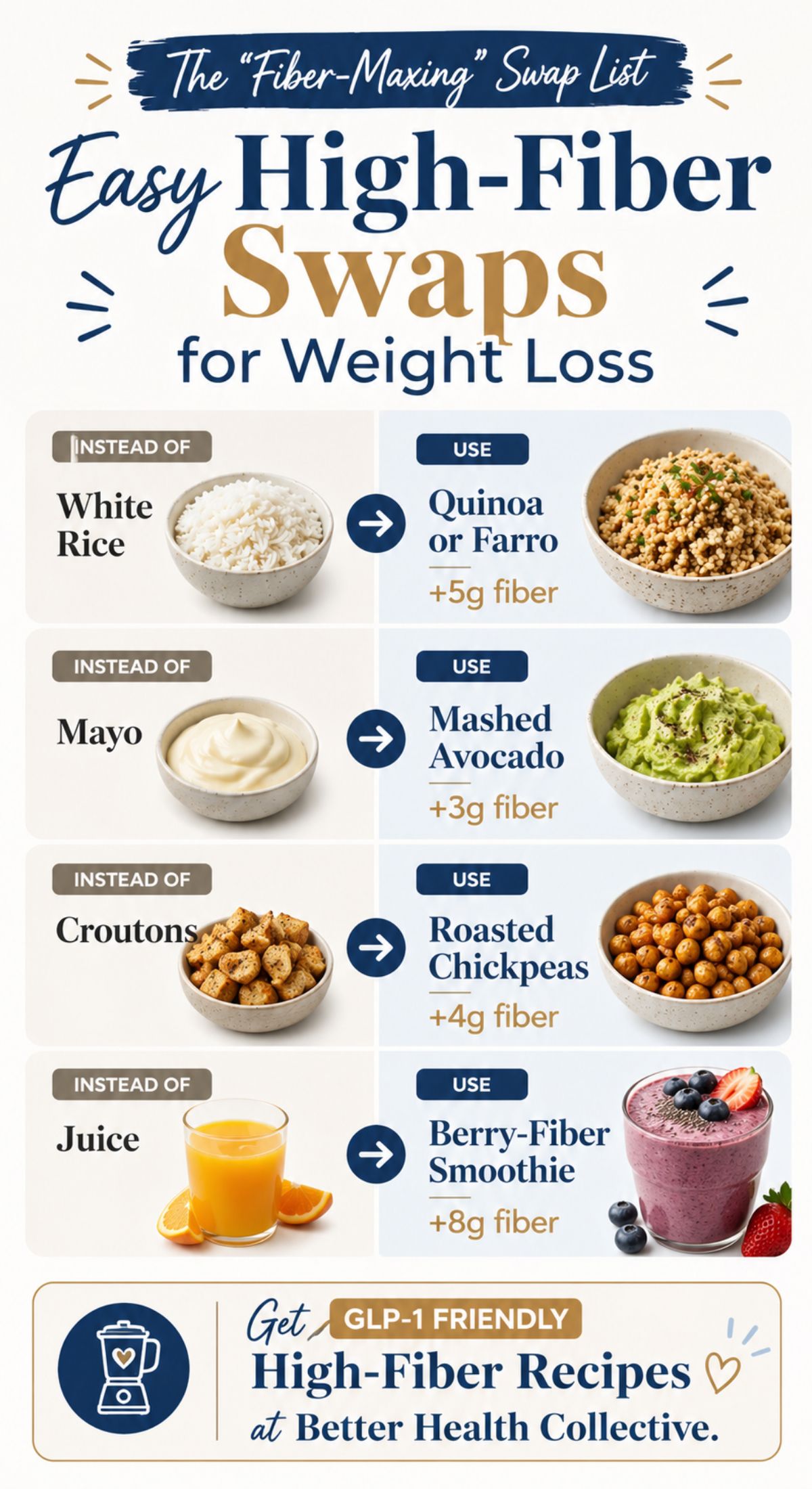
- Swap Rice for Quinoa or Farro: Our Honey Mustard Chicken Farro Bowl is a perfect example.
- Veggies are Key: Incorporate high-protein, high-fiber dinner recipes that use cabbage, squash, or beans as a base.
- Find high protein bread or wraps: If you love having a sandwich at lunch, you don’t have to change a thing! There are now quite a few high fiber tortilla wraps on the market, as well as my FAVORITE bread – Dave’s Killer Bread. It has 4g of fiber and 6g of protein in ONE slice.
- Add Some Avocado: A medium avocado has about 10 grams of fiber, making it an excellent high-fiber food. This includes a mix of soluble and insoluble fiber that helps with digestion, so it’s perfect for GLP-1 users. So stock up on avocados and add a few slices to your sandwich, protein bowl, or mix it with some tuna or eggs (instead of mayo).
Troubleshooting: When Fiber Makes You Feel Worse
If you are experiencing sulfur burps on GLP-1 or intense bloating, your fiber might be “trapped” behind slow-moving digestion.
- Move Your Body: A 10-minute walk after a high-fiber meal can help mechanically move things along.
- Natural Remedies: If you’re feeling backed up, try our constipation relief drink recipes or a lemon ginger digestive detox smoothie.
- Texture Matters: If whole veggies feel too heavy, try blending them into a high-protein soup or a protein-fiber smoothie.
Frequently Asked Questions: Fiber & GLP-1s
1. How much fiber should I eat daily on Wegovy or Zepbound?
While the standard recommendation is 25–35 grams per day, it can be difficult to hit this target when you have a small appetite on GLP-1s. A better rule of thumb for medication users is to aim for 14 grams of fiber for every 1,000 calories consumed. Always prioritize quality over quantity.
2. Can I take a fiber supplement (like Metamucil) with my medication?
Yes, but timing is everything. Because GLP-1s slow down your stomach, taking a large dose of fiber at the exact same time as other oral medications (like thyroid meds or vitamins) can interfere with absorption. It is best to take your fiber supplement at least one hour before or two hours after other oral medications.
3. Will fiber make my bloating worse?
It can if you increase it too quickly! If you jump from 5g to 30g of fiber in one day, the fiber will sit in your “slow” stomach and ferment, causing gas and sulfur burps. Increase your intake by only 5g per week and ensure you are drinking plenty of fluids.
4. What is the best type of fiber for GLP-1 constipation?
Soluble fiber is generally the “gold standard” for GLP-1 users because it is gentler. Foods like oats, chia seeds, and psyllium husk form a gel that softens stool. If you need a quick boost, our high-protein chia pudding or protein-fiber smoothies are excellent, gentle options.
5. Can fiber help me lose more weight on tirzepatide or semaglutide?
Absolutely. Fiber increases the production of natural GLP-1 in your gut and physically fills the stomach. This helps maximize the “fullness” feeling of the medication and prevents weight loss plateaus. For more meal ideas that use this strategy, check out our high-protein, high-fiber lunch recipes.
6. Should I eat fiber if I have nausea?
If you are feeling nauseous, heavy insoluble fibers (like raw kale or broccoli) might feel too difficult to digest. Instead, opt for “blended fiber” which is pre-broken down. A green low-sugar smoothie or a creamy veggie soup provides the nutrients you need without making your stomach work quite as hard.
Final Thoughts
Fiber is the bridge between “surviving” on GLP-1 medications and “thriving” on them. By prioritizing fiber alongside your protein, you protect your muscle mass, keep your energy high, and avoid the most common pitfalls of Wegovy and Zepbound.
Ready to start? Check out our Full Fiber-Maxing Guide for a deeper dive into the specific foods that will change your weight loss journey.
SAVE THIS AS A REMINDER FOR LATER!
Please note: This website contains affiliate links. As an Amazon Associate, we earn from qualifying purchases at no additional cost to you.