
Please note: This website contains affiliate links. As an Amazon Associate, we earn from qualifying purchases at no additional cost to you.
Ever find yourself standing in the kitchen at 9:30 PM thinking, why do I suddenly need something sweet right now?
Or maybe it’s not even nighttime—you just ate, and somehow you’re still craving something salty, crunchy, or sugary like your life depends on it.
It’s easy to assume cravings are about willpower… but more often than not, they’re not random at all. Your body is actually trying to communicate something.
And a lot of the time, those cravings are tied to your hormones—especially things like cortisol, insulin, and your overall blood sugar balance.
So instead of fighting your cravings (and feeling frustrated when you “give in”), it helps to understand what they might be telling you—and how to respond in a way that actually supports your body.
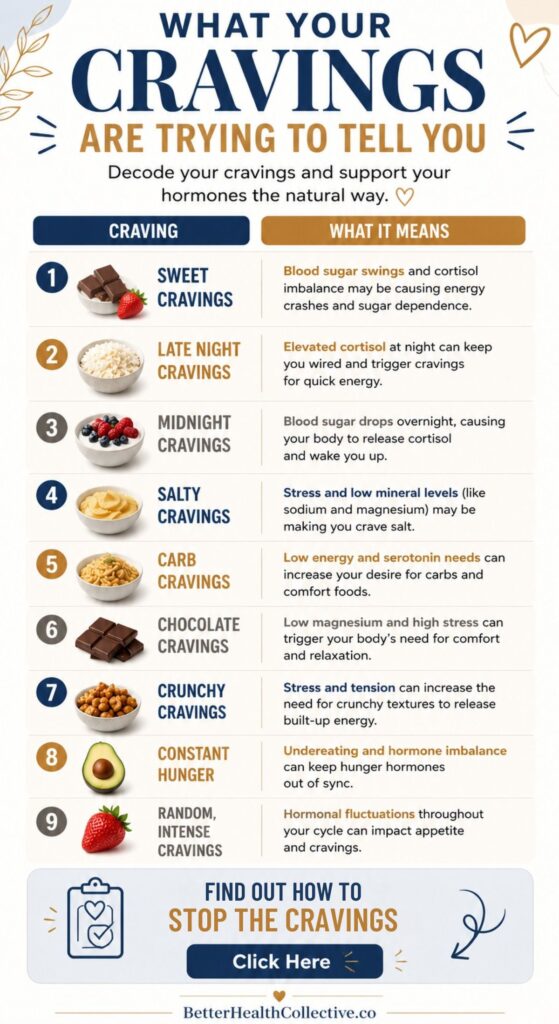
Sweet Cravings → Blood Sugar Swings + Cortisol Imbalance
If you find yourself constantly reaching for sweets—especially mid-afternoon or after dinner—your blood sugar may be rising and falling more than you realize.
When blood sugar drops too low, your body looks for the fastest way to bring it back up. Sugar is the quickest option, so your brain pushes you in that direction. On top of that, elevated cortisol (from stress, poor sleep, or under-eating) can increase your desire for quick energy foods.
What helps:
- Build meals around protein first, then add carbs and healthy fats
- Avoid going long stretches without eating (especially earlier in the day)
- Start your morning with a protein-rich meal to reduce the afternoon crash
- If you want something sweet, pair it with protein (like Greek yogurt or nuts) to avoid another spike
Late Night Cravings → Elevated Cortisol + Disrupted Rhythm
Late night cravings are incredibly common, and they’re often more about your body being out of sync than actual hunger.
When cortisol stays elevated into the evening (instead of dropping like it should), your body can feel wired and restless. That “second wind” often comes with cravings—usually for sugar or carbs—because your body is still looking for energy.
What helps:
- Eat enough during the day so you’re not playing catch-up at night
- Try to finish caffeine earlier in the day (ideally before 1–2 PM)
- Create a simple evening routine that signals your body to wind down (lower lights, less screen time)
- If you truly are hungry, choose something balanced instead of just sugar
Midnight Cravings → Overnight Blood Sugar Drops
Waking up in the middle of the night thinking about food (or feeling wide awake for no reason) can be a sign your blood sugar dipped too low while you were sleeping.
When that happens, your body releases cortisol to bring levels back up—which can wake you up and make it hard to fall back asleep.
What helps:
- Make sure dinner includes protein, carbs, and healthy fats
- Avoid going to bed overly hungry (this is more common than people think)
- If this happens often, consider a small, balanced evening snack
- Focus on consistent meal timing during the day to stabilize overnight levels
Salty Cravings → Stress + Electrolyte Needs
If you’re craving salty foods like chips, fries, or crackers, your body might be asking for more than just flavor.
Chronic stress can deplete key minerals like sodium, potassium, and magnesium. When those levels drop, your body may naturally push you toward salty foods to help restore balance.
What helps:
- Stay well-hydrated throughout the day (not just when you feel thirsty) – try one of our Healthy Hydration Drink Recipes
- Include whole, mineral-rich foods like leafy greens, eggs, and avocado
- Don’t overly restrict salt if you’re eating a very “clean” diet
- Consider adding electrolytes, especially if you’re active or sweating frequently
Carb Cravings → Low Energy + Serotonin Support
Carb cravings often get labeled as “bad,” but they actually serve a purpose.
Carbohydrates help your body produce serotonin, which plays a role in mood, relaxation, and sleep. When you’re stressed, tired, or running on low energy, your body may crave carbs as a quick way to feel better.
What helps:
- Include carbs in your meals instead of trying to avoid them completely
- Pair carbs with protein to keep your blood sugar stable
- Choose more complex carbs (like oats, rice, potatoes) for longer-lasting energy
- Pay attention to when cravings hit—timing can reveal a lot
Chocolate Cravings → Magnesium + Stress Support
Chocolate cravings are one of the most common—and there’s actually a reason for it.
Magnesium plays a role in relaxation, muscle function, and stress regulation. When your body is under stress, magnesium levels can drop, which may increase cravings for chocolate (especially dark chocolate).
What helps:
- Add magnesium-rich foods like nuts, seeds, and dark chocolate. For more ideas, check out our list of the top magnesium rich foods
- Consider a magnesium supplement if appropriate for you
- Focus on reducing daily stressors where possible
- Instead of ignoring the craving, choose a higher-quality version
Crunchy Food Cravings → Stress + Tension Release
Ever notice how satisfying it feels to eat something crunchy when you’re stressed?
That’s because crunchy foods provide a sensory release. The act of chewing and the texture itself can help your body release built-up tension, even if only temporarily. What helps:
- Swap ultra-processed crunchy foods for better options like roasted chickpeas, nuts, or veggies
- Take a moment to pause and check in—are you stressed, bored, or overwhelmed?
- Find alternative stress outlets like walking, stretching, or stepping away from your phone
- Don’t ignore the craving—just try to respond to it more intentionally
Constant Hunger → Hormone Imbalance + Undereating
If you feel like you’re always hungry—even after eating—this is a big signal from your body.
It often means your meals aren’t providing enough protein, fiber, or overall calories to keep you satisfied. Hormones like ghrelin (hunger) and leptin (fullness) can also become dysregulated when you’re under-eating or dieting too aggressively.
What helps:
- Increase protein intake (this is one of the biggest game-changers)
- Make meals more filling by adding fiber and healthy fats
- Avoid overly restrictive diets that leave you constantly thinking about food
- Pay attention to whether you feel satisfied—not just “done eating”
If you’d like some tips about how to get to 100g (or more) of protein each day, this is a great read: How to Hit 100g of Protein (Even If You Aren’t That Hungry)
Random, Intense Cravings → Hormonal Fluctuations
Sometimes cravings don’t follow a clear pattern—and that can feel the most frustrating.
For many women, hormonal fluctuations throughout the month can impact appetite, cravings, and energy levels. This is especially common in the days leading up to your cycle.
What helps:
- Notice patterns over time instead of focusing on one-off days
- Give your body a little more flexibility during higher-craving periods
- Focus on consistent meals rather than restriction
- Support your body with rest, hydration, and balanced nutrition
What Your Cravings Are Really Trying to Tell You
Here’s the big takeaway: Cravings aren’t the enemy—they’re feedback.
They’re your body’s way of saying something is off, whether it’s your energy, stress levels, or overall balance.
Instead of asking: “How do I stop this?”
Try asking: “What is my body asking for right now?”
That shift alone can make cravings feel a lot less frustrating—and a lot more manageable.
How to Stop Cravings (Without Fighting Your Body)
If cravings feel constant, focus on the basics first:
- Eat enough throughout the day (especially protein)
- Balance your meals to avoid spikes and crashes
- Manage stress levels as best you can
- Prioritize consistent, quality sleep
These aren’t quick fixes—but they are what actually work long-term.
If your cravings feel tied to stress or that “wired but tired” feeling, learn how to do a simple 72-Hour Cortisol Reset.
If you’re noticing bigger patterns like fatigue, weight changes, or mood swings, definitely check out this article: 12 Signs Your Cortisol Is Out of Control (And What Your Body Is Trying to Tell You)FAQs
Why do I get cravings at night but not during the day?
This is often linked to blood sugar imbalance, undereating earlier in the day, or elevated cortisol levels at night.
Are cravings a sign of hormone imbalance?
They can be. Frequent or intense cravings may point to issues with blood sugar, cortisol, or other hormonal imbalances.
How do I stop sugar cravings fast?
Focus on stabilizing your blood sugar—eat protein, avoid skipping meals, and stay hydrated. Over time, consistency matters more than quick fixes.
Are late night cravings real hunger or habits?
It can be both. Sometimes it’s true hunger, and other times it’s tied to stress, routine, or hormonal patterns.
Please note: This website contains affiliate links. As an Amazon Associate, we earn from qualifying purchases at no additional cost to you.