
Please note: This website contains affiliate links. As an Amazon Associate, we earn from qualifying purchases at no additional cost to you.
If you’ve ever thought, “Why does it feel like my body is working against me lately?”… you’re definitely not alone.
Maybe the scale isn’t moving like it used to. Maybe your energy is off, your cravings are all over the place, or you just feel a little more sluggish than usual—even when you’re trying to do all the “right” things.
It’s easy to jump straight to “my metabolism must be broken.” But the reality is a little more nuanced than that.
Your metabolism is constantly adapting based on how you eat, move, sleep, and handle stress. So when things feel “off,” it’s often your body trying to adjust—not fail.
Let’s walk through the most common signs your metabolism may be slower than it should be, what’s actually happening behind the scenes, and what you can do to gently support your body again.
What Does “Slow Metabolism” Actually Mean?
Your metabolism is the process your body uses to convert food into energy for everything you do—from breathing to walking to thinking.
When people say “slow metabolism,” they usually mean:
- Your body is burning fewer calories than expected
- Energy production feels inefficient
- You’re not getting the same results from your habits
This can happen when your body is trying to conserve energy due to things like:
- Undereating
- Muscle loss
- Hormonal shifts
- Poor sleep or high stress
It’s not broken—it’s adaptive.
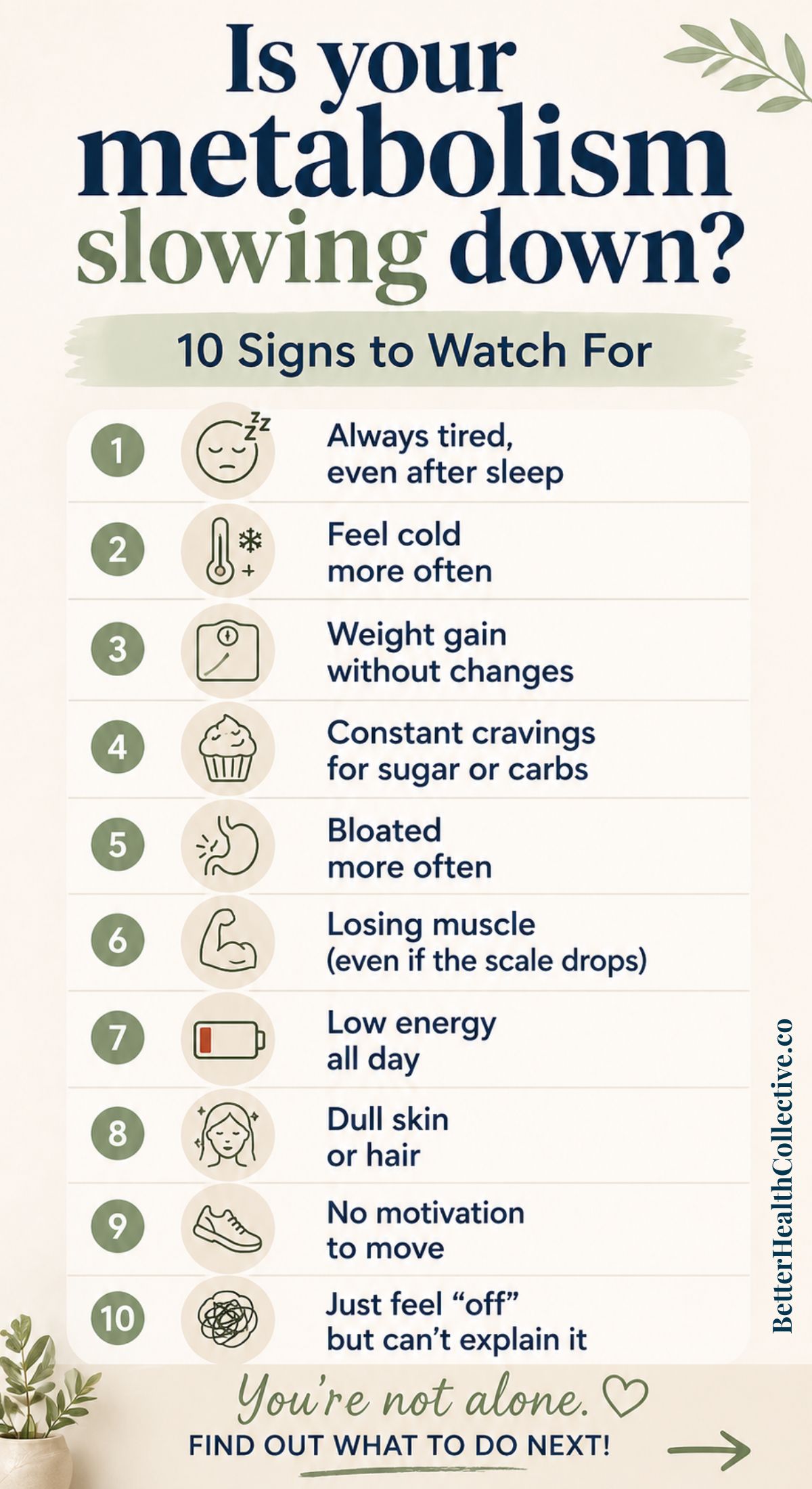
10 Signs Your Metabolism May Be Slower Than It Should Be
You Feel Tired… Even When You’ve Slept
If you’re waking up tired or crashing mid-day, your body may not be efficiently turning food into usable energy. This can happen when you’re under-fueled, dehydrated, or lacking enough protein to support stable energy levels.
When your body senses low fuel, it often slows things down to conserve energy, which can leave you feeling sluggish even after a full night of sleep.
What to do:
- Start your morning with hydration + protein
- Eat within an hour of waking if possible
- Support sleep quality (limit late-night screens, caffeine timing)
- Add a short morning walk to gently “wake up” your system
You’re Gaining Weight Without Major Changes
If your habits haven’t changed much but your weight has, your metabolism may have adapted to your current intake and activity level. This is especially common after periods of dieting or inconsistent eating.
Your body becomes more efficient at using fewer calories, which can make weight maintenance or loss feel harder.
What to do:
- Increase protein intake to support muscle
- Add resistance training 2–3 times per week
- Avoid dropping calories too low
- Track consistency rather than perfection
You Feel Cold More Often Than Usual
Feeling cold—especially in your hands and feet—can sometimes be a sign your body is conserving energy. When metabolism slows, your body may reduce heat production to preserve calories.
It’s subtle, but noticeable once you start paying attention.
What to do:
- Make sure you’re eating enough overall
- Include healthy fats in your meals
- Stay active throughout the day
- Consider checking iron or thyroid levels if this is persistent
You’re Losing Muscle (Even If the Scale Drops)
If the scale is going down but your body looks or feels softer, you may be losing muscle instead of fat. Muscle is metabolically active, so losing it can make your metabolism slower over time.
This often happens with low-protein diets or excessive cardio without strength training.
What to do:
- Aim for consistent protein intake daily
- Incorporate strength training (even light weights help)
- Consider creatine to support muscle retention
- Don’t rely on cardio alone for weight loss
Give my morning “primer” drink recipe a try! It’s filled with protein, creatine and electrolytes.
You’re Constantly Craving Sugar or Carbs
Frequent cravings can be tied to blood sugar fluctuations. When your body isn’t getting enough steady fuel, it looks for quick energy—usually in the form of sugar or refined carbs.
This can create a cycle of spikes and crashes that leaves you feeling hungry more often.
What to do:
- Eat protein early in the day
- Pair carbs with protein or fat
- Don’t skip meals if it leads to overeating later
- Stay hydrated—dehydration can mimic hunger (try some fun hydration drink recipes)
Need some high protein breakfast ideas? We have it covered! Here are 21 Easy High Protein Breakfast Ideas with 30g+ Protein.
You Hit a Weight Loss Plateau (and Stay There)
Plateaus are normal, but if you’ve been stuck for a while, your metabolism may have adapted to your routine. Your body becomes more efficient, burning fewer calories for the same activities. This is especially common after long periods of dieting.
What to do:
- Slightly increase calories to reset your baseline
- Yes, you read that correctly! INCREASE your daily calorie intake by 200-300 calories for a few days and it can help revitalize your metabolism)
- Focus on strength training
- Change your workout intensity or type
- Prioritize recovery and sleep
You Feel Bloated More Often
Sluggish digestion can sometimes go hand-in-hand with a slower metabolism. When your body is under stress or under-fueled, digestion may slow down, leading to bloating or discomfort.
Hydration and fiber play a big role here.
What to do:
- Increase fiber gradually (don’t rush it)
- Drink more water throughout the day
- Include whole, minimally processed foods
- Take time to eat slowly and mindfully
Learn a few simple tips and tricks to increase your daily fiber.
Your Skin and Hair Feel Duller Than Usual
When your body doesn’t have enough energy or nutrients, it prioritizes essential functions first. That means things like skin, hair, and nails may not get the same level of support. This can show up as dryness, dullness, or slower growth.
What to do:
- Make sure you’re getting enough protein
- Add healthy fats like avocado or olive oil
- Stay hydrated consistently
- Consider overall nutrient intake, not just calories
You Have Low Motivation to Move
If even light activity feels like a struggle, your body may be conserving energy. This can create a cycle where you move less, which further slows metabolic activity.
It’s not laziness—it’s often a signal.
What to do:
- Start small with daily movement (even 5 or 10 minute walks count!)
- Focus on consistency over intensity
- Fuel your body before activity
- Build movement into your routine (not just workouts)
You Feel “Off” But Can’t Quite Explain It
Sometimes it’s not one big symptom—it’s a collection of small things that just feel… off. Slight fatigue, low motivation, subtle changes in mood or appetite.
This often points to your body needing more support across the basics.
What to do:
- Focus on sleep, hydration, and protein first
- Reduce overly restrictive habits
- Track patterns instead of guessing
- Give your body time to respond to changes
What Actually Helps Support Your Metabolism
Let’s keep this simple and realistic.
Prioritize Protein
Helps support muscle, satiety, and energy balance
Build and Maintain Muscle
Even small amounts of strength training can make a difference over time
Stay Hydrated
Hydration impacts energy, digestion, and overall function more than most people realize
Don’t Undereat Long-Term
Your body adapts to low intake by conserving energy
Move More Throughout the Day
Daily movement adds up more than occasional intense workouts
A Simple Habit That Can Help
One of the easiest ways to support your metabolism without overthinking everything?
Start your day with hydration, protein, and electrolytes.
It’s simple, it’s quick, and it helps your body start the day with what it actually needs instead of playing catch-up later.
Final Thoughts
If you feel like you have a slow metabolism, it’s usually not because something is broken. It’s your body adapting to your environment, your habits, and your energy intake.
The good news is that small, consistent changes can make a real difference over time. You don’t need extremes—you just need to support your body in a way that feels sustainable.
And as always, if you need help, please contact your physician or medical provider!
Slow Metabolism Signs: FAQs
Can you actually “fix” a slow metabolism?
In many cases, yes—by supporting muscle, nutrition, and overall lifestyle habits.
Does metabolism slow down with age?
It can, but lifestyle factors like muscle mass and activity play a major role.
Are metabolism-boosting supplements worth it?
Most have minimal impact compared to consistent habits like nutrition and movement.
How long does it take to notice changes?
You may notice improvements in energy within days, but physical changes take longer and require consistency.
Please note: This website contains affiliate links. As an Amazon Associate, we earn from qualifying purchases at no additional cost to you.