

Please note: This website contains affiliate links. As an Amazon Associate, we earn from qualifying purchases at no additional cost to you.
Burnout doesn’t always look like lying face-down on the couch crying into a family-size bag of chips while ignoring your email notifications for three straight days.
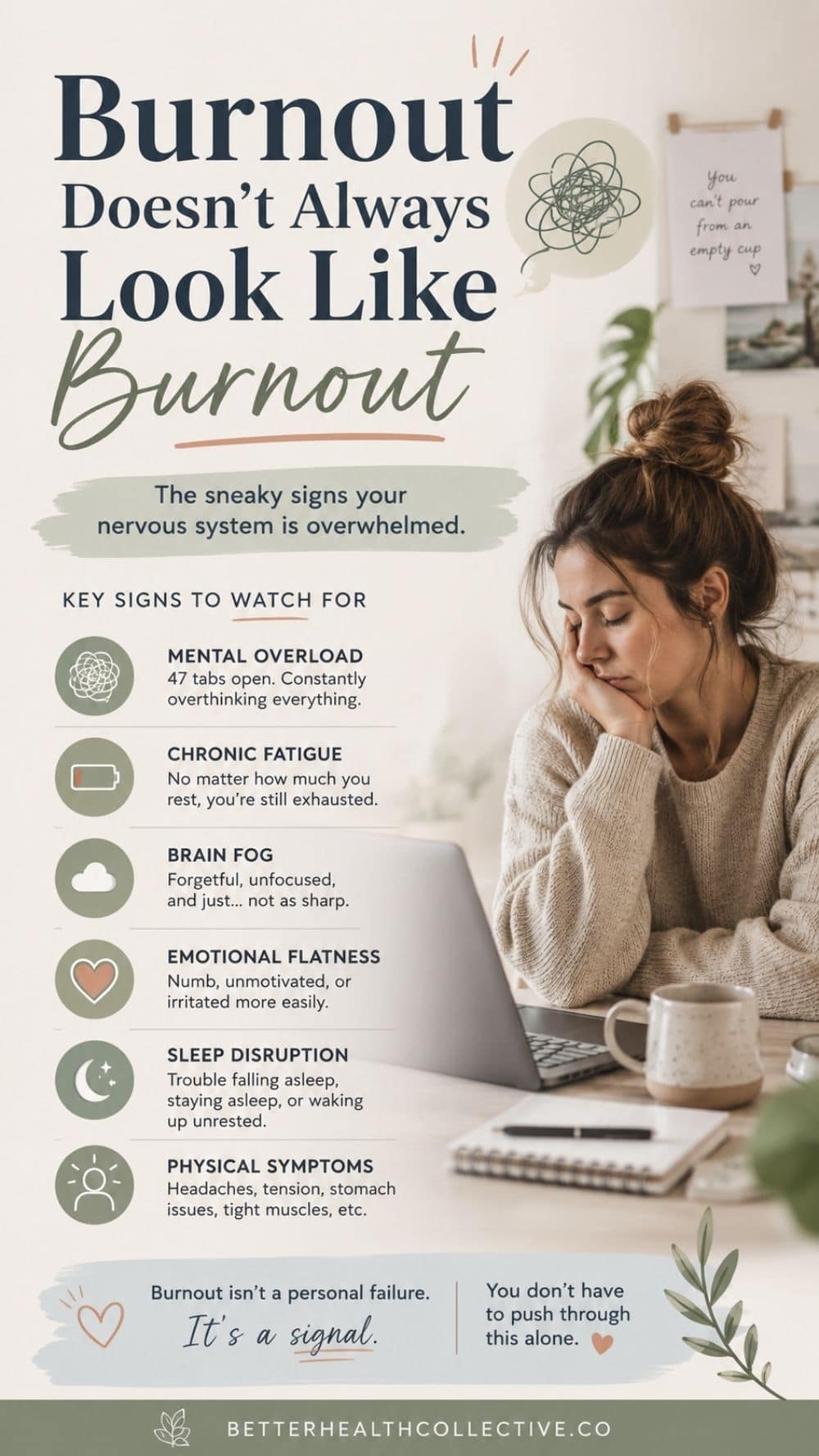
Sometimes burnout looks surprisingly… normal. You’re still getting things done. You’re still showing up. You’re still answering texts with “Haha yes totally!” while your brain quietly hums like an overheated laptop with 47 tabs open.
A lot of people assume burnout only happens to overworked executives or exhausted parents juggling seventeen schedules at once. But modern burnout has gotten sneaky. It shows up in weird little habits, emotional shifts, brain fog moments, random irritability, and physical symptoms that people brush off as “just being tired.”
And honestly? Many of us have been functioning in low-grade burnout for so long that we’ve started treating stress symptoms like personality traits.
If you’ve been feeling “off,” overwhelmed, exhausted, emotionally flat, unusually forgetful, or weirdly sensitive lately… this article might explain a few things.
What You’ll Learn
- The surprising ways burnout can show up physically and emotionally
- Why burnout doesn’t always feel dramatic
- Signs your nervous system may be overstressed
- How chronic stress affects energy, focus, sleep, and mood
- Small ways to start recovering without completely disappearing into the woods
What Burnout Actually Feels Like
Burnout is more than simply being tired after a busy week. It’s prolonged mental, emotional, and physical stress that your body hasn’t fully recovered from. Over time, your nervous system can become overloaded, making everyday tasks feel harder than they should.
And the tricky part?
Burnout doesn’t always scream.
Sometimes it whispers things like:
- “Why can’t I focus?”
- “Why am I so irritated lately?”
- “Why do simple tasks suddenly feel exhausting?”
- “Why do I need three business days to answer one text message?”
Your body often starts waving tiny red flags long before full exhaustion hits.
You Feel Tired… But Also Weirdly Wired
One of the biggest signs of burnout is feeling exhausted while simultaneously unable to relax.
You’re tired all day, but suddenly your brain wants to replay every awkward moment from 2017 the second your head hits the pillow. You may feel physically drained but mentally overstimulated, almost like your nervous system forgot how to fully power down.
Many people describe this feeling as:
- “running on adrenaline”
- “tired but restless”
- “exhausted but unable to stop thinking”
This often happens when stress hormones stay elevated for too long.
Tiny Tasks Suddenly Feel Weirdly Overwhelming
Burnout changes how your brain handles decision-making and mental load.
Things that used to feel easy can suddenly feel enormous:
- replying to emails
- making dinner
- folding laundry
- scheduling appointments
- choosing what to eat
You may find yourself procrastinating simple tasks because your brain feels overloaded before you’ve even started.
This isn’t laziness. It’s mental exhaustion.
You’re More Irritated by Noise, People, or Minor Problems
When your nervous system is overloaded, your tolerance for stimulation often drops dramatically.
This one was the most surprising when I first experienced it. Normally I’m a pretty relaxed, go-with-the-flow kind of person, but with burnout I suddenly started feeling wildly irritated over the smallest things. A few examples:
- other people chewing sounds feel aggressive
- notifications feel enraging
- someone asking “quick question!” feels personally offensive
- small inconveniences feel disproportionately upsetting
Burnout often lowers emotional resilience, making everyday stressors feel much bigger than they normally would.
You Keep Forgetting Simple Things
Chronic stress can absolutely affect memory and concentration. You might notice yourself:
- walking into rooms and forgetting why
- rereading the same sentence five times
- struggling to focus
- forgetting appointments
- losing words mid-sentence
- feeling mentally foggy
When your brain stays in survival mode too long, focus and working memory often take a hit.
Rest Doesn’t Feel Restful Anymore
One of the strangest parts of burnout is that rest sometimes stops feeling restorative.
You sleep… but still wake up tired.
You take time off… but your brain still feels heavy.
You watch TV to relax… but somehow still feel overstimulated afterward.
This can happen when your nervous system has been running in stress mode for an extended period of time.
You’ve Lost Motivation for Things You Normally Enjoy
Burnout can quietly flatten excitement, creativity, and emotional energy.
Things you usually enjoy may suddenly feel exhausting, uninteresting, hard to start or just mentally “too much”.
This doesn’t necessarily mean you’re lazy or failing. Often it means your brain is conserving energy.
You Crave Sugar, Salt, or Caffeine Constantly
When people are chronically stressed or under-recovered, cravings often increase dramatically.
Your body may start chasing:
- quick energy
- stimulation
- comfort foods
- caffeine boosts
- sugary snacks
This doesn’t mean you “lack discipline.”
Sometimes your body is simply trying to compensate for exhaustion and unstable energy.
You Feel Emotionally Numb or Disconnected
Not everyone experiences burnout as emotional overwhelm. Some people experience the opposite:
- emotional flatness
- detachment
- numbness
- lack of excitement
- feeling disconnected from daily life
You may feel like you’re simply “going through the motions.” This is more common than people realize.
You’re Constantly Doom Scrolling Even Though It Makes You Feel Worse
Burnout often creates a strange combination of:
- exhaustion
- overstimulation
- avoidance
- mental fatigue
Many people end up stuck in cycles of:
- scrolling
- consuming content
- zoning out
- avoiding tasks
- seeking distraction
Not because they’re lazy…
…but because their brain is trying to escape stress temporarily.
Your Body Feels Tense All the Time
Burnout doesn’t only live in the mind. It often shows up physically through:
- jaw clenching
- headaches
- neck tension
- shoulder tightness
- digestive issues
- shallow breathing
- feeling physically “on edge”
Your body keeps score when stress piles up for too long.
Small Ways to Start Recovering From Burnout
If any of these signs sounded painfully familiar, the goal is not to completely overhaul your life overnight. Tiny nervous-system-friendly habits are usually far more sustainable than dramatic “fix your life” routines.
Some helpful starting points:
- getting outside for short walks
- eating enough protein and regular meals
- reducing overstimulation before bed
- taking breaks from constant notifications
- prioritizing sleep consistency
- building small moments of actual rest into your day
- saying no more often without writing a 12-page apology email
And perhaps most importantly:
stop treating exhaustion like a personality trait.
Final Thoughts
Burnout has become so normalized that many people don’t even recognize it anymore until their body practically forces them to slow down.
If you’ve been feeling unusually exhausted, overstimulated, emotionally flat, forgetful, irritable, or just not quite like yourself lately, your body may be asking for recovery — not more pressure.
You do not need to “earn” rest by completely falling apart first.
Sometimes the healthiest thing you can do is notice the signs early and start giving your nervous system a little breathing room before burnout turns into something bigger.
Burnout: FAQs
Is burnout the same as stress?
Not exactly. Stress is usually temporary, while burnout happens after prolonged stress without enough recovery. Burnout often includes emotional exhaustion, mental fatigue, and reduced motivation.
Can burnout cause physical symptoms?
Yes. Burnout can contribute to headaches, fatigue, digestive issues, muscle tension, sleep problems, brain fog, and changes in appetite or cravings.
How long does burnout recovery take?
It varies widely depending on the person, stress levels, lifestyle, and support system. Small consistent changes often help more than trying to “fix everything” all at once.
Can burnout affect sleep?
Absolutely. Many people with burnout feel exhausted but struggle to fully relax or stay asleep because their nervous system remains overstimulated.
What’s the difference between burnout and laziness?
Laziness is avoiding effort without distress. Burnout usually involves exhaustion, overwhelm, mental fatigue, and difficulty functioning despite wanting to feel better.
Articles That Might Help…
- Signs Your Cortisol Is Out of Control
- Easy Electrolyte Drink Recipes
- Cortisol-Lowering Drinks to Calm Your Nervous System and Stop the Stress Cycle
- Magnesium Body Scrub for Better Sleep
- How to Lower Cortisol Naturally – Reset Guide
- High Protein Snacks Under 250 Calories
SHARE THIS WITH A FRIEND
Please note: This website contains affiliate links. As an Amazon Associate, we earn from qualifying purchases at no additional cost to you.