


Please note: This website contains affiliate links. As an Amazon Associate, we earn from qualifying purchases at no additional cost to you.
If you’ve spent any time exploring natural wellness remedies, you’ve probably heard people talk about magnesium spray.
And while magnesium spray can be helpful, I’ll be honest — it isn’t always the most comfortable option. It can sometimes sting or tingle, especially if your skin is dry or sensitive.
That’s actually why I started experimenting with magnesium lotion.
Magnesium lotion gives you the potential benefits of topical magnesium, but in a much gentler, more skin-friendly form. Instead of that sharp “whoa, that burns” feeling some sprays can cause, lotion feels soothing and moisturizing — more like a nourishing body butter than a mineral treatment.
It’s also incredibly easy to make at home. If you can melt a few ingredients and stir them together, you can make magnesium lotion.
Let me show you exactly how to do it….
Do Use Magnesium Lotion?
Magnesium plays a role in hundreds of processes throughout the body, including muscle function, nerve signaling, and relaxation.
Because of that, magnesium often comes up when people are dealing with things like:
• tight or tired muscles
• restless legs
• tension headaches
• trouble winding down at night
• everyday stress
Some people prefer topical magnesium instead of supplements because it feels gentler on the stomach, and you can apply it exactly where you want it.
For example, if your calves feel tight after a workout or your shoulders carry the stress of the day, applying magnesium lotion to those areas can feel incredibly soothing.
Personally, I love the idea of turning it into a small nighttime ritual — something calming that helps signal to your body that the day is winding down.
And honestly, sometimes that simple moment of slowing down is half the benefit.
Magnesium Lotion vs. Magnesium Spray
Magnesium spray is basically magnesium chloride dissolved in water.
It works, but it can sometimes cause a stinging or tingling sensation — especially on dry or sensitive skin.
Magnesium lotion softens that effect by blending magnesium with nourishing ingredients like oils and butters. Instead of feeling like a mineral spray, it feels more like a rich body lotion.
I find that the lotion version tends to feel:
• gentler on the skin
• more moisturizing
• easier to work into a daily routine
• a lot more relaxing to apply
If you’re curious about magnesium spray as well, it’s very simple to make and I’ll link to that guide here. But if you’re just getting started, lotion is often the most comfortable place to begin.
Ingredients for DIY Magnesium Lotion
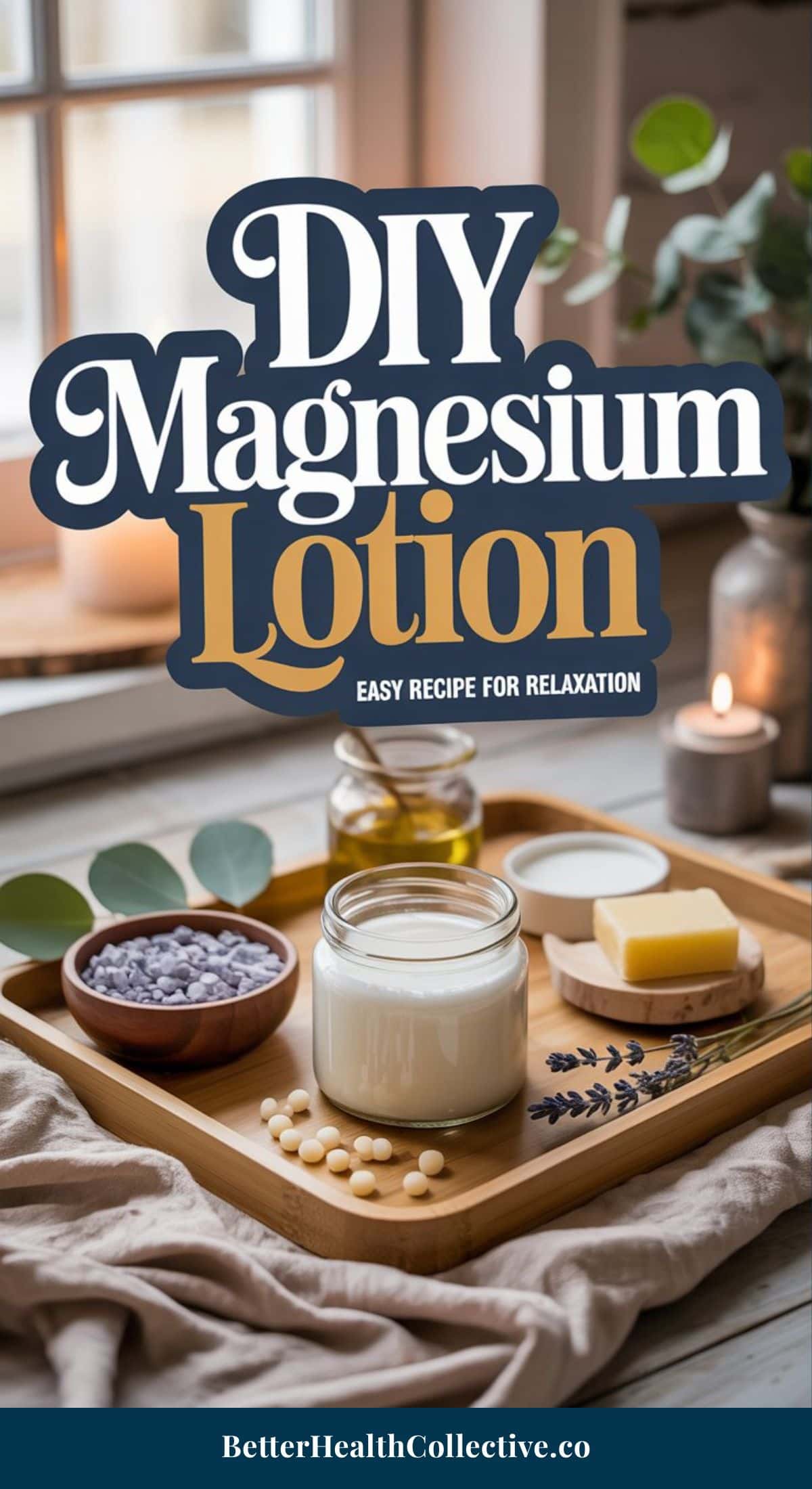
The ingredient list for magnesium lotion is surprisingly simple. If you enjoy making natural skincare products, you may already have some of these at home.
You’ll need:
• ½ cup magnesium chloride flakes
• ½ cup distilled water
• ¼ cup shea butter
• 2 tablespoons coconut oil
• 1 tablespoon beeswax pellets
• Optional: 10–15 drops lavender or chamomile essential oil
Magnesium chloride flakes are often sold as magnesium bath flakes and are commonly used for topical magnesium products.
They dissolve easily and work perfectly for this recipe.
Step-by-Step: How to Make Magnesium Lotion
Step 1: Make the magnesium oil
Despite the name, magnesium oil isn’t actually an oil. It’s simply magnesium chloride dissolved in water.
In a heat-safe bowl, combine:
½ cup magnesium chloride flakes
½ cup distilled water
Warm the mixture gently and stir until the flakes dissolve completely.
Set the mixture aside and allow it to cool.
Step 2: Melt the moisturizing ingredients
Next, we’ll prepare the lotion base.
In a double boiler — or a heat-safe bowl placed over a saucepan of simmering water — melt the following ingredients together:
• shea butter
• coconut oil
• beeswax pellets
Stir until everything is smooth and fully melted.
Once melted, remove from heat.
Step 3: Combine the mixtures
Once both mixtures have cooled slightly, slowly pour the magnesium oil into the melted butter mixture while stirring continuously. This is where the lotion starts to come together.
Step 4: Blend for a creamy texture
For the best texture, use a hand mixer or immersion blender for about 1–2 minutes.
Blending helps emulsify the ingredients so the lotion becomes smooth and creamy instead of separating.
If you’re adding essential oils, this is the time to mix them in. Lavender or chamomile are lovely choices if you’re planning to use the lotion as part of an evening routine.
Step 5: Let it cool
Pour the mixture into a clean glass jar and allow it to cool completely.
As it cools, the lotion will thicken into a soft, creamy texture.
How to Use Magnesium Lotion
You can apply magnesium lotion anytime you like, but one of my favorite ways to use it is as part of an evening wind-down routine.
After a long day, take a small amount of lotion and gently massage it into areas that tend to carry tension — your shoulders, neck, calves, or the bottoms of your feet.
The act of slowing down for a minute, breathing deeply, and giving tired muscles a little attention can feel incredibly calming.
Sometimes that small ritual is exactly what helps your body shift out of “go mode” and into relaxation.
A little goes a long way, so start with a small amount and massage it in until absorbed.
A Few More Quick TIps
A Quick Note About Skin Sensitivity
Please know that topical magnesium can sometimes cause a slight tingling sensation — especially the first time you use it. If that happens, don’t worry. It’s usually temporary and often fades as your skin gets used to it. If your skin feels irritated, here are a few easy adjustments you can try:
• Use a smaller amount
• Apply the lotion to thicker skin areas like your feet or calves
• Mix a small amount of magnesium lotion with your regular moisturizer
And if you have sensitive skin, it’s always a good idea to test a small patch first before applying it more broadly.
How to Store Homemade Magnesium Lotion
Because this lotion uses natural ingredients and no preservatives, it’s best stored in a clean glass jar with a lid.
Keep it in a cool, dry place and plan to use it within 1 to 2 months for the best quality.
If your home is warm, storing it in the refrigerator can help maintain its texture.
Does Magnesium Absorb Through the Skin?
This is one of the most common questions people ask about topical magnesium.
Some small studies suggest magnesium may be absorbed through the skin, but research in this area is still ongoing.
That said, many people enjoy using magnesium lotion simply because of how relaxing it feels — especially when massaged into tired muscles at the end of the day.
If you’re concerned about magnesium levels or possible deficiency, it’s always a good idea to speak with a healthcare professional.
If you like this recipe, you’ll also love our Homemade Magnesium Body Butter.
Frequently Asked Questions About DIY Magnesium Lotion
What are magnesium flakes?
Magnesium flakes are typically made from magnesium chloride, a naturally occurring mineral that dissolves easily in water. They’re commonly used for things like magnesium baths, DIY magnesium spray, and homemade magnesium lotion recipes.
When dissolved in water, magnesium flakes create what’s often called magnesium oil, which is the base used in many topical magnesium products.
What is magnesium lotion used for?
Magnesium lotion is commonly used as a topical way to incorporate magnesium into a daily wellness routine. Many people enjoy applying it when they’re looking to relax tired muscles, ease everyday tension, or wind down in the evening.
Because the lotion is massaged into the skin, it can feel especially soothing on areas that tend to hold stress, like the shoulders, calves, neck, or the bottoms of the feet.
For many people, the biggest benefit is simply turning it into a small self-care ritual at the end of the day — taking a moment to slow down, breathe, and let the body relax.
Is magnesium spray or magnesium lotion better?
Both magnesium spray and magnesium lotion use the same basic ingredient — magnesium chloride — but they feel a little different when applied. Magnesium spray is essentially magnesium chloride dissolved in water. It absorbs quickly, but it can sometimes cause a tingling or stinging sensation on sensitive skin.
Magnesium lotion blends magnesium with moisturizing ingredients like shea butter and oils, which makes it feel much gentler and more hydrating. Many people prefer the lotion because it doubles as a skincare product while still delivering topical magnesium. If you’re just getting started with topical magnesium, lotion is often the more comfortable option.
Want to dry the DIY Magnesium Spray? Here’s an easy recipe.
Is magnesium lotion better than taking a magnesium supplement?
Magnesium lotion and magnesium supplements simply work in different ways.
Magnesium supplements are taken orally and are often used when someone is trying to increase their overall magnesium intake through diet and supplementation.
Magnesium lotion, on the other hand, is applied directly to the skin. Many people enjoy using it as part of a relaxation routine, especially when massaged into areas that feel tight or tired.
If you’re concerned about magnesium levels or considering supplementation, it’s always a good idea to speak with a healthcare professional who can help guide you based on your individual needs.
Can magnesium lotion help with sleep?
Many people enjoy using magnesium lotion as part of their evening wind-down routine. Massaging lotion into areas like the feet, calves, or shoulders can feel relaxing at the end of the day.
While research on topical magnesium is still developing, magnesium itself plays a role in muscle relaxation and nervous system function, which is one reason it often comes up in conversations about sleep and nighttime routines.
Where should I apply magnesium lotion?
You can apply magnesium lotion anywhere on the body, but some areas tend to feel especially soothing. Common spots include: bottoms of the feet, calves, shoulders and neck, lower back. These areas often carry tension, and gently massaging lotion into the skin can feel incredibly relaxing.
Can magnesium lotion sting when applied?
It can sometimes cause a mild tingling sensation, especially if it’s your first time using topical magnesium. If you notice that feeling, try using a smaller amount, applying it to thicker skin areas like the feet, or mixing the magnesium lotion with a regular moisturizer. The sensation often becomes less noticeable as your skin adjusts.
How long does homemade magnesium lotion last?
Because this DIY magnesium lotion recipe uses natural ingredients without preservatives, it’s best used within about 1 to 2 months. Store it in a clean jar with a lid and keep it in a cool, dry place. If your home runs warm, you can store it in the refrigerator to help maintain its texture.
Can I use different oils or butters in this magnesium lotion recipe?
Yes, absolutely. One of the fun parts of making your own magnesium cream is that you can customize it. For example, you could swap or add ingredients like:
• cocoa butter
• almond oil
• jojoba oil
• mango butter
Just keep the basic balance of magnesium oil and moisturizing ingredients similar so the lotion maintains a smooth texture.
Final Thoughts
Magnesium lotion is one of those simple DIY wellness projects that quickly becomes part of everyday life. It’s easy to make, gentle on the skin, and customizable depending on the oils or scents you prefer.
But what I love most about it is the ritual it creates.
Taking a minute to slow down, massage tired muscles, and signal to your body that it’s time to relax can make a bigger difference than we often realize.
And sometimes, those small moments of self-care are exactly what help us feel a little more balanced at the end of a long day.
Please note: This website contains affiliate links. As an Amazon Associate, we earn from qualifying purchases at no additional cost to you.