Please note: This website contains affiliate links. As an Amazon Associate, we earn from qualifying purchases at no additional cost to you.
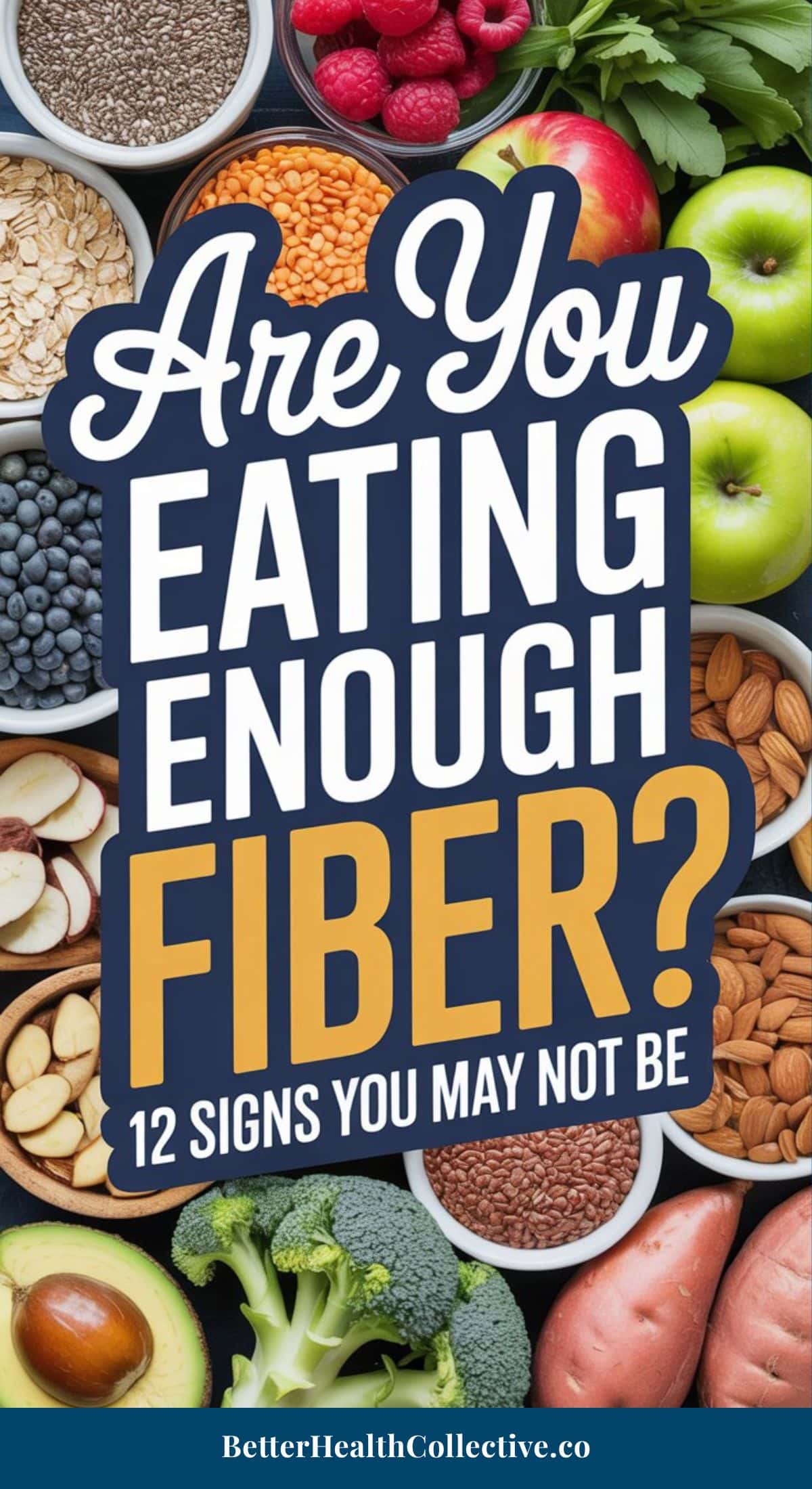
Fiber is one of those nutrients that most people know is important — but many people still don’t get enough of it.
According to general nutrition guidelines, most adults should aim for about 25–38 grams of fiber per day, depending on age and gender. Yet studies consistently show that many people consume closer to 10–15 grams daily.
Because fiber plays a major role in digestion, blood sugar balance, and feeling full after meals, not getting enough can affect your body in subtle ways. Some signs are obvious, while others are easy to overlook.
If any of the following symptoms sound familiar, your body may be asking for more fiber.
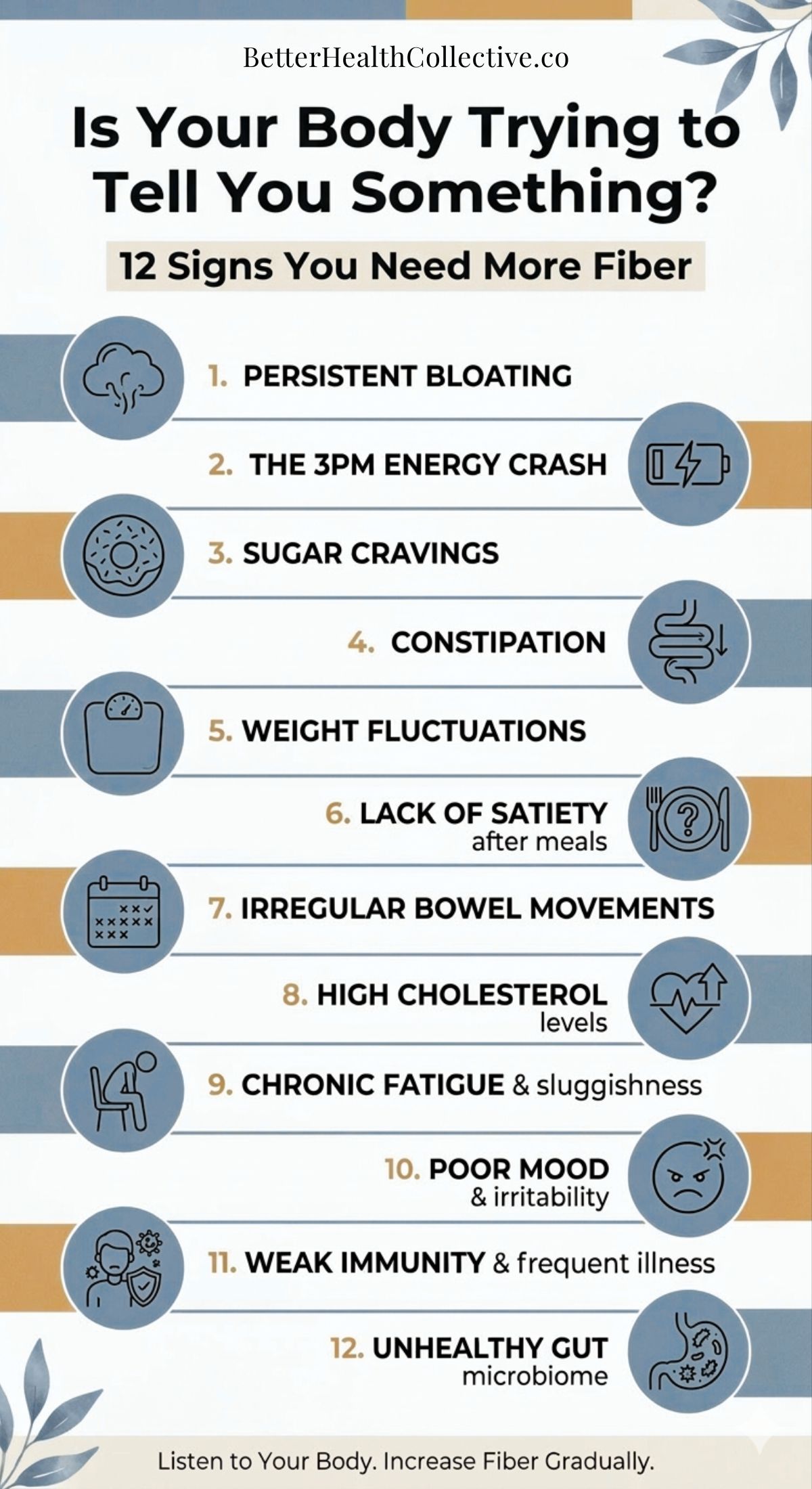
Signs You May Need More Fiber in Your Diet (Low Fiber Symptoms)
Here are the big red flags that you need to add some more fiber to your life. If you are feeling any of these symptoms, be sure to keep reading because we have some simple tips to help get you back on track.
1. You’re Frequently Constipated
One of the most well-known signs of low fiber intake is constipation.
Fiber adds bulk to stool and helps food move through the digestive system more efficiently. Without enough fiber, digestion can slow down, making bowel movements less frequent or more difficult.
Foods like beans, oats, berries, and whole grains are excellent ways to support regular digestion.
2. You Feel Hungry Shortly After Eating
If you feel hungry again within an hour or two after eating, your meals may not contain enough fiber.
Fiber slows digestion and helps you stay satisfied longer. Meals that lack fiber — especially those high in refined carbohydrates — tend to digest quickly and leave you feeling hungry again soon after.
Adding fiber-rich foods like chia seeds, lentils, vegetables, and whole grains can help improve satiety.
3. Your Blood Sugar Feels Like a Rollercoaster Ride
Energy spikes followed by sudden crashes can sometimes be linked to low fiber intake.
Fiber helps slow the absorption of carbohydrates into the bloodstream, which can help stabilize blood sugar levels. Without enough fiber, carbohydrates may digest quickly, leading to more dramatic swings in energy.
Including fiber alongside carbohydrates can help keep energy levels more consistent throughout the day.
4. You Struggle With Frequent Sugar Cravings
Fiber can play a helpful role in managing cravings.
When meals lack fiber, they tend to digest faster and may lead to fluctuations in blood sugar. These fluctuations can sometimes trigger cravings for sweets or quick sources of energy.
Adding fiber-rich foods like berries, oats, apples, and beans can help promote steadier energy.
5. You Often Feel Bloated After Meals
It may seem surprising, but low fiber intake can contribute to bloating.
When digestion slows due to low fiber intake, food may remain in the digestive tract longer, which can lead to discomfort or bloating.
Gradually increasing fiber intake — along with drinking enough water — may help support smoother digestion.
6. You Rarely Feel Fully Satisfied After Meals
Fiber helps create a sense of fullness.
High-fiber foods add bulk to meals without adding excessive calories, which can help promote satiety. If meals feel small or unsatisfying, adding fiber-rich foods like vegetables, legumes, or whole grains may help.
7. Your Cholesterol Levels Are Higher Than Ideal
Soluble fiber can help support heart health.
Foods like oats, beans, lentils, and flax seeds contain soluble fiber that can help bind cholesterol in the digestive tract and support healthy cholesterol levels.
This is one reason fiber-rich diets are often associated with improved cardiovascular health.
8. Your Diet Is Low in Whole Plant Foods
A simple indicator of low fiber intake is a lack of plant-based foods in your diet. Fiber is found primarily in foods such as:
- fruits
- vegetables
- beans
- whole grains
- nuts and seeds
If most meals rely heavily on refined foods or animal products, fiber intake may be lower than recommended.
9. You Experience Irregular Digestion
Healthy digestion typically involves consistent, predictable bowel habits.
When fiber intake is too low, digestion may become irregular. Some people may alternate between constipation and loose stools as the digestive system struggles to maintain balance.
A fiber-rich diet can help support a more consistent digestive rhythm.
10. You Rely Heavily on Highly Processed Foods
Many ultra-processed foods are naturally low in fiber.
Foods such as white bread, sugary snacks, packaged desserts, and refined cereals often contain very little fiber compared with whole-food alternatives.
Choosing whole grains, fruits, vegetables, and legumes more often can naturally increase fiber intake.
11. Your Meals Lack Texture and Variety
Fiber-rich foods often add texture and volume to meals.
If meals frequently consist of soft or refined foods — like white pasta, white rice, or processed snacks — they may not contain enough fiber.
Foods like beans, vegetables, seeds, and whole grains help add both texture and nutritional value.
12. You’re Not Reaching Daily Fiber Recommendations
Sometimes the clearest sign is simply looking at your daily intake.
Most adults should aim for roughly:
- Women: about 25 grams of fiber per day (many experts are now recommending 30+ grams)
- Men: about 38 grams per day
If your typical meals don’t include fiber-rich foods regularly, you may fall short of these targets.
How Can You Start Getting More Fiber in Your Diet?
After reading about all the signs and symptoms and you’re pretty sure you’re not getting enough fiber, we have a simple plan for you! Nothing complicated, no special product to buy. Just simply start by gradually incorporating more foods such as:
- oats
- berries
- beans
- lentils
- chia seeds
- apples
- vegetables
- whole grains
Increasing fiber slowly — and drinking plenty of water — can help your body adjust comfortably.
Over time, you’ll probably be amazed at how these small changes can make you feel better. From better digestion to your energy levels, less bloating and fewer food cravings.
The Heavy Hitters: High Fiber Foods Cheat Sheet
Many whole foods naturally contain fiber, but the amounts can vary widely depending on the food and serving size. The table below highlights some of the most common high-fiber foods and approximately how much fiber they contain per serving.
Even adding one or two of these foods to each meal or snack can quickly help you reach your daily fiber goals.
| Food | Serving Size | Fiber (grams) |
|---|---|---|
| Chia Seeds | 2 tablespoons | 10g |
| Lentils (cooked) | 1 cup | 15g |
| Black Beans (cooked) | 1 cup | 15g |
| Chickpeas | 1 cup | 12g |
| Raspberries | 1 cup | 8g |
| Pear (with skin) | 1 medium | 6g |
| Apple (with skin) | 1 medium | 4–5g |
| Avocado | 1 medium | 10g |
| Oats | 1 cup cooked | 4g |
| Flax Seeds (ground) | 2 tablespoons | 5g |
| Almonds | 1 ounce (about 23 almonds) | 3.5g |
| Edamame | 1 cup | 8g |
| Broccoli | 1 cup cooked | 5g |
| Sweet Potato (with skin) | 1 medium | 4g |
If you need some ideas on how to sneak in some of these high fiber foods, here are a few helpful guides and recipe ideas…
START HERE: How to Reach 30g of Fiber Daily (Without the Bloat)
Then check out these easy recipes:
Super Simple High Fiber Recipes: Delicious Ways to Hit Your 30g+ Daily Fiber Goal
High Protein + High Fiber Dinner Ideas
High Fiber Breakfast Ideas to Reduce Sugar Cravings & Keep You Full
Frequently Asked Questions
How much fiber should I be eating each day?
Most health organizations recommend about 25 to 38 grams of fiber per day, although many people fall well short of these targets. The average adult in the United States typically eats only about 15 grams of fiber daily.
Can eating more fiber help with weight loss?
Absolutely! Fiber slows your digestion and helps you feel fuller for longer periods of time after eating. This can naturally reduce overeating and help control cravings, making it easier to maintain a healthy calorie balance.
What happens if you suddenly eat too much fiber?
Increasing fiber too quickly can sometimes cause bloating, gas, or digestive discomfort. If you are currently eating very little fiber, it’s best to increase your intake gradually and drink plenty of water to help your digestive system adjust.
Is fiber important for gut health?
Absolutely. Fiber acts as food for beneficial bacteria in your gut, helping support a healthy microbiome. A balanced gut microbiome is linked to improved digestion, better immune function, and even better metabolic health.
Can you get enough fiber without supplements?
Most people can get plenty of fiber from whole foods like fruits, vegetables, beans, and whole grains. However, if it’s difficult to meet daily fiber goals through food alone, some people choose to use fiber supplements as an additional option.
Final Thoughts
If you’ve been nodding your head while reading through some of these signs, you’re definitely not alone. A lot of people assume they’re getting enough fiber simply because they eat “pretty healthy.” But when you actually start paying attention to how much fiber is in your meals, it’s surprisingly easy to fall short.
The modern diet just isn’t very fiber-friendly. Between busy schedules, grab-and-go foods, and a lot of refined carbs, many of us end up eating far less fiber than our bodies really need.
The good news is that fixing it doesn’t require a total diet overhaul.
Sometimes it’s as simple as adding a handful of berries to your breakfast, tossing some beans into a salad, or choosing whole grains instead of refined ones. Small changes like these can add up quickly.
And when you do start getting enough fiber, people often notice some pretty nice side effects — better digestion, fewer energy crashes, feeling fuller after meals, and sometimes even easier weight management.
So if any of the signs in this article sounded a little too familiar, it might be worth taking a closer look at your fiber intake. Your gut, your energy levels, and honestly your whole body will probably appreciate the extra support.
SAVE THIS PIN FOR LATER!
Please note: This website contains affiliate links. As an Amazon Associate, we earn from qualifying purchases at no additional cost to you.