


Please note: This website contains affiliate links. As an Amazon Associate, we earn from qualifying purchases at no additional cost to you.
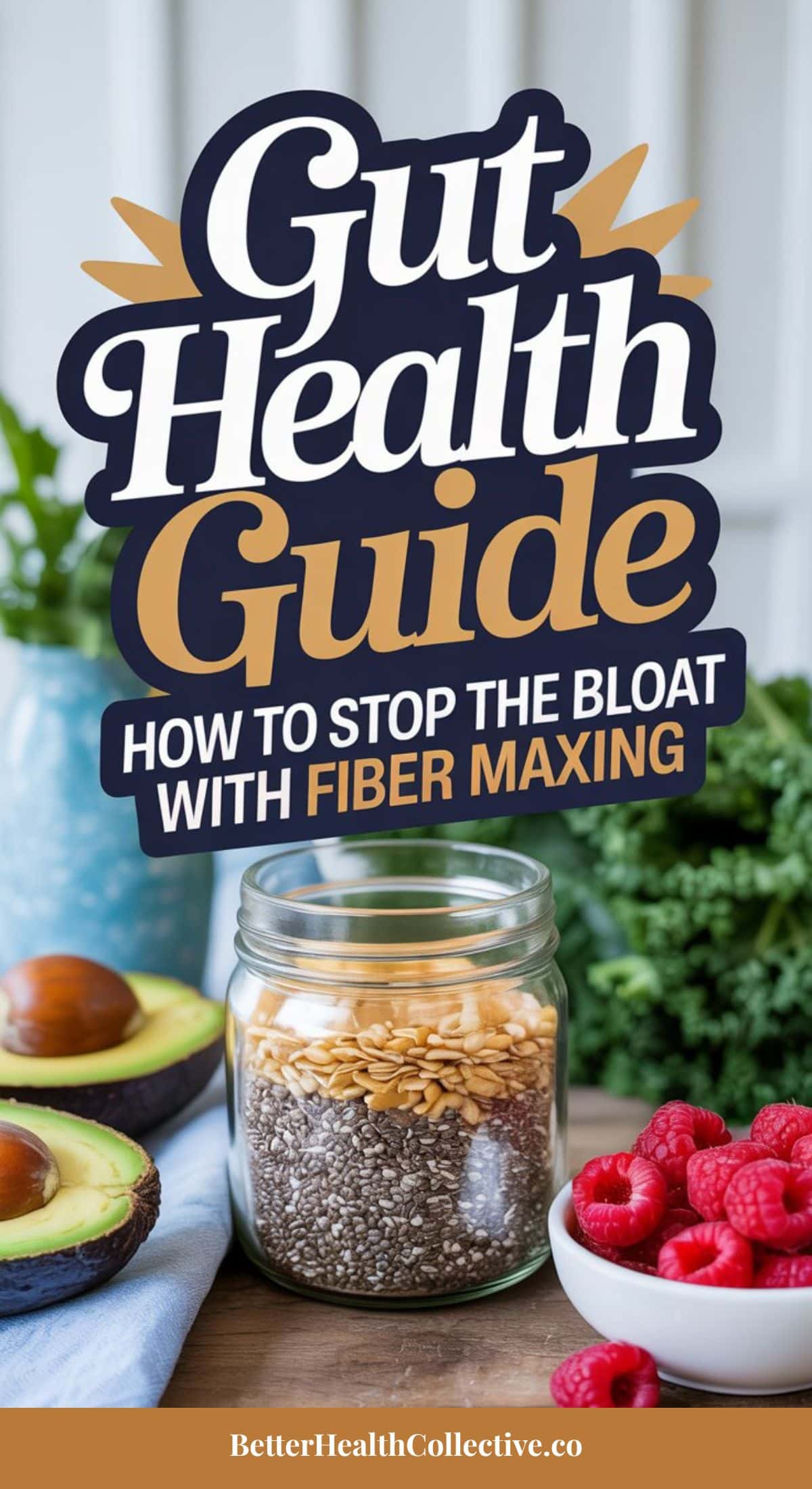
We’ve spent years obsessing over macros like protein and carbs, but there’s a “missing macro” that 95% of us are failing to hit. Welcome to the Fiber Maxing (aka “fibermaxxing”) movement.
Fiber isn’t just for your grandparents’ morning bran flakes; it is the ultimate fuel for your microbiome, the secret to stable blood sugar, and your body’s natural detox system.
If you’re ready to move from the average 15g a day to the “Gold Standard” of 30g+, this is your roadmap.
THE ROADMAP: Simple Steps to 30g Fiber Daily
1. The Golden Rule: Low and Slow
Before we dive into the seeds and legumes, we have to talk about the “Fiber Flu.” If you jump from 10g to 40g of fiber overnight, your gut will rebel (think: intense bloating and cramping).
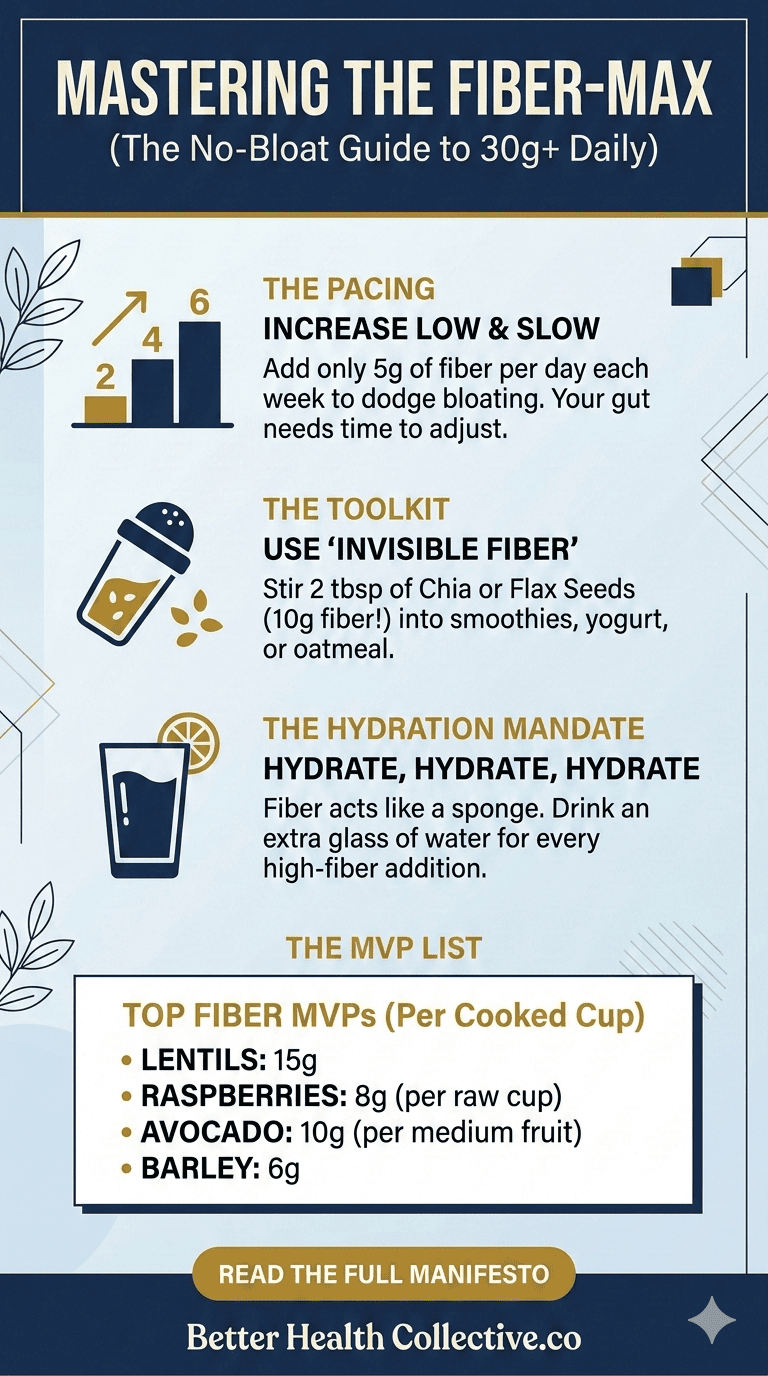
- The Pace: Increase your intake by only 5g per day each week.
- The Hydration Mandate: Fiber acts like a sponge. Without water, it turns into a brick. Aim for an extra glass of water for every high-fiber meal you add.
2. The Three Pillars of Fiber-Maxing Strategy
You don’t need to eat a bucket of broccoli to max your fiber. It’s about micro-additions that add up to macro-results.
I. The “Seeding” Technique
Think of seeds as “Fiber Sprinkles.” They are virtually tasteless but pack a massive nutritional punch.
- The Goal: Add 1-2 tablespoons of Chia, Flax (ground), or Hemp hearts to everything.
- Where to hide them: Smoothies, oatmeal, yogurt, salad dressings, and even folded into turkey burger patties.
- The Payoff: 2 tbsp of Chia seeds = 10g of fiber. You’re a third of the way to your goal before you’ve even finished breakfast.
II. The “Skin-On” Rule
The vast majority of a plant’s fiber (and antioxidants) lives in the skin.
- The Rule: If the skin is edible, leave it on. This goes for potatoes (sweet and white), apples, cucumbers, and carrots.
- The Payoff: A peeled apple has about 2g of fiber; with the skin, it jumps to 4.5g.
III. The “Legume Swap”
Meat is great for protein, but it has zero fiber.
- The Strategy: Use the 50/50 Method. Making Tacos? Use half ground beef and half black beans. Making Bolognese? Use half meat and half red lentils.
- The Payoff: You maintain the flavor you love while sneaking in an extra 7-8g of fiber per serving.
3. The “Fiber Maxing” Essential Pantry
If your pantry is stocked with these “MVPs,” hitting your 30g goal becomes effortless:
| The MVP | Why it Wins |
| Raspberries | The highest fiber fruit (8g per cup). |
| Lentils | The king of legumes (15g per cooked cup). |
| Avocados | High in healthy fats and fiber (10g per medium fruit). |
| Barley/Farro | Ancient grains that crush white rice (6g+ per cup). |
4. Troubleshooting: “Am I doing this right?”
- The “Sink” Test: If you feel heavy or “backed up,” you’ve likely increased your fiber too fast or your water intake too slow.
- The Energy Shift: Within 14 days of consistent fiber-maxing, most people report a total lack of “3 PM crashes” because their blood sugar is finally stabilized.
Frequently Asked Questions: Mastering the Fiber-Max
Q: Is it possible to eat too much fiber?
A: While rare, yes. If you exceed 70g+ per day, you might experience “fiber backup,” where the digestive tract slows down too much. For most people, the goal is a “sweet spot” between 30g and 45g. If you feel persistently bloated or dehydrated, scale back and focus on your water intake.
Q: Does fiber “cancel out” calories or carbs?
A: Not exactly, but it does change how they affect you. Fiber slows down the absorption of sugar (glucose) into your bloodstream. This prevents insulin spikes and keeps you full longer, which naturally helps with weight management without the need for restrictive “calorie counting.”
Q: What’s the difference between Soluble and Insoluble fiber? Do I need both?
A: Think of Soluble fiber (oats, beans, apples) as a “gel” that lowers cholesterol and slows digestion. Think of Insoluble fiber (whole grains, nuts, vegetable skins) as a “broom” that keeps things moving.
- The Pro-Tip: Don’t stress about the math. If you eat a variety of whole plants, you’ll naturally get the perfect mix of both.
Q: Why am I so gassy after eating lentils or beans?
A: Your gut bacteria are essentially “having a party” because they finally have the fuel they love. This creates gas as a byproduct.
- The Fix: Rinse canned beans thoroughly to remove excess sugars (oligosaccharides), or try a “digestive enzyme” supplement while your microbiome adjusts. Within 2 weeks of consistent eating, the gas usually subsides.
Q: Can I just take a fiber supplement instead?
A: Supplements (like powders or gummies) are a great “bridge,” but they lack the vitamins, minerals, and antioxidants found in whole foods. Think of a supplement as a “multivitamin” and whole-food fiber as the “main course.” Use the supplement to hit your goal on busy days, but aim for real food first.
Q: Does cooking vegetables reduce their fiber?
A: Nope! While cooking may slightly change the type of fiber or make it easier to digest, the total amount of fiber remains largely the same. In fact, because cooking shrinks veggies (like spinach), you might actually end up eating more fiber because you can fit more on your plate!
Conclusion: Your Gut is a Garden
Fiber-maxing isn’t a restrictive diet; it’s an additive lifestyle. By feeding your gut microbes the fiber they crave, you’re cultivating a healthier, more energetic version of yourself.
Ready to get cooking?
Please note: This website contains affiliate links. As an Amazon Associate, we earn from qualifying purchases at no additional cost to you.