
Please note: This website contains affiliate links. As an Amazon Associate, we earn from qualifying purchases at no additional cost to you.
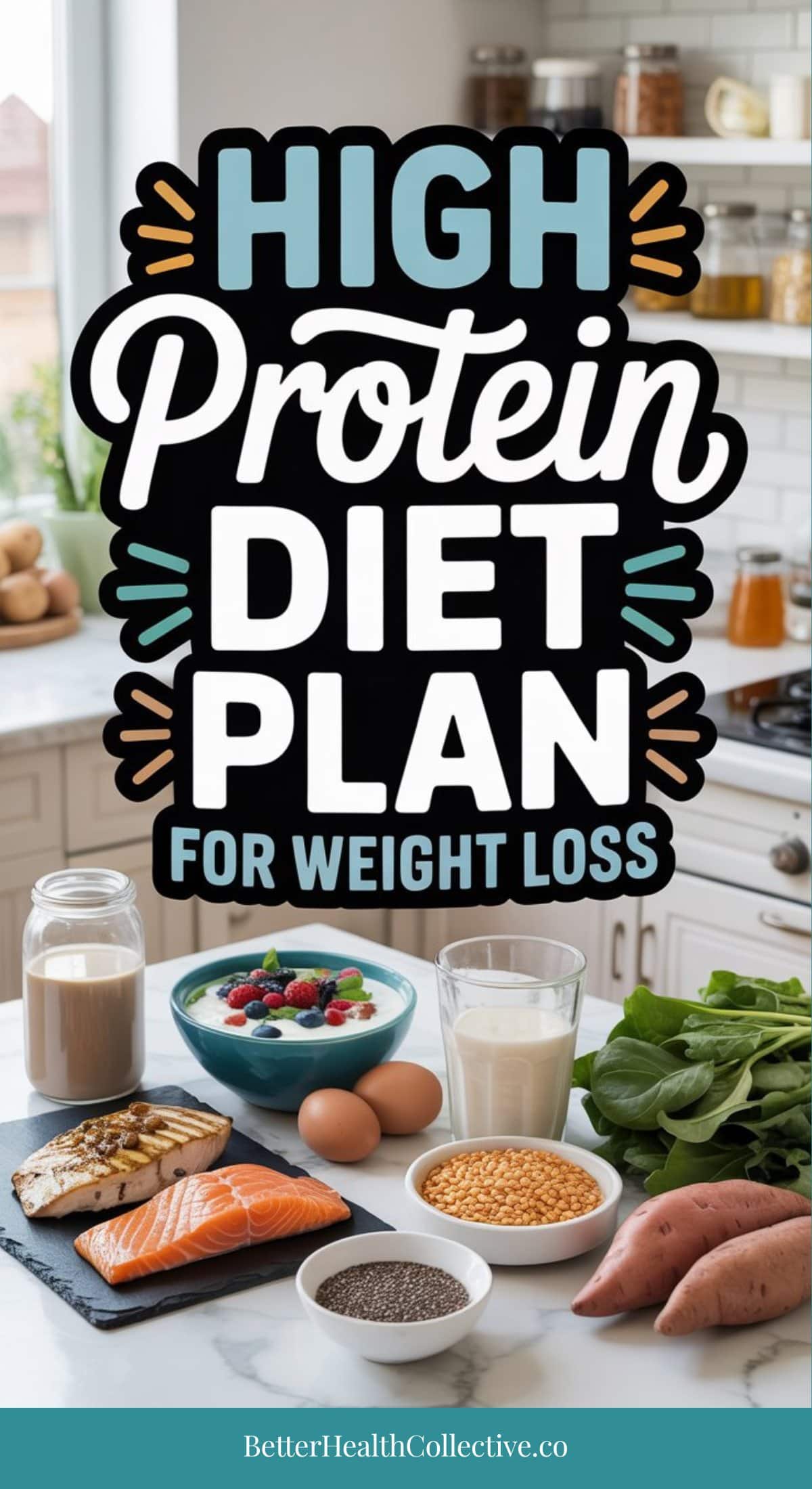
If you’ve been trying to lose fat and feel like you’re constantly hungry, low-energy, or losing muscle instead of body fat, protein might be the missing piece.
The high protein diet for fat loss isn’t a trend — it’s one of the most consistently supported strategies in nutrition research. When structured correctly, a high protein approach can help preserve muscle, improve fullness, stabilize appetite, and make a calorie deficit more sustainable.
But here’s the important part:
A high protein diet is not just “eat more chicken.”
It’s not unlimited calories.
And it’s not a magic shortcut.
Fat loss still requires a calorie deficit. The difference is that protein helps protect your body composition while you’re in that deficit — meaning you’re more likely to lose fat instead of muscle.
In this beginner guide, we’ll walk through the science, the practical framework, and exactly how to implement a high protein diet for fat loss without overcomplicating it.
What You’ll Learn:
- What a high protein diet for fat loss actually means
- Why protein supports muscle preservation and body recomposition
- How protein affects metabolism and calorie burn
- How protein improves appetite control and fullness
- How much protein you need for fat loss
- How to structure high protein meals for sustainability
- A 3-day high protein meal plan with calorie and protein totals
- The most common high protein diet mistakes
- Who should approach a high protein diet cautiously
What Is a High Protein Diet for Fat Loss?
A high protein diet for fat loss is an eating approach where protein intake is intentionally elevated to support muscle preservation, fullness, and metabolic efficiency while maintaining a calorie deficit.
Most standard diets provide around 10–15% of total calories from protein. A high protein diet typically ranges from 25–35% of total calories from protein, or roughly 0.7–1.0 grams of protein per pound of body weight, depending on activity level and goals.
The goal isn’t just “more protein.” The goal is strategic protein intake within a controlled calorie range.
Why the Calorie Deficit Still Matters
Protein does not override energy balance.
Fat loss occurs when you consistently consume fewer calories than you burn — known as a calorie deficit. However, when protein intake is too low during a deficit, your body is more likely to break down muscle tissue along with fat.
Higher protein intake helps preserve lean muscle mass, which supports long-term metabolic health and improves body recomposition — the process of losing fat while maintaining or building muscle.
Research from organizations like the International Society of Sports Nutrition and findings published in peer-reviewed journals consistently show that higher protein intake during weight loss improves muscle retention and satiety compared to lower protein approaches.
In simple terms:
A calorie deficit determines whether you lose weight.
Protein determines what kind of weight you lose.
That distinction matters.
Three Reasons Protein Is SO Important for Fat Loss
When people think about fat loss, they usually think about calories.
But calories determine whether weight changes.
Protein influences how your body responds to that change.
During fat loss, your body doesn’t automatically decide to burn only fat. Without enough protein, it can also break down muscle tissue. That’s why two people can lose the same number of pounds — but end up with very different body composition results.
Protein supports three critical processes during fat loss:
- Muscle preservation
- Metabolic efficiency
- Appetite regulation
Let’s break each one down.
#1 | Protein and Muscle Preservation
When you’re in a calorie deficit, your body looks for energy sources. If protein intake is too low, muscle tissue can be broken down along with stored fat.
This matters because muscle is metabolically active tissue. Preserving it helps maintain strength, metabolic rate, and long-term weight maintenance.
Multiple studies — including research summarized by the International Society of Sports Nutrition — show that higher protein intake during weight loss improves lean mass retention compared to lower protein diets. In practical terms:
More protein helps you lose fat while holding onto muscle.
This is especially important for:
- Women over 40
- Individuals in perimenopause or menopause
- People lifting weights
- Anyone wanting body recomposition instead of just weight loss
Fat loss without muscle preservation can lower metabolic rate over time. Preserving muscle helps protect it.
#2 | Protein and Metabolism Boost
Protein has a higher thermic effect of food (TEF) than carbohydrates or fats.
The thermic effect of food refers to the number of calories your body burns digesting and processing nutrients. Protein requires more energy to digest than other macronutrients.
On average:
- Protein: ~20–30% of its calories are burned during digestion
- Carbohydrates: ~5–10%
- Fat: ~0–3%
This doesn’t mean protein “melts fat.” But it does mean that a higher protein diet slightly increases total daily energy expenditure compared to lower protein diets.
Combined with muscle preservation, this creates a small but meaningful metabolic advantage over time.
#3 | Protein and Appetite Control
Protein is one of the most powerful macronutrients for satiety.
It influences hormones like:
- Ghrelin (hunger hormone)
- Peptide YY
- GLP-1 (a hormone that increases fullness and slows digestion)
Higher protein meals consistently show improved fullness ratings compared to lower protein meals in clinical studies.
In practical terms: Protein helps you feel satisfied on fewer calories.
This is one of the main reasons high protein diets are effective for fat loss. When appetite feels stable, maintaining a calorie deficit becomes more manageable.
For individuals using GLP-1 medications, adequate protein intake is especially important. Because appetite is reduced, prioritizing protein ensures muscle preservation and nutrient density even with smaller meal sizes.
Together, these three mechanisms explain why a high protein diet for fat loss works:
- It protects muscle
- It slightly increases metabolic efficiency
- It reduces hunger
And when hunger is predictable instead of chaotic, adherence improves.
That’s what ultimately drives results.
How Much Protein Do You Actually Need?
This is the question everyone asks — and the answer depends on your goal.
For general health, the Recommended Dietary Allowance (RDA) is 0.36 grams per pound of body weight. But that amount is designed to prevent deficiency — not to optimize fat loss or muscle preservation.
For fat loss, most research supports a range of:
0.7 to 1.0 grams of protein per pound of body weight
(or 1.6–2.2 grams per kilogram)
This higher intake helps preserve lean muscle mass during a calorie deficit and improves satiety.
You can calculate protein needs based on either:
- Your current body weight
- Your goal weight
If you have a significant amount of weight to lose, using goal weight is often more practical and sustainable. Here’s a quick reference table so you’ll know what your daily protein target should be…
Estimated Protein Targets for Fat Loss
| Goal Weight | Lower Range (0.7g/lb) | Higher Range (1.0g/lb) |
|---|---|---|
| 150 lbs | 105 grams per day | 150 grams per day |
| 175 lbs | 123 grams per day | 175 grams per day |
| 200 lbs | 140 grams per day | 200 grams per day |
Please note that you DO NOT need to hit the highest number perfectly every day. Most beginners do very well aiming for:
- 100–140 grams of protein per day (depending on size and activity)
Consistency matters more than perfection.
If you’re strength training or trying to maximize body recomposition, aim toward the higher end of the range.
How to Structure a High Protein Diet (Beginner Framework)
Now that you know how much protein you need, the next step is distributing it properly.
One of the most common mistakes is eating very little protein during the day and then trying to “catch up” at dinner.
Instead, aim to spread protein evenly across meals.
The Protein Anchor Method
Think of protein as the anchor of each meal. Each meal should include:
- 25–40 grams of protein
- A fiber source
- Moderate healthy fats
- Carbohydrates adjusted to your calorie target
For example:
Breakfast: 30g protein
Lunch: 35g protein
Dinner: 35–40g protein
Snack: 20–30g protein
This structure makes it easier to hit your daily target without overeating.
High Protein Diet + Calorie Deficit
Remember: Protein helps preserve muscle… but fat loss still requires a calorie deficit.
A moderate deficit (300–500 calories below maintenance) is typically more sustainable than aggressive restriction.
A high protein diet makes that deficit easier to maintain because:
- Hunger feels steadier
- Cravings are reduced
- Meals feel more satisfying
High Protein Foods to Prioritize
Not all protein sources are equal — especially for fat loss. When choosing high protein foods, prioritize options that:
- Provide at least 15–25 grams per serving
- Are moderate in calories
- Fit within your overall calorie budget
High Protein Foods Ranked by Protein per Serving
| Food | Serving Size | Protein | Approx. Calories |
|---|---|---|---|
| Chicken breast | 4 oz | 28g | 130 |
| Turkey breast | 4 oz | 26g | 120 |
| Lean ground beef (93%) | 4 oz | 23g | 170 |
| Salmon | 4 oz | 22g | 200 |
| Eggs | 2 large | 12g | 140 |
| Egg whites | 1 cup | 26g | 120 |
| Greek yogurt (nonfat) | 1 cup | 20g | 130 |
| Cottage cheese (low-fat) | 1 cup | 24g | 180 |
| Whey protein powder | 1 scoop | 20–25g | 100–130 |
| Tofu (firm) | 4 oz | 20g | 160 |
| Lentils | 1 cup cooked | 18g | 230 |
You don’t need to eat only “lean” foods. But when fat loss is the goal, balancing protein with calorie awareness matters.
This is where “high protein low calorie meals” become especially effective — they allow you to increase protein intake without overshooting your calorie deficit. Get the full scoop on the best protein sources for weight loss.
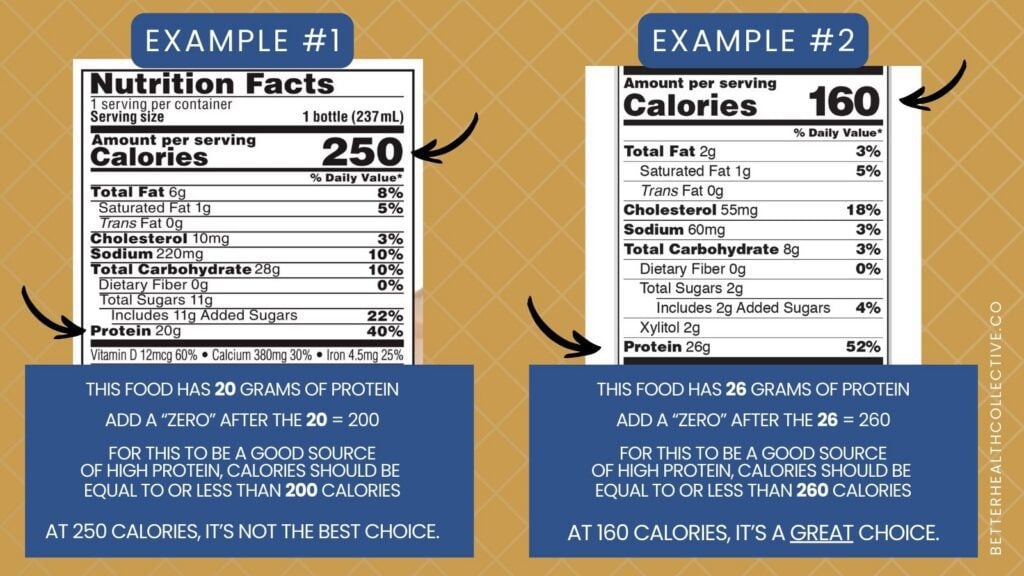
Pro Tip: The “Add a Zero” Protein Rule
If you’re scanning nutrition labels and wondering whether something is truly high protein, here’s a simple rule of thumb:
Take the grams of protein and add a zero to the end. The calories should be equal to or less than that number. For example:
- 15 grams of protein → aim for 150 calories or less
- 20 grams of protein → aim for 200 calories or less
- 25 grams of protein → aim for 250 calories or less
This isn’t a scientific formula — it’s a quick grocery store filter. It helps you identify foods that are protein-dense rather than calorie-dense. Here are two quick examples….
That said, not every protein source needs to follow this perfectly. Foods like salmon or whole eggs may slightly exceed this ratio because they also contain healthy fats. Those can still absolutely fit into a high protein diet for fat loss.
Think of this rule as a screening tool, not a strict requirement.
If the calories are dramatically higher than the protein × 10 guideline, the food may be more fat- or carb-heavy than protein-forward.
This simple trick makes label reading much easier — especially when building high protein low calorie meals.
High Protein Low Calorie Meals for Fat Loss
One of the biggest misconceptions about a high protein diet is that it automatically means high calories.
It doesn’t.
You can absolutely build high protein meals that support fat loss — but the key is protein density.
Protein-dense foods provide a meaningful amount of protein without excessive calories. When you combine those foods with fiber and volume vegetables, you create meals that feel large and satisfying while still fitting into a calorie deficit.
What Makes a Meal “High Protein Low Calorie”?
A high protein low calorie meal typically:
- Contains 30–40 grams of protein
- Stays within 350–500 calories (depending on your target)
- Includes fiber for fullness
- Limits excess added fats and refined carbohydrates
The goal isn’t to eliminate carbs or fats. It’s to make protein the anchor and build around it intentionally.
Examples of High Protein Low Calorie Meals
Here are some structured examples (not full recipes, just frameworks):
Breakfast
- 1 cup nonfat Greek yogurt
- ½ cup berries
- 1 tablespoon chia seeds
- Optional: ½ scoop protein powder mixed in
Approximate: 35g protein | 300–350 calories
Lunch
- 4 oz grilled chicken breast
- Large spinach salad
- Cherry tomatoes, cucumber, bell peppers
- 1 tablespoon olive oil + vinegar
- ½ cup quinoa
Approximate: 35–40g protein | 450–500 calories
Dinner
- 5 oz baked salmon
- Roasted zucchini and broccoli
- ½ cup sweet potato
Approximate: 35g protein | 450–500 calories
Snack
- 1 scoop whey protein mixed with water
- 1 apple
Approximate: 25g protein | 200–250 calories
Notice what these meals have in common:
- Protein first
- Fiber included
- Controlled fats
- Moderate carbohydrates
This is what “fat loss meals” actually look like in practice.
They’re not extreme. They’re structured.
And when meals are structured, staying in a calorie deficit becomes significantly easier.
3-Day Beginner High Protein Meal Plan for Fat Loss
This sample meal plan is designed to:
- Deliver approximately 110–140g protein per day
- Stay within a moderate calorie deficit (~1,700–1,900 calories depending on portions)
- Feel realistic and sustainable
- Prioritize high protein low calorie meals
Adjust portion sizes based on your calorie needs.
Day 1 High Protein Meal Plan
| Meal | Food | Approx. Protein | Approx. Calories |
|---|---|---|---|
| Breakfast | Greek yogurt (1 cup) + berries + 1 tbsp chia | 35g | 325 |
| Lunch | 4 oz grilled chicken + large salad + ½ cup quinoa | 38g | 475 |
| Dinner | 5 oz salmon + roasted vegetables + ½ cup sweet potato | 35g | 500 |
| Snack | Whey protein shake + apple | 25g | 225 |
| Daily Total | 133g | 1,525–1,650 |
Day 2 High Protein Meal Plan
| Meal | Food | Approx. Protein | Approx. Calories |
|---|---|---|---|
| Breakfast | 3 eggs + ½ cup egg whites + spinach + 1 slice whole grain toast | 40g | 450 |
| Lunch | Turkey breast wrap (5 oz turkey) + high fiber wrap + veggies | 35g | 425 |
| Dinner | 4 oz lean ground beef (93%) + roasted zucchini + ½ cup rice | 35g | 500 |
| Snack | Cottage cheese (1 cup) + cinnamon + small handful almonds | 25g | 300 |
| Daily Total | 135g | 1,675–1,775 |
Day 3 High Protein Meal Plan
| Meal | Food | Approx. Protein | Approx. Calories |
|---|---|---|---|
| Breakfast | Protein smoothie (1 scoop whey + almond milk + spinach + berries + chia) | 35g | 325 |
| Lunch | 5 oz grilled shrimp + large salad + olive oil dressing + ½ cup lentils | 40g | 500 |
| Dinner | 5 oz chicken breast + roasted broccoli + small baked potato | 40g | 500 |
| Snack | Greek yogurt (¾ cup) + peanut butter (1 tbsp) | 20g | 250 |
| Daily Total | 135g | 1,575–1,650 |
Why does this work?
- Each day you’ll get over 130 grams of protein
- Your protein is distributed evenly across meals
- Includes fiber for fullness
- Stays within a moderate calorie deficit
- Supports muscle preservation and appetite control
This is what a practical high protein meal plan for fat loss looks like. It’s structured — not restrictive.
Want more meal plan ideas?
- 21 High Protein Breakfast Ideas with 30g+ Protein
- High Protein Low Calorie Lunch Ideas Under 400 Calories
- 21 Cheap High Protein Breakfast Meal Prep Recipes
- Cottage Cheese Bowls | 15 Easy High Protein Recipes
- More recipes and high protein meal plans are coming soon!
Common Mistakes on a High Protein Diet
A high protein diet for fat loss is powerful — but only when structured correctly. Here are the most common mistakes people make:
1. Ignoring the Calorie Deficit
Protein helps preserve muscle and reduce hunger, but it does not override energy balance.
If calories are consistently above maintenance, fat loss will not occur — even with high protein intake.
2. Eating Most Protein at Dinner
Spreading protein evenly throughout the day improves muscle protein synthesis and satiety.
Aim for 25–40 grams per meal rather than 10 grams at breakfast and 70 grams at dinner.
3. Cutting Carbs Too Aggressively
A high protein diet does not require eliminating carbohydrates.
Fiber-rich carbohydrates support fullness, training performance, and long-term sustainability. Extreme carb restriction often leads to rebound overeating.
4. Over-Relying on Protein Bars and Shakes
Protein supplements are convenient tools — but whole food protein sources provide better satiety and micronutrients. Use shakes to supplement, not replace real meals.
5. Not Drinking Enough Water
Higher protein intake increases the need for adequate hydration.
Protein metabolism produces nitrogen waste products that are processed by the kidneys. Staying well hydrated supports normal kidney function and digestion.
6. Forgetting About Fiber
One of the most overlooked mistakes on a high protein diet is ignoring fiber.
When people focus heavily on protein, they sometimes crowd out fruits, vegetables, legumes, and whole grains. This can lead to constipation, bloating, unstable blood sugar, and increased cravings — all of which make fat loss harder.
Protein supports muscle and satiety.
Fiber supports digestion and fullness.
Together, they regulate appetite more effectively than either alone.
Aim for at least 25–30 grams of fiber per day (and often closer to 30 grams for women over 40), especially if your goal is appetite control and sustainable fat loss.
A high protein diet works best when it’s also a high fiber diet. Learn how to increase your daily fiber (without bloating).
Who Should Approach a High Protein Diet Carefully?
For most healthy individuals, a moderately high protein diet is safe and well-supported by research.
However, certain individuals should consult a healthcare professional before significantly increasing protein intake:
- Individuals with diagnosed kidney disease
- Those with advanced liver disease
- Individuals with certain metabolic disorders
It’s important to clarify:
There is no strong evidence that high protein intake harms kidney function in healthy individuals. Multiple studies have shown that increased protein intake is safe for those with normal kidney function.
But if you have a pre-existing medical condition, personalized guidance from your doctor is always best.
Frequently Asked Questions
Is a high protein diet safe long term?
For healthy individuals, yes. Research consistently shows that higher protein diets are safe and effective when calories and overall diet quality are managed appropriately.
Can a high protein diet help with body recomposition?
Yes. Higher protein intake supports muscle preservation and can enhance body recomposition — especially when combined with resistance training.
How quickly will I see results?
Fat loss speed depends on your calorie deficit, consistency, sleep, stress levels, and activity. Most sustainable fat loss occurs at 0.5–1 pound per week.
Do I need supplements to follow a high protein diet?
No. Whole foods can absolutely meet protein needs. Protein powders are optional convenience tools, not requirements.
What if I’m not hungry enough to hit my protein goal?
Focus on protein-dense foods. Greek yogurt, egg whites, lean meats, and protein smoothies allow you to increase protein without dramatically increasing calories or volume.
This can be especially helpful for individuals using GLP-1 medications, where appetite may be reduced.
Final Thoughts
A high protein diet for fat loss isn’t about extremes. It’s about intention.
It’s about preserving muscle while reducing body fat.
It’s about stabilizing hunger instead of fighting it all day.
And it’s about building meals that support your metabolism — not sabotage it.
But here’s what really matters:
Protein works best when it isn’t working alone.
When you combine adequate protein with fiber-rich foods, a moderate calorie deficit, and consistent strength training, you create a system that supports body recomposition — not just weight loss.
You feel fuller.
Your energy is steadier.
Your muscle is protected.
And fat loss becomes sustainable instead of stressful.
You don’t need perfection.
You need structure, consistency, and a protein target that supports your body through the process.
That’s what makes a high protein diet one of the most reliable, science-backed strategies for long-term fat loss.
Sources & Further Reading
Below are reputable, evidence-based resources that support the science behind high protein intake, muscle preservation, and fat loss.
National Institutes of Health (NIH) – Protein and Muscle Mass During Weight Loss
Pasiakos SM, et al. “Protein Supplementation and Muscle Mass During Energy Restriction.”
https://pubmed.ncbi.nlm.nih.gov/23097268/
International Society of Sports Nutrition (ISSN) – Position Stand on Protein and Exercise
Jäger R, et al. “International Society of Sports Nutrition Position Stand: Protein and Exercise.”
https://jissn.biomedcentral.com/articles/10.1186/s12970-017-0177-8
NIH – Dietary Protein Intake and Human Health
Wolfe RR, et al. “Dietary Protein Intake and Human Health.”
https://www.ncbi.nlm.nih.gov/pmc/articles/PMC6566799/
Harvard T.H. Chan School of Public Health – Protein: The Nutrition Source
https://www.hsph.harvard.edu/nutritionsource/what-should-you-eat/protein/
Mayo Clinic – High-Protein Diet: Is It Safe?
https://www.mayoclinic.org/healthy-lifestyle/weight-loss/in-depth/high-protein-diet/art-20046910
Cleveland Clinic – How Much Protein Do You Need?
https://health.clevelandclinic.org/how-much-protein-you-need/
Please note: This website contains affiliate links. As an Amazon Associate, we earn from qualifying purchases at no additional cost to you.