


Please note: This website contains affiliate links. As an Amazon Associate, we earn from qualifying purchases at no additional cost to you.
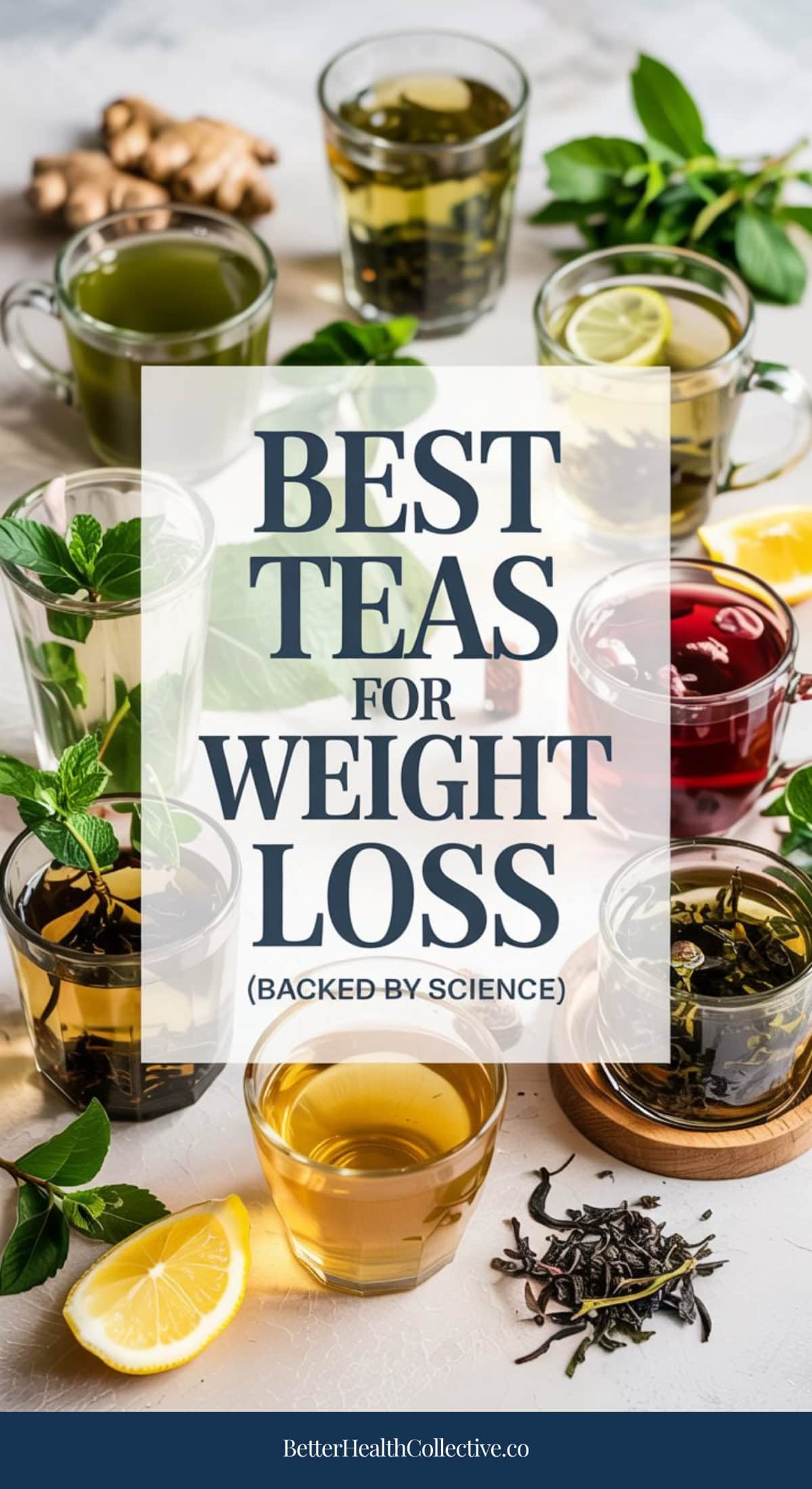
Drinking tea won’t magically melt fat overnight — but certain teas can genuinely support fat burning, appetite control, and metabolism when used consistently. The key is choosing teas that are backed by research, not just hype.
Here are the most effective teas for weight loss, explained in a simple, no-fluff way.
What You’ll Learn
- Which teas are backed by real research for weight loss and fat burning
- How different teas can support metabolism, appetite control, and belly fat
- The best teas to drink if you want gentle, low-effort weight loss support
- Which teas are GLP-1 friendly and easier on digestion
- How to use tea as a simple daily habit that fits into real life
Green Tea (The Metabolism MVP)
Green tea is one of the most researched fat-burning beverages in the world.
It contains catechins, especially EGCG, which help your body:
- Release fat from fat cells (lipolysis)
- Turn fat into usable energy
- Burn more calories throughout the day
What the research shows:
- A large review of studies found people using green tea lost about 2–3 lbs more than those who didn’t.
- A 12-week study showed that people who drank 4–5 cups of green tea per day + exercised for 25 minutes lost 2 lbs more than those who skipped green tea.
- Drinking 3 cups per day helped reduce muscle damage after workouts, meaning faster recovery.
- Another study found green tea increased exercise endurance by up to 24%.
Green tea also contains CCK, a hormone that helps suppress appetite.
👉 Pro tip: Drink a cup before meals to help curb overeating.
Matcha (Green Tea, But Stronger)
Matcha is basically green tea on steroids — you’re consuming the whole leaf instead of just steeping it.
Because of this, matcha provides:
- Higher catechin levels
- More sustained energy
- Stronger fat-burning effects
What studies suggest:
- Matcha can increase calorie burn during exercise
- It helps raise fat oxidation (fat burned for fuel), even at rest
If regular green tea is helpful, matcha is the upgraded version — especially for mornings.
Oolong Tea (The Sleep-Time Fat Burner)
Oolong tea sits between green and black tea and has some surprisingly impressive fat-burning effects.
Research highlights:
- Drinking 2 cups of oolong tea daily increased fat burning by up to 20% over 24 hours
- Even more interesting: fat burning stayed elevated during sleep
- This effect was stronger than caffeine alone
Oolong helps your body burn more fat without increasing heart rate or disrupting sleep, making it a great afternoon or evening tea.
Black Tea (Great for Belly Fat)
Black tea doesn’t get enough credit.
Its unique compounds (theaflavins) help:
- Reduce calorie absorption
- Improve gut bacteria linked to leanness
- Reduce waist circumference
What studies found:
- People drinking 3 cups of black tea daily had smaller waist measurements
- They also gained less weight over time compared to those who didn’t drink black tea
This makes black tea a solid choice if belly fat is your main concern.
White Tea (Stops Fat Cells Before They Start)
White tea is lightly processed and extremely rich in antioxidants.
Lab research shows white tea can:
- Prevent new fat cells from forming
- Break down existing fat stores
- Support metabolism naturally
While human studies are limited, white tea contains many of the same fat-burning compounds as green tea, with a gentler caffeine profile.
It’s an excellent option if you want subtle fat-loss support without jitters.
Ginger Tea (Boosts Calories Burned + Reduces Hunger)
Ginger tea is small but mighty when it comes to metabolism.
What research shows:
- Ginger increases thermogenesis (your body’s calorie-burning heat)
- People burned ~40 extra calories after a meal when consuming ginger
- Ginger reduced hunger and improved fullness
- Studies show ginger supplementation can reduce body weight and waist-to-hip ratio
Ginger tea is also fantastic for:
- Bloating
- Digestion
- Nausea (especially helpful for GLP-1 users)
Peppermint Tea (Craving Control)
Peppermint tea doesn’t burn fat directly — but it can dramatically reduce appetite and cravings.
A key study found:
- People exposed to peppermint aroma consumed about 360 fewer calories per day
- Hunger and food cravings were significantly reduced
Peppermint tea is perfect:
- After meals
- At night
- When emotional or boredom eating kicks in
Hibiscus Tea (Fat + Blood Sugar Support)
Hibiscus tea has become popular for weight loss — and science backs it up.
Studies show hibiscus can:
- Reduce body weight, BMI, and body fat
- Increase calorie burn after meals
- Improve feelings of fullness
One study found hibiscus tea increased calorie burn by over 100 calories post-meal in men and increased fat burning in women.
It’s also caffeine-free and supports healthy blood pressure.
How to Use Tea for Weight Loss (Without Overthinking It)
- Aim for 2–4 cups per day
- Drink it plain or lightly flavored
- Replace sugary drinks with tea
- Pair with protein-rich meals for best results
- Be consistent — results build over weeks, not days
Tea won’t replace healthy eating, but it can absolutely support fat loss, appetite control, and metabolism when used the right way.
If you’d like, next I can:
- Tighten this further for Pinterest formatting
- Add a comparison chart
- Create Pinterest titles + descriptions
- Add a GLP-1-friendly angle
- Insert inline source citations for publishing compliance
Just tell me what you want next 💚
Yes, I’d love it if you could create a comparison chart for me. as well as an FAQ section and a conclusion.
Perfect idea — a comparison chart makes this much more Pinterest- and reader-friendly. Below is a clean, scannable comparison chart, followed by a FAQ section and a simple, reassuring conclusion that fits your Better Health Collective tone.
Quick Comparison Chart: Best Teas for Weight Loss & Fat Burning
| Tea | Primary Benefit | How It Helps With Weight Loss | Best Time to Drink | Caffeine |
|---|---|---|---|---|
| Green Tea | Boosts metabolism | Increases fat burning and calorie expenditure through catechins (EGCG) | Morning or before workouts | Yes |
| Matcha | Strong fat oxidation | Higher concentration of green tea compounds; boosts calorie burn during exercise | Morning | Yes (moderate) |
| Oolong Tea | Burns fat all day | Increases fat oxidation for up to 24 hours, including during sleep | Afternoon | Yes |
| Black Tea | Reduces belly fat | Supports gut bacteria linked to leanness and waist reduction | Morning or midday | Yes |
| White Tea | Prevents fat storage | May block formation of new fat cells and increase fat breakdown | Anytime | Low |
| Ginger Tea | Boosts calorie burn | Increases thermogenesis and reduces appetite | Before meals | No |
| Peppermint Tea | Controls cravings | Helps suppress appetite and emotional eating | Evening or after meals | No |
| Hibiscus Tea | Supports fat + blood sugar | Improves satiety and post-meal calorie burn | Afternoon or evening | No |
Frequently Asked Questions
How much tea should I drink per day for weight loss?
Most studies show benefits with 2–4 cups per day, depending on the tea. More is not always better — consistency matters more than quantity.
Can tea alone help me lose weight?
Tea can support weight loss, but it won’t replace:
- A calorie-aware diet
- Adequate protein intake
- Basic movement
Think of tea as a helper, not the main solution.
What’s the best tea for belly fat?
Green tea, black tea, and hibiscus tea have the strongest evidence for reducing waist circumference and belly fat over time.
Is it better to drink tea hot or iced?
Both work. Hot tea may slightly increase thermogenesis, but iced tea still delivers the same active compounds as long as it’s unsweetened.
Can I add honey or sweetener?
A small amount is fine, but frequent sweeteners can cancel out the calorie benefit. If needed:
- Use cinnamon, lemon, or mint
- Choose stevia or monk fruit over sugar
Are these teas safe for GLP-1 users?
Generally yes — and many are especially helpful.
- Ginger & peppermint can reduce nausea and bloating
- Green tea & oolong should be limited if caffeine sensitivity is an issue
Always listen to your body and space caffeine away from injections if needed.
What tea is best at night?
Caffeine-free options are best:
- Peppermint
- Hibiscus
- Ginger
- White tea (low caffeine)
Final Thoughts: Do Teas Actually Help With Weight Loss?
Teas won’t magically burn fat — but the right teas can absolutely support fat loss by:
- Slightly increasing metabolism
- Improving fat oxidation
- Reducing appetite and cravings
- Replacing high-calorie drinks
When used consistently, these small benefits add up over time, especially if you’re already making mindful food choices.
If weight loss feels overwhelming, tea is an easy, low-effort place to start. It’s simple, affordable, and gentle — and sometimes those small habits are the ones that stick the longest.
Medical Sources & Research References
If you’d like to dig in deeper to the benefits of drinking tea, here are many of the publications and studies we referenced when creating this article for you.
Green Tea & Matcha (Metabolism, Fat Oxidation, Weight Loss)
- National Institutes of Health (NIH) – Green Tea and Weight Loss (Systematic Review)
Green tea catechin plus caffeine supplementation and body weight regulation.
👉 https://pubmed.ncbi.nlm.nih.gov/19597519/ - American Journal of Clinical Nutrition
Efficacy of green tea extract rich in catechins and caffeine in increasing energy expenditure and fat oxidation.
👉 https://pubmed.ncbi.nlm.nih.gov/11101470/ - American Physiological Society
Green tea extract increases fat oxidation during exercise.
👉 https://journals.physiology.org/doi/full/10.1152/japplphysiol.00330.2009
Oolong Tea (24-Hour Fat Burning)
- Journal of Nutrition
Oolong tea increases energy metabolism and fat oxidation over 24 hours.
👉 https://pubmed.ncbi.nlm.nih.gov/27281608/
Black Tea (Belly Fat & Gut Health)
- European Journal of Nutrition
Black tea consumption and changes in body weight and waist circumference.
👉 https://pubmed.ncbi.nlm.nih.gov/26456641/ - Food & Function (Gut Microbiome Study)
Henning SM et al.
Black tea polyphenols alter gut microbiota and reduce weight gain.
👉 https://pubmed.ncbi.nlm.nih.gov/28402123/
White Tea (Fat Cell Formation & Breakdown)
- Nutrition & Metabolism Journal
White tea inhibits adipogenesis and stimulates lipolysis in human fat cells.
👉 https://nutritionandmetabolism.biomedcentral.com/articles/10.1186/1743-7075-6-20
Pu-erh Tea (Weight & Body Fat Reduction)
- Phytotherapy Research
Anti-obesity effects of pu-erh tea extract in humans.
👉 https://pubmed.ncbi.nlm.nih.gov/23255276/ - Journal of Functional Foods
Pu-erh tea consumption reduces body fat and body weight.
👉 https://pubmed.ncbi.nlm.nih.gov/28651125/
Ginger Tea (Thermogenesis & Appetite Control)
- Metabolism: Clinical and Experimental
Ginger consumption enhances thermogenesis and reduces hunger.
👉 https://pubmed.ncbi.nlm.nih.gov/23862114/ - Critical Reviews in Food Science and Nutrition (Systematic Review)
Effects of ginger on body weight and obesity-related outcomes.
👉 https://pubmed.ncbi.nlm.nih.gov/32009588/
Peppermint Tea (Appetite & Calorie Reduction)
- Journal of Neurological and Orthopaedic Medicine
Peppermint aroma reduces appetite and caloric intake.
👉 https://pubmed.ncbi.nlm.nih.gov/17325521/
Hibiscus Tea (Body Fat, BMI, Satiety)
- Journal of Alternative and Complementary Medicine
Hibiscus sabdariffa extract reduces body weight, body fat, and BMI.
👉 https://pubmed.ncbi.nlm.nih.gov/24827763/ - Nutrients Journal (2022)
Hibiscus tea increases post-meal energy expenditure and fat oxidation.
👉 https://www.mdpi.com/2072-6643/14/2/358
Please note: This website contains affiliate links. As an Amazon Associate, we earn from qualifying purchases at no additional cost to you.