

Please note: This website contains affiliate links. As an Amazon Associate, we earn from qualifying purchases at no additional cost to you.
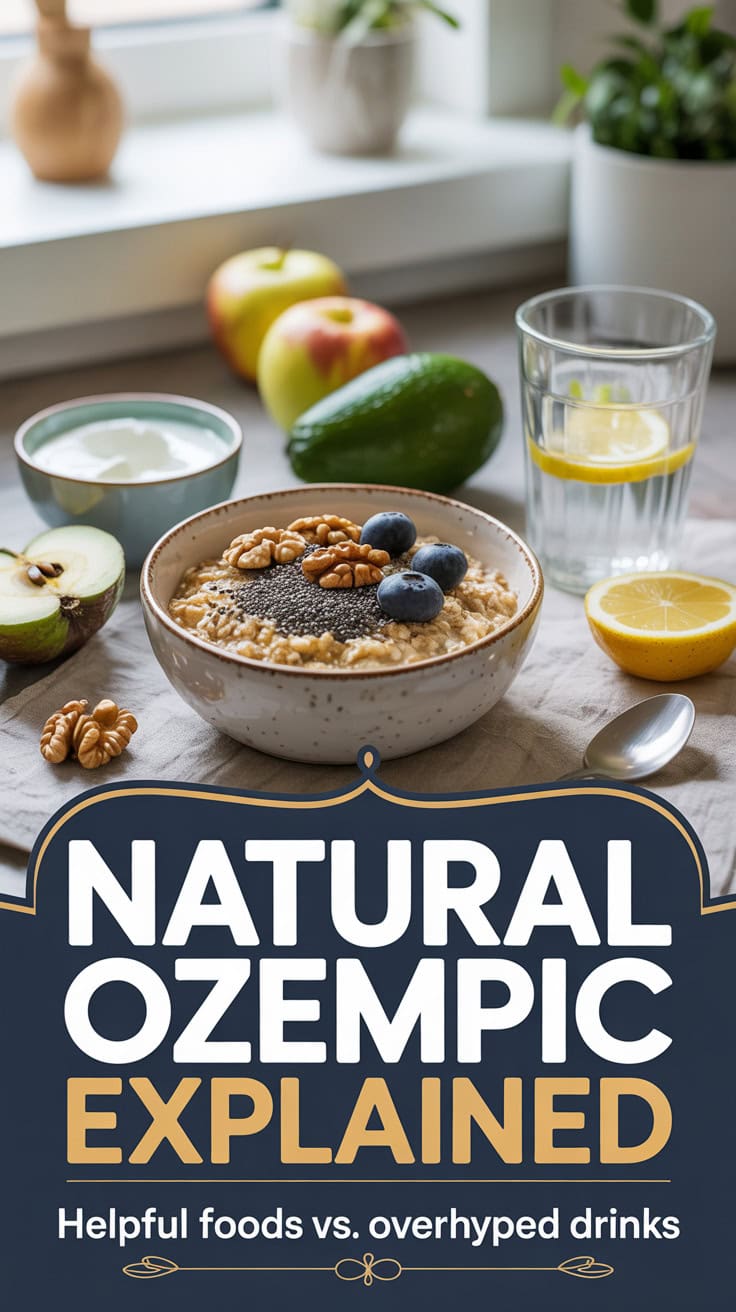
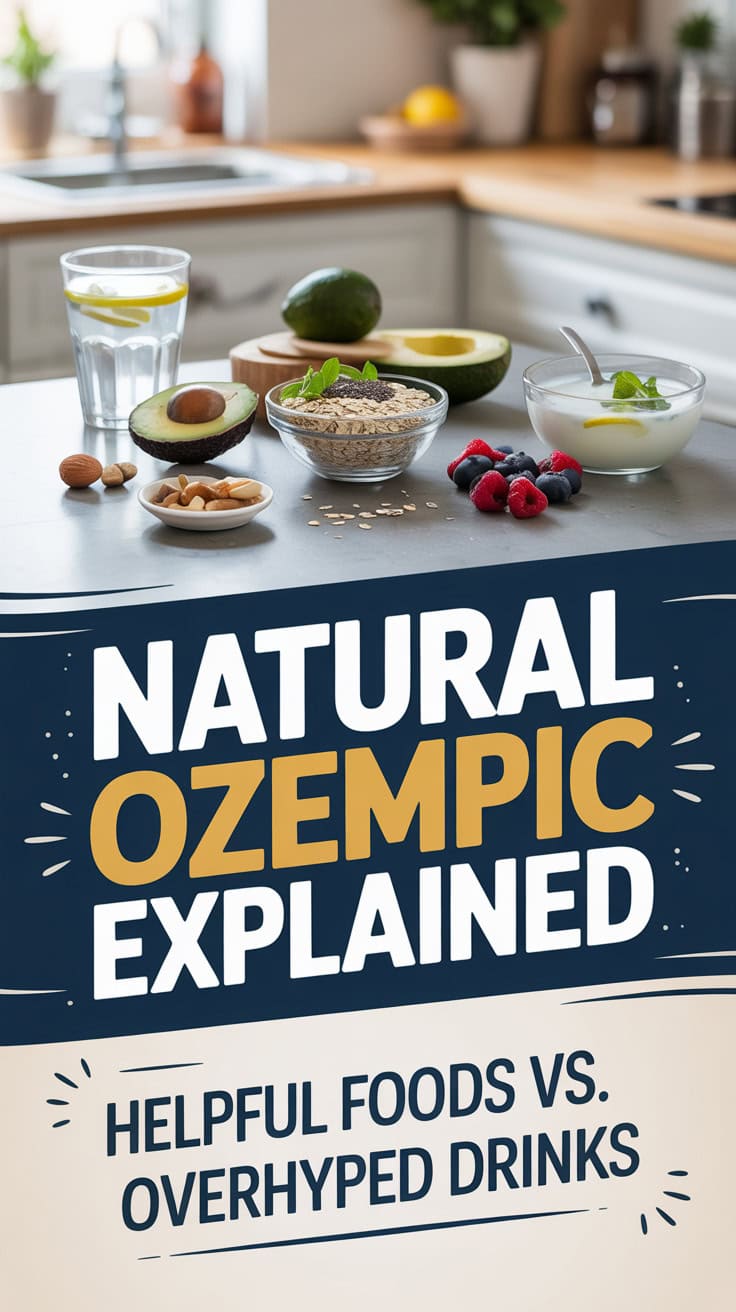
If you’ve opened TikTok recently, you’ve probably seen people drinking chia water, taking berberine supplements, squeezing entire lemons into mason jars, and calling it all “Natural Ozempic.” And yes — it’s extremely catchy. But it’s also… not 100% true.
Ozempic (and Wegovy and Zepbound) are GLP-1 medications with very real, very specific biological effects. No food, drink, supplement, herb, or wellness ritual can duplicate those effects.
But here’s the part no one talks about: Some natural foods can support fullness, reduce cravings, regulate blood sugar, and amplify your body’s own satiety signals.
Not Ozempic-level magic — but meaningful, real-life help.
So let’s break down:
- what actually works
- what definitely doesn’t
- what’s safe
- what’s hype
and how to build an evidence-based “natural Ozempic” routine that supports your hunger hormones. Without chaos drinks, digestive meltdowns, or misinformation spirals.
What You’ll Learn
- What “Natural Ozempic” really means (not what TikTok thinks it means)
- How GLP-1 naturally works in your body
- Which foods genuinely boost GLP-1
- Whether berberine is truly “Nature’s Ozempic”
- The safest version of the Natural Ozempic morning drink
- Honest breakdowns of the viral drink trends
- 11 natural fullness habits that actually work
- Daily Natural Ozemplic meal plan and routine ideas
- How GLP-1 users can safely use natural support tools
- FAQs, sources, and simple daily strategies
What People Get Wrong About “Natural Ozempic”
Let’s clear this up right away:
Ozempic = a GLP-1 receptor agonist.
It mimics a natural gut hormone and directly affects:
- appetite
- cravings
- fullness
- digestion speed
- blood sugar
- hunger timing
Natural Ozempic = NOT any of that.
No drink or food can act on the GLP-1 receptor the way medication does.
But… natural foods can help your body:
- release more of its own GLP-1
- improve insulin sensitivity
- stabilize blood sugar
- support digestion
- help you feel fuller
So the internet is half wrong… and half almost right.
How GLP-1 Works (Simple, Human Explanation)
When you eat, your gut releases GLP-1, which tells your brain:
“Okay, we’re good — you can stop eating now.”
GLP-1 naturally:
- slows stomach emptying
- reduces appetite
- increases fullness
- supports blood sugar regulation
Medications amplify this dramatically.
“Natural Ozempic” foods and drinks support the natural version of this process — but in a gentle, subtle way.
For the full list of foods that boost GLP-1 naturally, see our guide here:
👉 Foods That Boost GLP-1 Naturally
The 5 Categories of “Natural Ozempic” Strategies
Below are the real ways people support satiety naturally — backed by evidence, not hype.
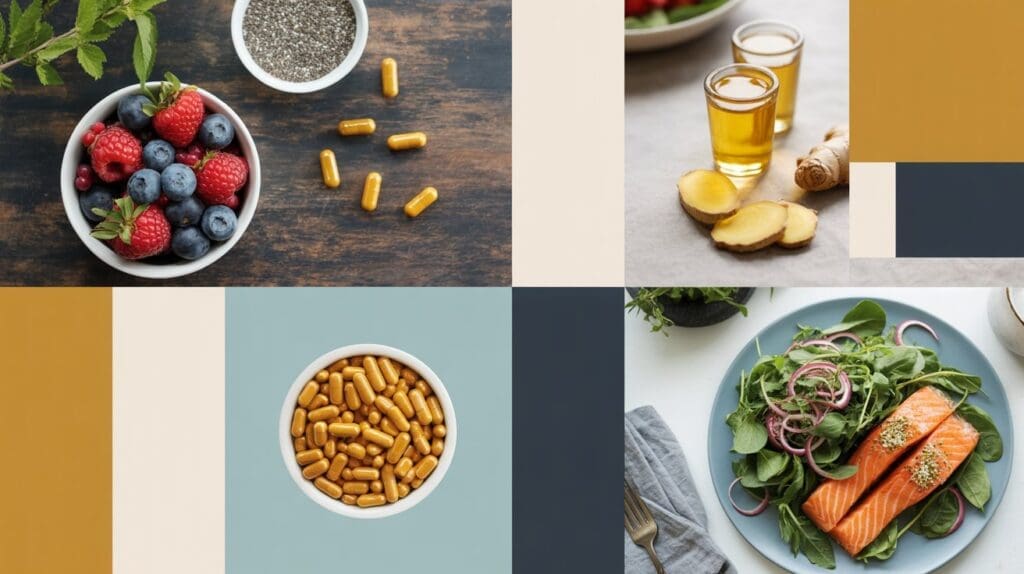
Natural GLP-1 Supporting Foods
These foods trigger natural GLP-1 release:
- high-protein foods
- soluble fiber
- resistant starch
- fermented foods
- healthy fats
- polyphenol-rich produce
For the full breakdown of which foods increase GLP-1 and how to build meals:
👉 Foods That Boost GLP-1 Naturally
Metabolic Support Supplements (Berberine, ACV, Cinnamon)
This is where berberine enters the chat — and where the misinformation usually begins.
Berberine can:
- support insulin sensitivity
- reduce blood sugar spikes
- reduce inflammation
- support gut health
But it does NOT:
- mimic GLP-1
- reduce appetite like Ozempic
- slow digestion like semaglutide
For the honest breakdown, including who should and shouldn’t take it:
👉 Berberine vs Ozempic: What the Science Actually Says
Natural Ozempic Morning Drinks (But Only the Safe Versions)
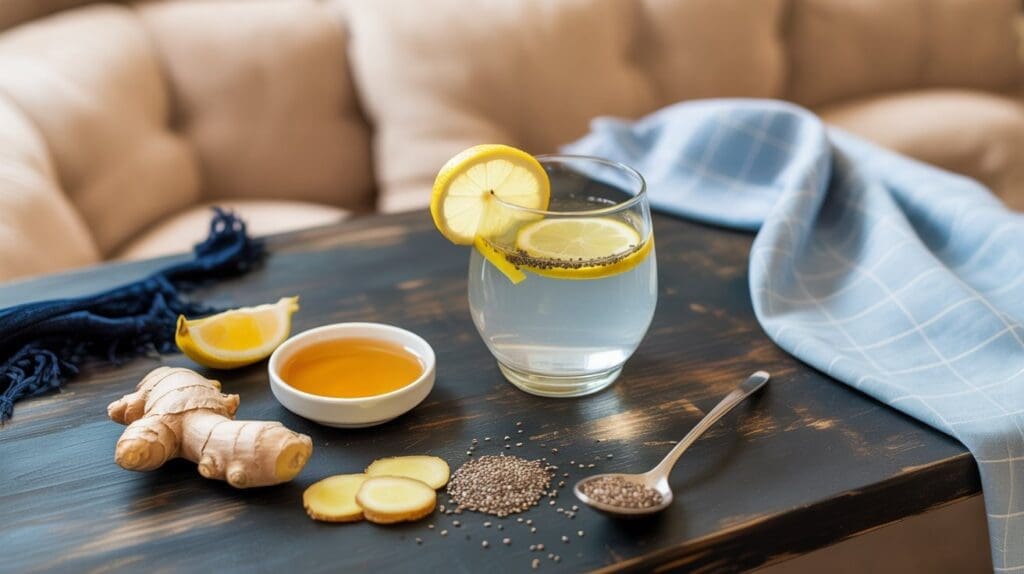
The viral chia–ACV–lemon “Natural Ozempic Drink” is often:
- too acidic
- too high in chia
- too harsh on digestion
But a gentler, safer version can support:
- fullness
- hydration
- digestion
- blood sugar stability
For the full recipe and variations:
👉 The Natural Ozempic Morning Drink (Safe Version)
Viral Wellness Drinks (ACV, Chia Water, Ginger Shots, Psyllium Drinks)
Some are helpful…
Some are harmless…
Some are crimes against your stomach.
If you want the honest breakdown of what works, what doesn’t, and how to avoid nuclear-level bloating:
👉 ACV, Chia Water, Ginger Shots & More: Do Any of These Trends Work?
Practical Fullness Habits (The Most Underrated Part of the Trend)
Your body responds beautifully when you:
- eat protein first
- add soluble fiber
- include healthy fats
- hydrate consistently
- sleep well
- build balanced meals
These are the real “natural appetite suppressants.”
For the complete guide with 11 fullness strategies:
👉 11 Healthy Ways to Feel Full Longer
What Doesn’t Work (No Matter What the Internet Says)
❌ Lemon water
❌ Green juice without fiber
❌ Cayenne “fat burning” shots
❌ Black coffee alone
❌ Eating only carbs
❌ Skipping breakfast
❌ Extreme detox drinks
❌ Anything that makes you sprint to the bathroom
These don’t stimulate GLP-1 or increase satiety.
What GLP-1 Users Should Know About Natural Support
If you’re on Ozempic, Wegovy, Zepbound or any of the other GLP1 weight loss medications, there are some really important things you have to keep in mind…
- You need less fiber than viral drink recipes recommend
- Always dilute acidic drinks
- Ginger shots may help nausea
- Chia + water is helpful, but keep it 1–2 tsp
- Psyllium husk can worsen nausea during GLP1 dose escalations
- Hydration is top priority
- Avoid combining multiple “Natural Ozempic” trends at once
Think gentle support, not duplicates.
Simple Daily Natural Ozempic Routine (Optional but Helpful)
Morning
- 12 oz water
- Natural Ozempic Morning Drink (1–2 tsp chia)
- High-protein breakfast
Lunch
- Protein + fiber + healthy fats
- Add fermented foods if possible
Afternoon
- Water or electrolytes
- Cinnamon tea
- Balanced snack (protein + fiber)
Dinner
- Protein first
- Add vegetables + resistant starch
- Healthy fat for satisfaction
Evening
- Light walk
- 7–9 hours of sleep
Natural Ozempic: FAQs
Can any food or drink replace Ozempic?
No — but many foods support the same pathways in gentler, natural ways.
Is berberine really Nature’s Ozempic?
No. It helps blood sugar but does not mimic GLP-1 hormones.
What’s the best natural appetite suppressant?
Protein + soluble fiber + healthy fats + hydration.
Does the Natural Ozempic drink work?
A safer version can support fullness — see the recipe linked above.
Can I use these tips if I’m on GLP-1 meds?
Yes — just start slow and avoid harsh supplements during dose escalations.
Conclusion
At the end of the day, “Natural Ozempic” isn’t a drink, a supplement, or a quick fix — it’s a marketing phrase the internet fell in love with. And while no food or tonic can mimic the powerful GLP-1 effects of Ozempic, Wegovy, or Zepbound, there are natural habits and foods that genuinely support fullness, blood sugar, cravings, digestion, and overall metabolic health.
Not magic. Not hype.
Just simple, real tools your body already understands.
If you enjoy ACV, chia water, cinnamon, ginger, or any of the trending wellness drinks, you can absolutely use them as supportive add-ons. They’re helpful for digestion, hydration, and gentle fullness — as long as you’re mixing them into a routine that prioritizes balanced meals, protein, fiber, hydration, sleep, and stress reduction.
The real “natural Ozempic” isn’t a viral recipe.
It’s the quiet, consistent habits that make your body feel steady, fueled, and supported.
So try the tools that feel good. Skip the ones that don’t.
And remember — your health journey doesn’t need to look extreme, trendy, or dramatic to be effective. Small, steady changes done with intention will always win.
Expert Sources + Further Reading
- NIH – GLP-1 Receptor Physiology & Mechanisms
- Journal of Clinical Investigation – GLP-1 and Appetite Regulation
- Nature Reviews Endocrinology – The GLP-1 System & Satiety
- Journal of the American Diabetes Association – Vinegar’s Effect on Post-Meal Blood Glucose
- Journal of Nutrition – Soluble Fiber and Satiety Signaling
- Appetite Journal – Chia Seeds, Satiety & Glucose Response
- Nutrients (MDPI) – Fiber’s Effect on GLP-1 Release
- Metabolism: Clinical and Experimental – Berberine & Insulin Sensitivity (Systematic Review)
- NIH – Berberine for Diabetes & Cholesterol Overview
- Mayo Clinic – Blood Sugar Regulation & Metabolic Health
- Harvard School of Public Health – Protein, Fiber & Fullness Research
- American Journal of Clinical Nutrition – Protein’s Impact on Satiety Hormones
Please note: This website contains affiliate links. As an Amazon Associate, we earn from qualifying purchases at no additional cost to you.