

Please note: This website contains affiliate links. As an Amazon Associate, we earn from qualifying purchases at no additional cost to you.
If you’ve been on TikTok lately, you’ve probably noticed that the internet is suddenly obsessed with “natural Ozempic,” “food that boosts GLP-1,” and “drinks that curb appetite.”
And honestly? I get it.
GLP-1 meds like Ozempic, Wegovy, and Zepbound have completely changed the weight-loss conversation — and for the first time, people are actually talking about hunger hormones instead of willpower.
But here’s the thing most of those viral videos forget to mention:
Your body already makes GLP-1.
And some foods and habits can help support it naturally — not in a medication-level way, but in a “my hunger isn’t controlling me today” way.
So let’s talk about the foods that actually help increase fullness, slow digestion, stabilize blood sugar, and support a healthier GLP-1 response… using real science and zero hype.
What We’ll Cover:
- What GLP-1 is and why it matters
- The foods that naturally support GLP-1 production and how fiber, protein, and resistant starch impact fullness
- The best meals to keep your blood sugar steady throughout the day and reduce cravings
- What “natural Ozempic foods” can and cannot do
- Answers to your frequently asked questions
What Is GLP-1, and Why Does Everyone Care About It?
GLP-1 is a gut hormone released after eating — especially when you eat protein, fiber, or healthy fats.
It helps with:
- Feeling full
- Slowing stomach emptying
- Stabilizing blood sugar
- Reducing cravings
- Regulating appetite
Basically, GLP-1 is the hormone that stops you from standing in front of your pantry like a feral raccoon at 9 p.m.
GLP-1 medications work by mimicking this hormone.
Some foods help your body activate or increase GLP-1 on its own.
Same pathway, different power level — but still super helpful.
Foods That Naturally Support GLP-1
Below are the foods research consistently connects to better GLP-1 release, improved appetite control, and steadier blood sugar.
Let’s break it down by category.
1. High-Fiber Foods (Your GLP-1 Besties)
Fiber slows digestion, supports gut health, and triggers a natural increase in GLP-1. Great high fiber foods that boost GLP-1 include:
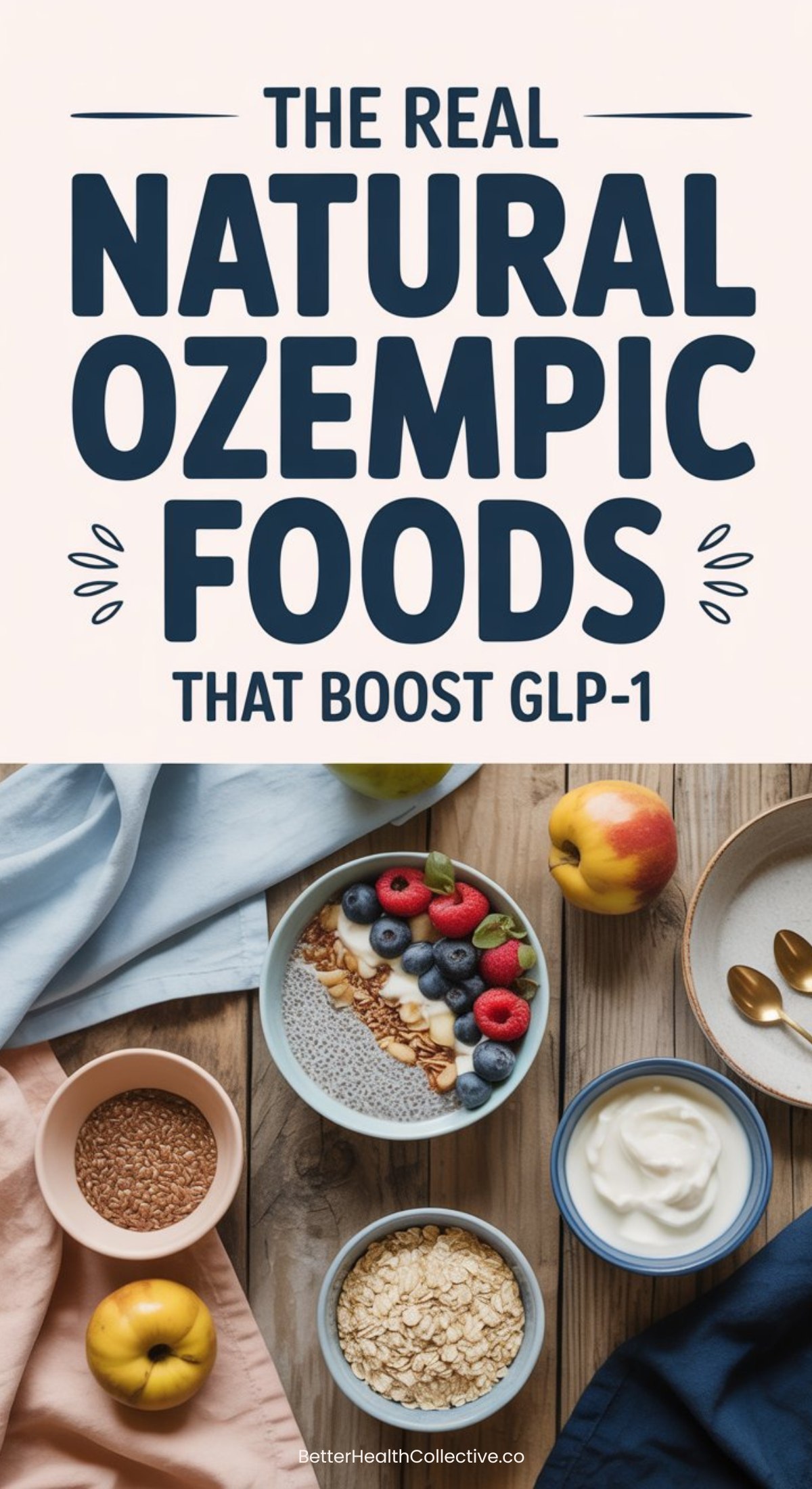
- Chia seeds
- Flaxseed
- Oats
- Lentils
- Beans
- Apples
- Berries
- Avocado
- Vegetables
- Chickpeas
Why It Works
Fiber helps stretch the stomach and feeds the gut bacteria that help produce short-chain fatty acids — which in turn stimulate GLP-1 release.
Translation: Fiber = fuller, longer + fewer cravings.
2. Protein-Rich Foods (The Most Underrated Hunger Hack)
You’re probably tired of hearing “protein, protein, protein” everywher you go. But when it comes to natural GLP-1, protein is the most satiating macronutrient and a major activator of GLP-1.
The best protein sources include:
- Eggs
- Greek yogurt
- Cottage cheese
- Chicken
- Turkey
- Salmon
- Tofu
- Beans + lentils
- Whey or plant protein shakes
Why It Works
Protein stimulates GLP-1 release AND keeps blood sugar stable.
Your first bite of breakfast should be protein — not caffeine. (Yes, I’m looking at you.)
3. Healthy Fats (Slow Down Digestion, Increase Satisfaction)
Fat doesn’t directly increase GLP-1, but it helps slow stomach emptying, which keeps GLP-1 active longer.
Great Sources of Healthy Fat:
- Avocado
- Olive oil
- Nuts
- Seeds
- Salmon
- Coconut
- Nut butter
Why It Works
Slower digestion = fewer blood sugar crashes = fewer cravings.
4. Resistant Starch (The Gut-Friendly GLP-1 Booster)
Resistant starch feeds the gut microbiome in a way that increases GLP-1 and PYY (another fullness hormone). Top sources of resistant starch include:
- Green bananas
- Cooked & cooled potatoes
- Cooked & cooled rice
- Cooked & cooled oats
- Beans, lentils, chickpeas
I know — “cold potatoes” doesn’t sound sexy, but it works.
5. Fermented Foods (The Microbiome Hormone Helpers)
Fermented foods help support the gut bacteria involved in natural GLP-1 production. Good choices for fermented foods that boost GLP-1 include:
- Greek yogurt
- Kefir
- Kimchi
- Sauerkraut
- Kombucha
- Tempeh
- Miso
Why It Works >> A healthier gut = a better GLP-1 response.
6. Cinnamon & Ginger (The Blood Sugar Helpers)
They’re not “natural Ozempic,” but they do help:
- Improve insulin sensitivity
- Reduce post-meal glucose spikes
- Slow digestion slightly
This supports your natural satiety signals.
Simple ways to use them:
- Add cinnamon to oatmeal or coffee
- Add ginger to smoothies
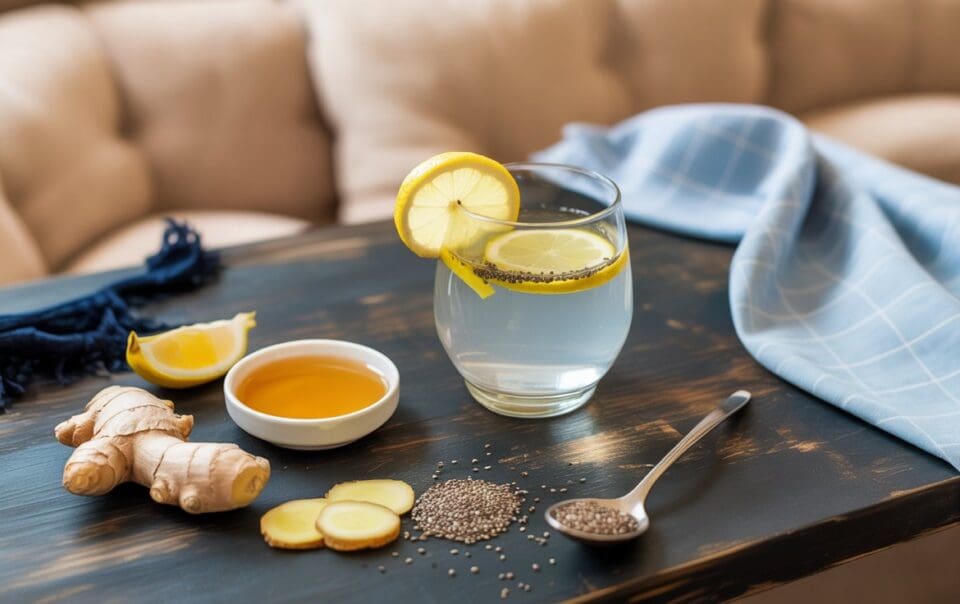
- Make ginger tea before meals
Small habits, surprisingly big difference.
How to Combine These Foods Into a GLP-1-Friendly Meal
Let’s put the science into something real-life and delicious.
GLP-1 Breakfast Ideas
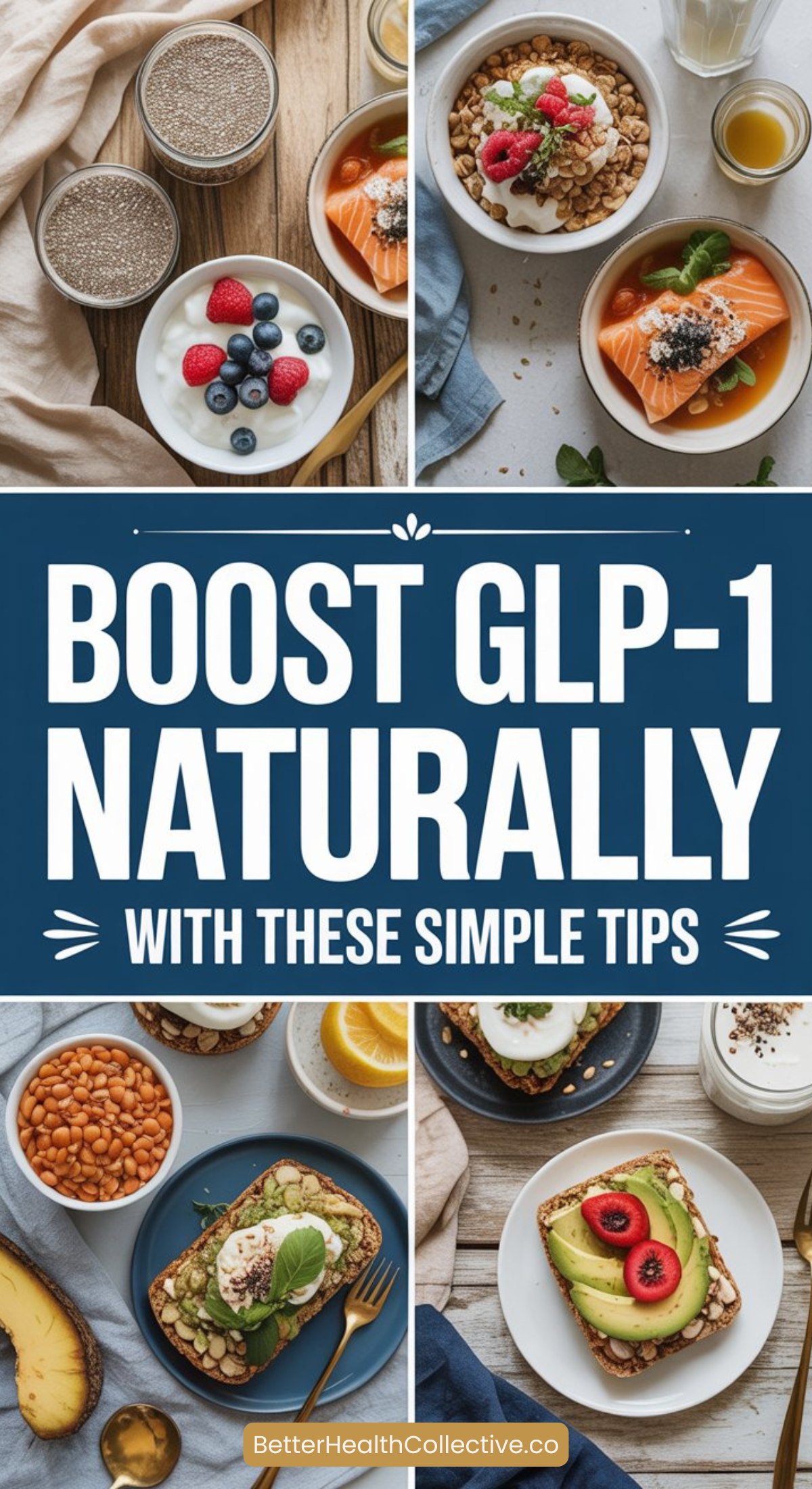
- Greek yogurt + berries + chia seeds
- Cottage cheese + cinnamon + apples
- Eggs + avocado + veggies
- Protein shake + a spoon of flax or chia
- Overnight oats with chia & berries (cooled oats = resistant starch!)
GLP-1 Lunch Ideas
- Lentil soup with veggies
- Chicken + quinoa + roasted veggies
- Salmon bowl with avocado + brown rice
- Chickpea salad with greens + olive oil
GLP-1 Dinner Ideas
Stir fry with chicken or tofu + veggies
- Baked salmon + cooled potatoes + asparagus
- Chili with beans, turkey, and tomatoes
- Buddha bowl with greens + rice + chickpeas + tahini
What “Natural Ozempic” Foods Cannot Do
Let’s be real. These foods:
✔ Help you feel fuller
✔ Reduce cravings
✔ Support steadier blood sugar
✔ Make it easier to lose weight
✔ Support GLP-1 naturally
But they do NOT:
❌ Replicate the effects of Ozempic or Wegovy
❌ Replace GLP-1 medications
❌ Cure insulin resistance in a week
❌ Melt fat on contact (sorry TikTok)
They’re tools — powerful tools — but they don’t replace medical treatment.
FAQs About Foods that Boost GLP-1 Naturally
Can food really increase GLP-1?
Yes — research shows high-fiber, high-protein foods trigger GLP-1 release. The effects are milder than medication but still meaningful.
Is this the same as “natural Ozempic”?
Kind of — this is the accurate, science-based version of the trend. No false promises.
What’s the best food for boosting GLP-1?
Chia seeds, beans, Greek yogurt, berries, oats, and foods high in resistant starch.
Can these foods help reduce cravings?
Absolutely. Better satiety = fewer cravings.
Is berberine natural Ozempic?
NO — It works differently and should be used cautiously. Learn more about Berberine.
Please note: This website contains affiliate links. As an Amazon Associate, we earn from qualifying purchases at no additional cost to you.