



Please note: This website contains affiliate links. As an Amazon Associate, we earn from qualifying purchases at no additional cost to you.
I stumbled into diy magnesium spray almost by accident. I’d been hearing whispers about it for months — people saying it helped them sleep better, loosen tight muscles, even calm anxiety. Honestly, I brushed it off. It sounded too good to be true… and a little “woo-woo” for something so simple.
But one night, after yet another round of tossing and turning, I finally tried making a small batch. I sprayed a little on my legs and shoulders, crawled into bed, and to my surprise… my whole body exhaled. Not the dramatic movie-style sigh — more like a quiet release of tension I didn’t realize I’d been holding.
Since then, this easy DIY has become one of my most reliable nighttime helpers. It’s inexpensive, quick to make, and surprisingly effective — especially on the days when stress gets the best of me.
If you’ve been curious about magnesium spray, let me show you how easy it is to make your own.
We’ll Cover:
- What magnesium spray actually is
- Why topical magnesium helps with sleep and relaxation
- The simple ingredients you need (just two!)
- How to make your own spray in under 10 minutes
- How to use it for sleep, stress relief, and muscle tension
- Tips for sensitive skin
- Optional ways to customize your spray
- Common questions people have about magnesium spray
What Is Magnesium Spray, Exactly?
Magnesium spray is simply a mixture of magnesium chloride flakes and warm water. When you apply it to your skin, magnesium absorbs into your body and supports several important functions, especially:
- Relaxing tight or overworked muscles
- Helping your nervous system shift into a calmer state
- Supporting melatonin production and better sleep
- Reducing “restless leg” sensations
- Easing general stress
It’s sometimes called “magnesium oil,” but it’s not an oil at all — it just has a silky texture once it dries.
Why Magnesium Spray Helps You Relax and Sleep Better
It Helps Quiet an Overactive Nervous System
In a world full of constant notifications, late-night screen time, and daily stressors, your body can forget how to unwind. Magnesium helps bring everything down a notch.
It Loosens Tight, Sore, or Achy Muscles
If you carry tension in your calves, shoulders, neck, or lower back, magnesium can help those areas release.
It Supports Healthy Sleep Hormones
Magnesium plays a major role in calming the brain and supporting your natural melatonin cycle.
It Absorbs Well Through the Skin
Some people don’t absorb magnesium well through their digestion, so topical application can feel more effective.
DIY Magnesium Spray Recipe (Quick + Simple)
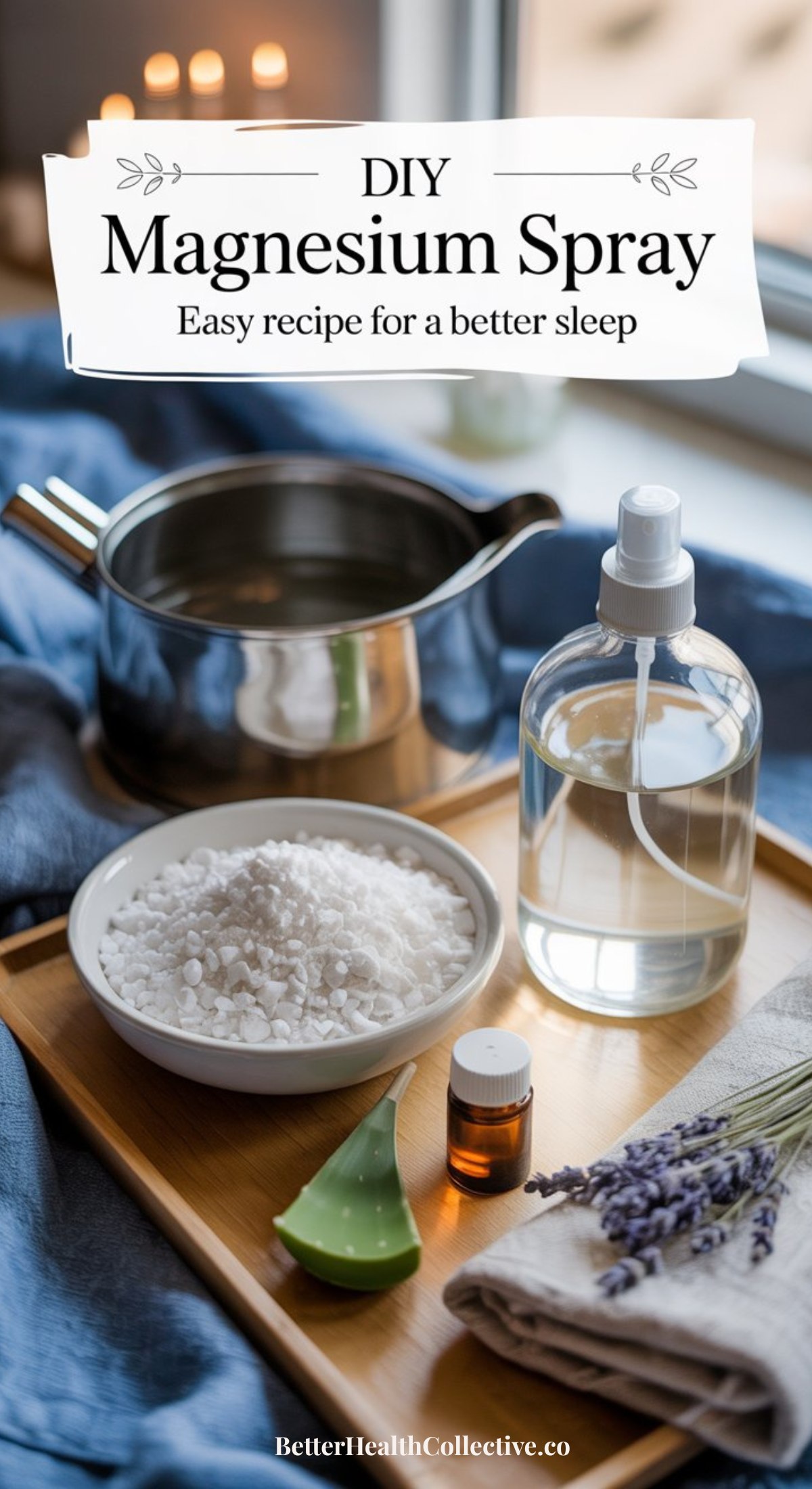
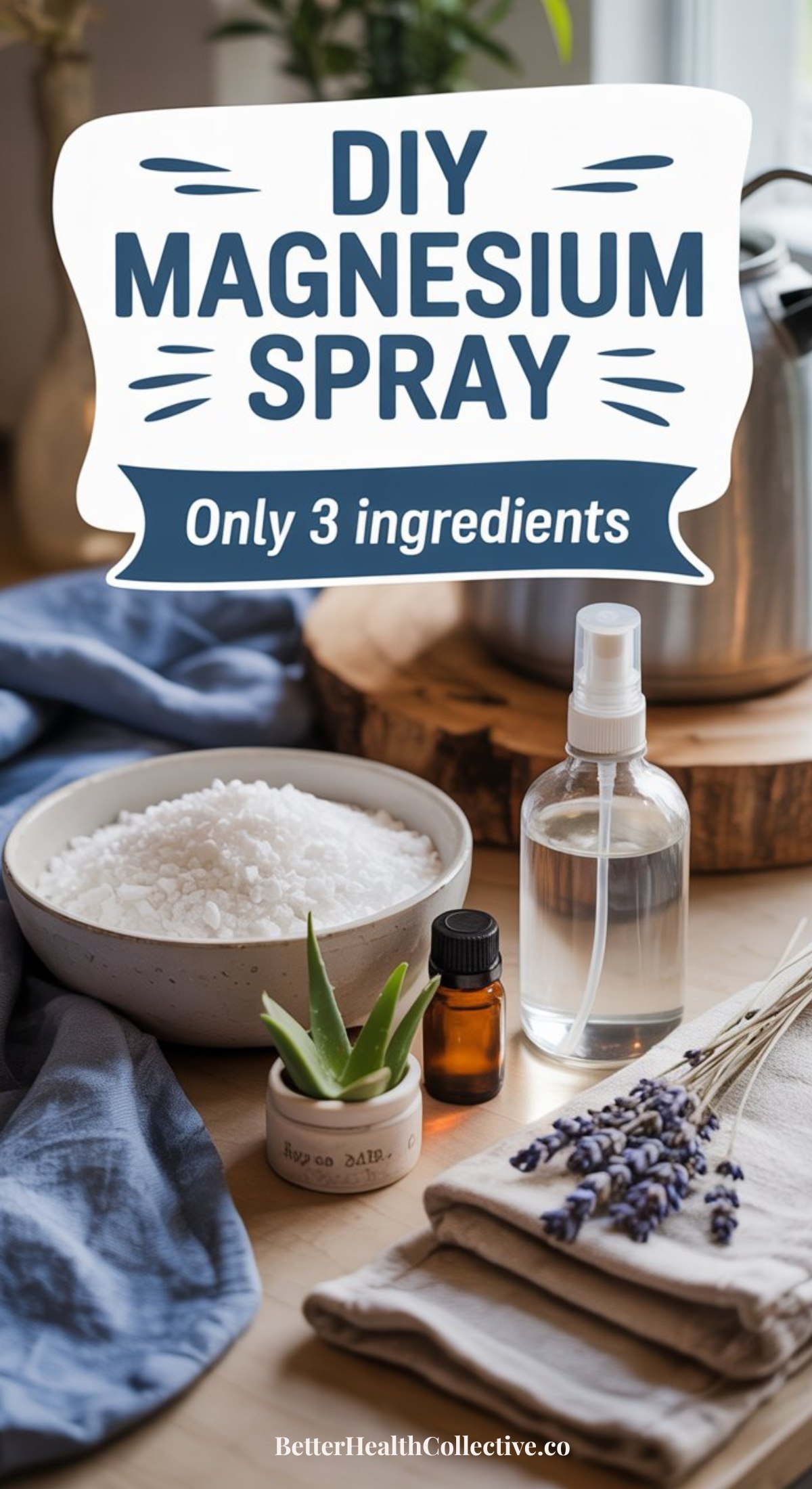
What You’ll Need
- ½ cup magnesium chloride flakes
- ½ cup distilled or filtered water
- A glass spray bottle
- Optional add-ins:
- lavender essential oil
- chamomile essential oil
- aloe vera gel (for sensitive skin)
How to Make It: Simple Recipe
Step 1: Warm Your Water
Heat the water until it’s warm (not boiling). Warm water dissolves the flakes more easily.
Step 2: Combine
Add the magnesium flakes to a glass bowl or heat-safe cup. Slowly pour the warm water over the flakes and stir until everything dissolves.
Step 3: Let It Cool
Allow the mixture to cool to room temperature.
Step 4: Customize (Optional)
You can add:
- 2–3 drops lavender for a nighttime scent
- 1–2 drops chamomile for extra calm
- a small dab of aloe to reduce tingling
Step 5: Pour Into Your Spray Bottle
Use a small funnel if needed. Store at room temperature.
How to Use Your DIY Magnesium Spray
For Better Sleep
Spray on:
- calves
- stomach
- thighs
- tops of feet
- shoulders
Use 20–30 minutes before bed.
For Stress or Overwhelm
Spray on your chest, wrists, or back of your neck for a grounding, soothing effect.
For Muscle Soreness
Spray directly over tight muscles and gently massage it in.
For Restless Legs
Apply before bed to help calm that “electric” leg feeling.
Quick Tips for Sensitive Skin
Start Small
Use a few sprays at first so your skin has time to adjust.
Dilute If Needed
Add more water if you experience strong tingling.
Try Applying Lotion First
A thin layer of lotion creates a buffer for sensitive skin.
Avoid Broken Skin
Don’t use immediately after shaving or on irritated areas.
Optional Ways to Customize Your Spray
Relaxation Blend
- lavender
- chamomile
- vanilla extract (tiny amount)
Muscle Relief Blend
- eucalyptus
- peppermint
These are strong — use sparingly.
Sensitive Skin Formula
- aloe vera
- rosewater (swap a few tablespoons of water for rosewater)
FAQs
Does this really help with sleep?
Many people notice that magnesium spray helps them fall asleep faster and sleep more deeply — especially if stress or muscle tension keeps them awake.
Why does it sometimes tingle?
Magnesium is a mineral salt. Tingling is common, especially if your skin is dry or your magnesium levels are low.
Can I use it every night?
Absolutely. Many people use it daily.
Can I use it on my face?
No — it’s too concentrated for facial skin.
How long does a batch last?
About 6 months stored in a cool, dry place.
Is this safe during pregnancy?
Talk to your doctor first. Some people do use topical magnesium during pregnancy, but everyone’s different.
Final Thoughts
There’s something soothing about adding magnesium spray to your nighttime routine. It’s quick, it’s simple, it’s affordable, and it genuinely helps your body release the tension it’s been carrying all day. I love that something so easy can make such a noticeable difference in how calm my evenings feel.
If better sleep and softer nights are what you’re craving, this little DIY is such a good place to start.
Please note: This website contains affiliate links. As an Amazon Associate, we earn from qualifying purchases at no additional cost to you.