


Please note: This website contains affiliate links. As an Amazon Associate, we earn from qualifying purchases at no additional cost to you.
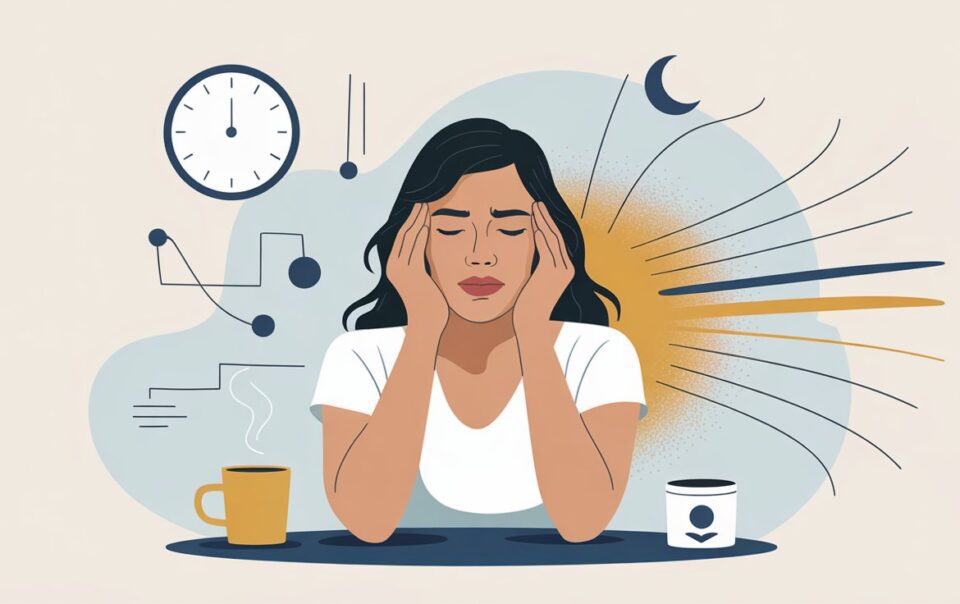
I know that feeling all too well. It’s the moment where your brain feels like it has 47 tabs open, three of them are playing music, and you can’t find the “mute” button.
I used to try to power through it, but I’ve learned that once I hit that wall of mental exhaustion, the best thing I can do is stop.
This isn’t about being a “productivity machine”—it’s about reclaiming my peace. This is the 60-minute “Step-by-Step” routine I use to come back to myself.
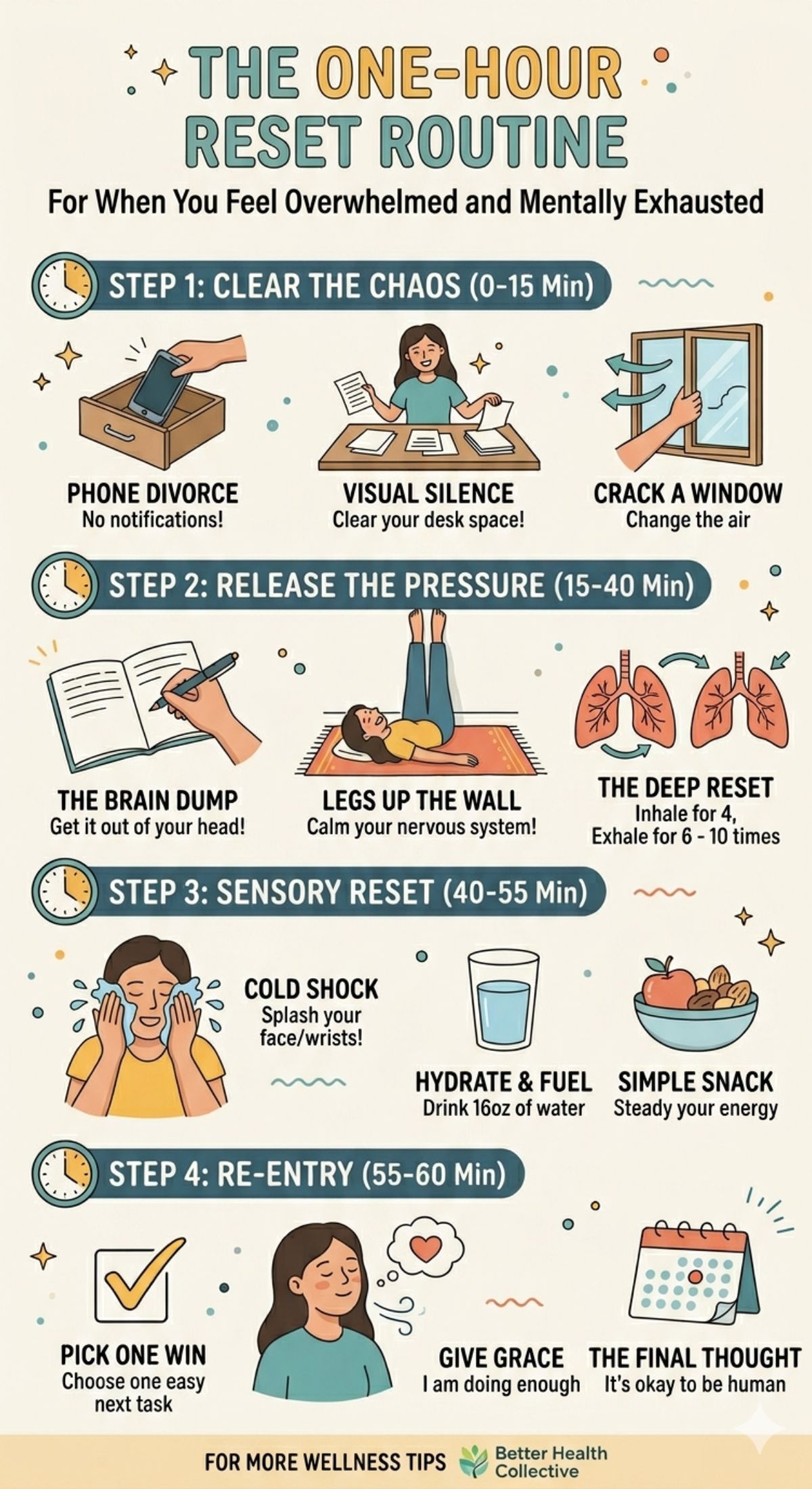
Here’s a Simple Step-by-Step Guide to the 1-Hour Mental Reset Routine
Step 1: Clearing the Immediate Chaos (Minutes 0–15)
- The Phone Divorce: The first thing I do is put my phone in a drawer or another room. I can’t heal my brain while it’s being bombarded by notifications.
- The “Visual Silence” Clean: I don’t clean the whole house—I just clear my immediate space. If I’m at my desk, I stack the papers. If I’m in the kitchen, I clear the counter. When my eyes stop seeing clutter, my brain stops feeling it.
- Cracking a Window: I need a change of air. Even if it’s cold, that 30 seconds of fresh air helps me feel like I’m no longer “stuck” in my own stress.
Step 2: Releasing the Pressure (Minutes 15–40)
- The Brain Dump: I grab a notebook and a pen (there’s something about the physical act of writing that helps). I write down everything—the big deadlines, the fact that I forgot to text my mom back, and even the tiny annoyances. I just need it out of my head.
- Movement & Breath: I don’t do an intense workout; that’s the last thing my body needs. Usually, I’ll find a quiet corner and put my legs up the wall.
- The Deep Reset: While I’m there with my legs up, I take 5 to 10 slow, deep breaths. I inhale for four counts and exhale for six. It’s like a manual override for my stress response. It tells my heart rate to slow down and my mind to follow.
Step 3: The Sensory Reset (Minutes 40–55)
- Wash it Away: I’ll take a quick shower or just splash some freezing cold water on my face. That temperature shock is like hitting the “restart” button on a frozen computer.
- Simple Fuel: I check in with my body. Am I actually hungry? Usually, I’m just dehydrated. I drink a full glass of water and have a small, easy snack—nothing complicated, just something to steady my energy.
Step 4: Re-Entry (Minutes 55–60)
- Pick One Win: I look back at my “brain dump” list. I’m not going to do all of it. I pick just one small, easy task to tackle next. It gives me a sense of agency without the overwhelm.
- A Little Grace: I remind myself that being human is heavy work. It’s okay that I needed this hour. I’m not “behind”; I’m just recharged.
RELATED ARTICLES: How to Calm Your Mind Before Bed | 72-Hour Reset to Lower Cortisol and Reclaim Your Energy
What if I’m Not at Home? (The Anywhere Reset)
Life doesn’t always wait until you’re in your pajamas to overwhelm you. If you’re out in the world, you can still do the 1-hour mental reset routine! Here is how I adapt these steps:
At the Office
- The Physical Clear: Clear just the square foot of desk right in front of you.
- The Movement: Head to a bathroom stall. Instead of legs-up-the-wall, sit back, plant your feet flat on the floor, and do your deep breathing there.
- The Sensory Shift: Run your wrists under cold water in the restroom sink for 30 seconds to calm your pulse.
In the Car (Parked!)
- The Phone Divorce: Toss your phone into the glove box or the backseat.
- The Movement: Lean your seat back and focus on dropping your shoulders away from your ears.
- The Sensory Shift: Turn the AC on high for a minute to get that cold air hit, then switch it off and sit in the silence.
The “Bathroom Escape” (In a Crowded House, Family Event or Social Event)
I’ve definitely been the person who disappears at a party for 15 minutes because my brain felt like it was buzzing. You don’t need a quiet house to reset; you just need a door with a lock.
- The “I’m Fine” Hideout: I go to the bathroom and actually lock the door. It’s the only place where it’s socially acceptable to be totally alone for 10 minutes.
- The Sensory Mute: I turn off the lights if I can, or just close my eyes. I put my hands over my ears for a few seconds just to experience “true” silence.
- The Cold Water Trick: I splash my face or just hold a cold, wet paper towel to the back of my neck. It’s like an instant “off” switch for that fight-or-flight feeling.
- The Intentional Return: Before I walk back out, I take three deep breaths and tell myself, “I only have to focus on the next 30 minutes.” I don’t look at the whole night; I just look at the next small chunk of time.
1-Hour Reset Routine: Common Questions & Concerns
What if I don’t have a full hour? Honestly? Do ten minutes. Put your phone in a drawer, take five deep breaths with your eyes closed, and drink a glass of water. A “micro-reset” is always better than no reset at all.
I feel guilty for stopping when I have so much to do. How do I handle that? I struggle with this too. I try to remind myself that an overwhelmed brain is an inefficient brain. Taking this hour isn’t “quitting”—it’s maintenance. You wouldn’t keep driving a car with a smoking engine; you’d pull over to add oil.
My brain won’t stop racing during the ‘Deep Breath’ part. Am I doing it wrong? Not at all. The goal isn’t to have a perfectly blank mind. If your brain wanders to your To-Do list twenty times, just gently bring it back to your breath twenty times. That is the work.
What if I’m in a public place and feel a meltdown coming on? My “emergency” trick is the 5-4-3-2-1 technique: Name 5 things you see, 4 things you can touch, 3 things you hear, 2 things you can smell, and 1 thing you can taste. It grounds me back in my body instantly.
“Is it okay if my ‘movement’ is just laying on the floor?” Absolutely. Some days, “movement” is just the effort it takes to breathe deeply. If all you can do is lie on the rug and stare at the ceiling, do that. The goal is to stop the doing and start the being.
“What if I still feel tired after the hour is up?” Then your body is telling you something important. This routine is designed to clear the “emergency” fog, but it isn’t a cure for chronic burnout. If you’re still exhausted, let this hour be the permission you need to go to bed early or clear your schedule for the evening.
A Final Thought
This hour isn’t about becoming a “productivity machine” again. It’s about remembering that I’m a person, not a laptop.
I don’t do this perfectly every time, and that’s okay.
We just start again at Step #1.
RELATED ARTICLES:
SAVE THIS IN CASE YOU MIGHT NEED IT!
Please note: This website contains affiliate links. As an Amazon Associate, we earn from qualifying purchases at no additional cost to you.