



Please note: This website contains affiliate links. As an Amazon Associate, we earn from qualifying purchases at no additional cost to you.
You’ve done everything “right.” You hit your protein goals, took your post-meal walk, avoided late caffeine — and yet it’s 2:00 AM and your brain feels like it just chugged an espresso.
You’re exhausted… but your mind won’t shut off.
At Better Health Collective, we hear this constantly from readers on Wegovy, Ozempic, and Zepbound. And in 2026, researchers are starting to understand why.
GLP-1 medications may stimulate the brain’s Orexin pathway (your alertness system) while also slowing digestion and shifting metabolic signals. The result?
You’re physically tired… but neurologically “on.”
If you’ve been Googling:
- Can GLP-1 cause insomnia?
- Why can’t I sleep on Ozempic?
- Racing heart at night on Wegovy
- Zepbound insomnia side effects
You are not imagining it.
Here’s what’s happening — and how to fix it.
Can GLP-1 Medications Cause Insomnia?
While insomnia isn’t the most common side effect, many users report difficulty falling asleep, a racing mind at night, or feeling wired but tired during the first 24–48 hours after injection.
Clinically, GLP-1 medications:
- Slightly increase resting heart rate
- Slow gastric emptying
- Shift blood sugar dynamics
- Influence hypothalamic signaling (including wakefulness pathways)
Emerging research suggests GLP-1 receptor activity may interact with brain regions involved in alertness and energy regulation — including the Orexin system.
That can create a mismatch:
Your body wants sleep.
Your brain thinks it’s daytime.
Why This Happens on GLP-1s
Several factors may contribute:
• Orexin stimulation – promotes alertness
• Mild heart rate elevation – can feel like subtle adrenaline
• Slower digestion – heavy meals sit longer at night
• Rapid fat loss stress – your nervous system interprets change as “stress”
• Blood sugar shifts – can create nighttime wake-ups
This doesn’t mean the medication is “wrong” for you.
It means your nervous system needs support.
3 Simple Ways to Fix GLP-1 Insomnia
#1 | The “Brake Pedal” Stack (Magnesium + GABA Support)
When your alertness system is pressing the gas pedal, melatonin alone often isn’t enough.
You need something that tells your nervous system it’s safe to power down.
The Science: Magnesium glycinate supports muscle relaxation and nervous system calm.
GABA and L-Theanine promote inhibitory signaling in the brain.
How to Use It: Many clinicians suggest magnesium glycinate in the 200–400mg range in the evening. Some people also benefit from pairing it with 100–200mg of L-Theanine or a gentle GABA supplement.
Take it about 60 minutes before bed.
TIP: Always check with your provider first — especially if you have kidney issues or take other medications.
Magnesium tends to feel “cleaner” than melatonin for daily use, especially since GLP-1s may slow melatonin metabolism and increase next-day grogginess.
#2 | The “Digital Sunset” at 8:00 PM (or 1-2 Hours Before Bedtime)
Because GLP-1 medications may increase alertness sensitivity, blue light becomes even more disruptive.
The Science
Blue light suppresses melatonin production. If your circadian rhythm is already being nudged by metabolic changes, screens can push it further off course.
The 2026 Fix
Create a strict Digital Sunset:
• Phone out of the bedroom
• Warm amber lighting after 8 PM
• No doom-scrolling in bed
• Switch to a physical book
Think of it as telling your brain:
“The day is officially over.”
#3 | Rethink Your Injection Timing
Many users report that the “wired” feeling peaks 24–48 hours after their weekly shot.
This aligns with when medication concentration is highest in the bloodstream.
If you inject Friday night and feel wired Saturday, consider moving your injection to Tuesday or Wednesday morning.
This allows the peak phase to happen during active workdays instead of recovery time.
Small timing shifts can make a noticeable difference.
What Not to Do (This Makes It Worse)
If you’re struggling with GLP-1 insomnia, avoid:
• Late evening protein shakes
• Pre-workout or hidden caffeine in electrolytes
• Eating a large heavy meal within 2 hours of bed
• Doom-scrolling in low light
• Taking high-dose melatonin nightly
Remember: your system is already sensitized.
Less stimulation = better sleep.
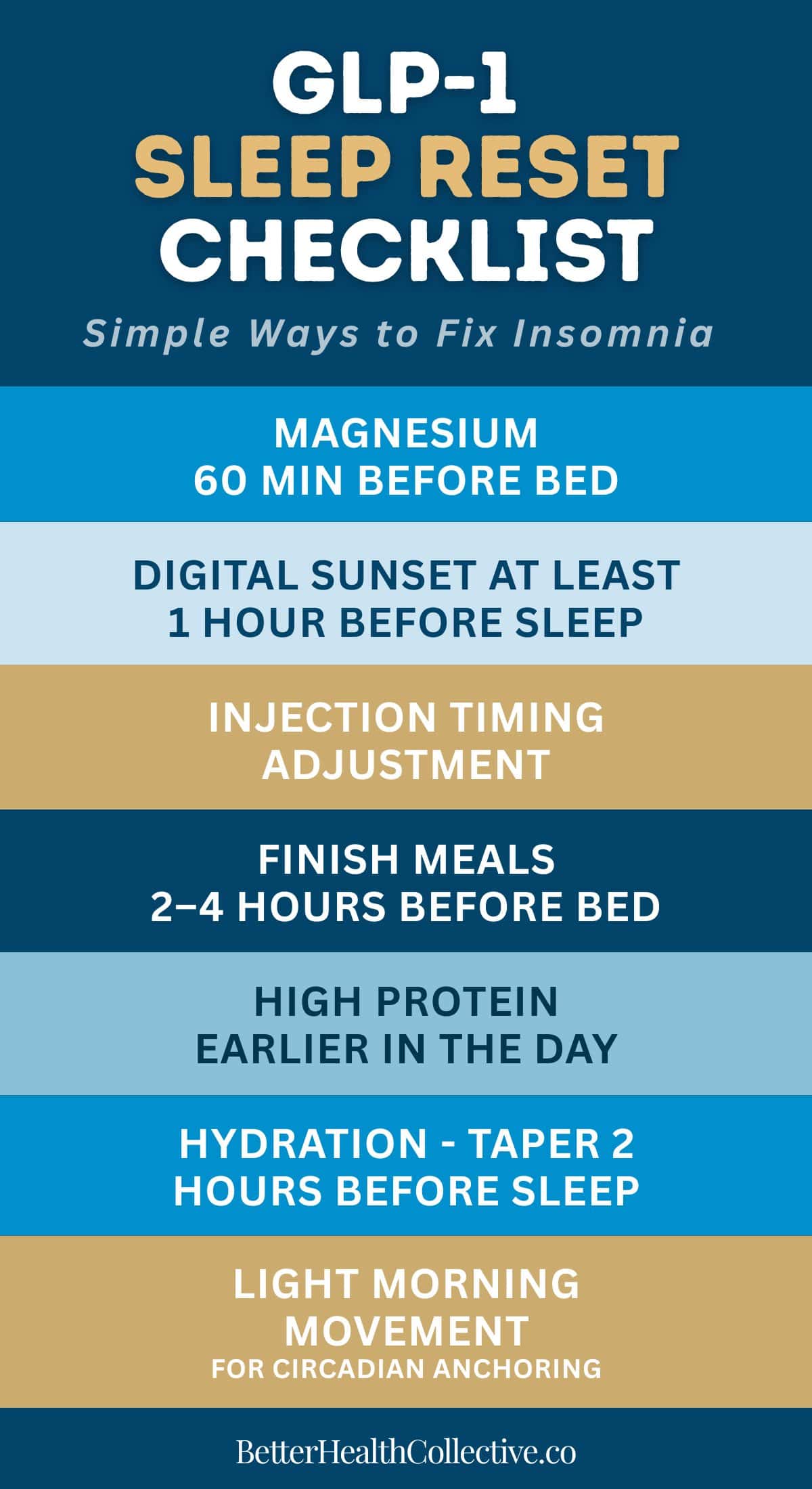
GLP-1 Sleep Reset Checklist
Save this.
✔ Magnesium routine 60 min before bed
✔ Digital sunset at least 1 hour before sleep
✔ Injection timing adjustment
✔ Finish meals 2–3 hours before bed
✔ Protein earlier in the day
✔ Hydration taper 2 hours before sleep
✔ Light morning movement for circadian anchoring
REMEMBER: Consistency is better than perfection.
FAQ: Quick Sleep Solutions
Why does my heart feel like it’s racing when I lie down?
A mild increase in resting heart rate is documented with some GLP-1 medications. If it keeps you awake, try Box Breathing:
Inhale 4
Hold 4
Exhale 4
Hold 4
Repeat 5–10 cycles. This activates your parasympathetic nervous system.
Should I take melatonin?
You can, but use it sparingly. Because GLP-1s slow digestion and metabolic processing, melatonin may linger longer in your system and cause next-day grogginess. Magnesium is often a gentler first step.
Is this dangerous?
Occasional sleep disruption is common during metabolic transitions. However, if you experience persistent insomnia, severe anxiety, or heart palpitations, speak with your healthcare provider.
Final Thoughts: Rest Is Part of the Work
When you’re on a metabolic journey, sleep isn’t downtime.
It’s when your body:
• Repairs muscle
• Regulates leptin and ghrelin
• Stabilizes blood sugar
• Supports fat metabolism
If you’re wired but tired, your body isn’t broken.
It’s adapting.
Give your nervous system the brake pedal it needs.
Put the phone down.
Dim the lights.
Shift the timing.
And remember — metabolic healing includes rest.
Please note: This website contains affiliate links. As an Amazon Associate, we earn from qualifying purchases at no additional cost to you.