
Please note: This website contains affiliate links. As an Amazon Associate, we earn from qualifying purchases at no additional cost to you.
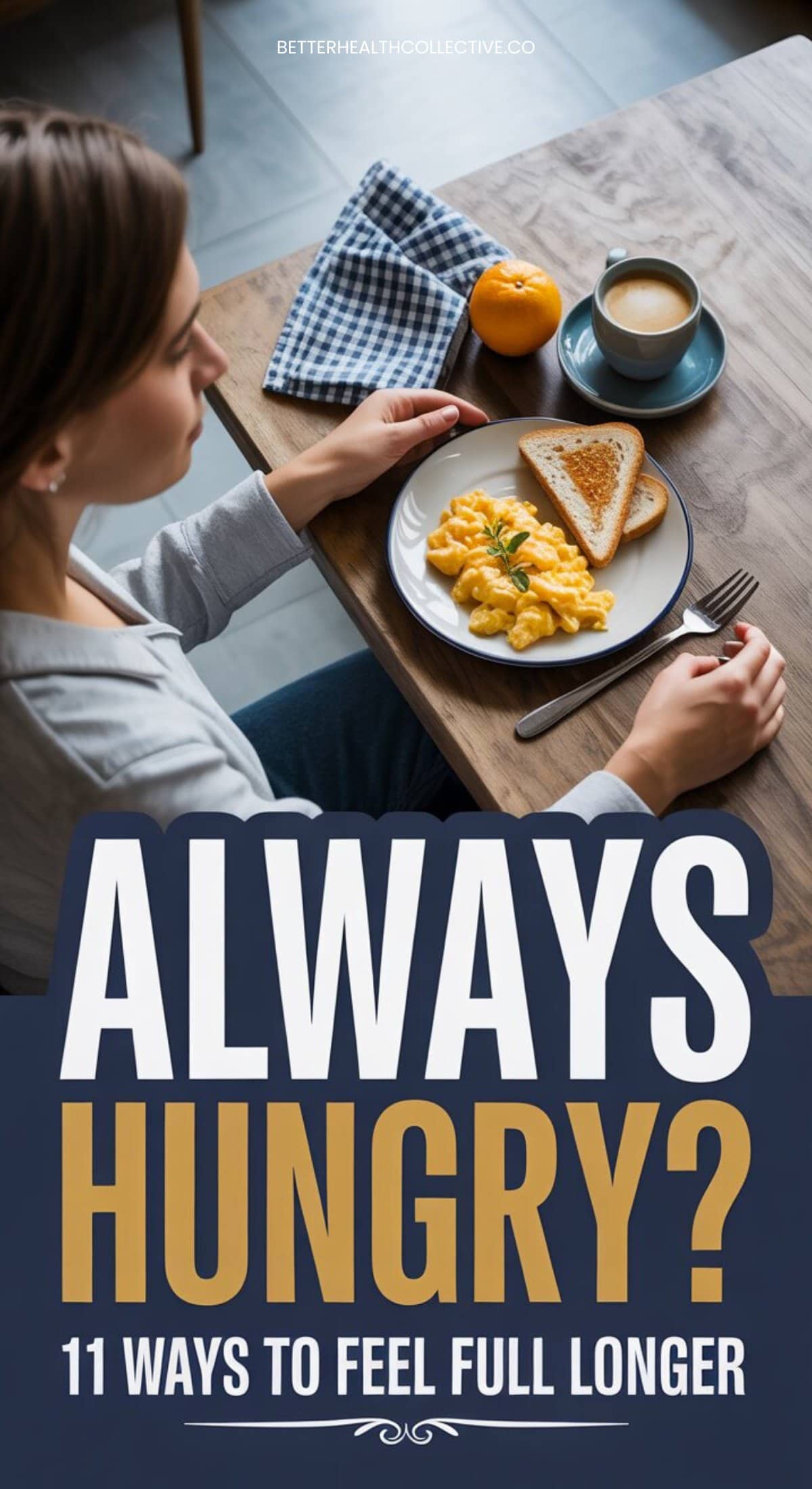
If hunger feels unpredictable, exhausting, or louder than it “should” be, this isn’t a personal failure — it’s physiology.
For years, we were taught that feeling hungry meant we were doing something wrong. But hunger isn’t a moral issue. It’s a biological signal influenced by hormones, blood sugar, digestion speed, stress, sleep, and how safe your body feels.
When those systems aren’t supported, hunger becomes chaotic. When they are, fullness feels calm and steady.
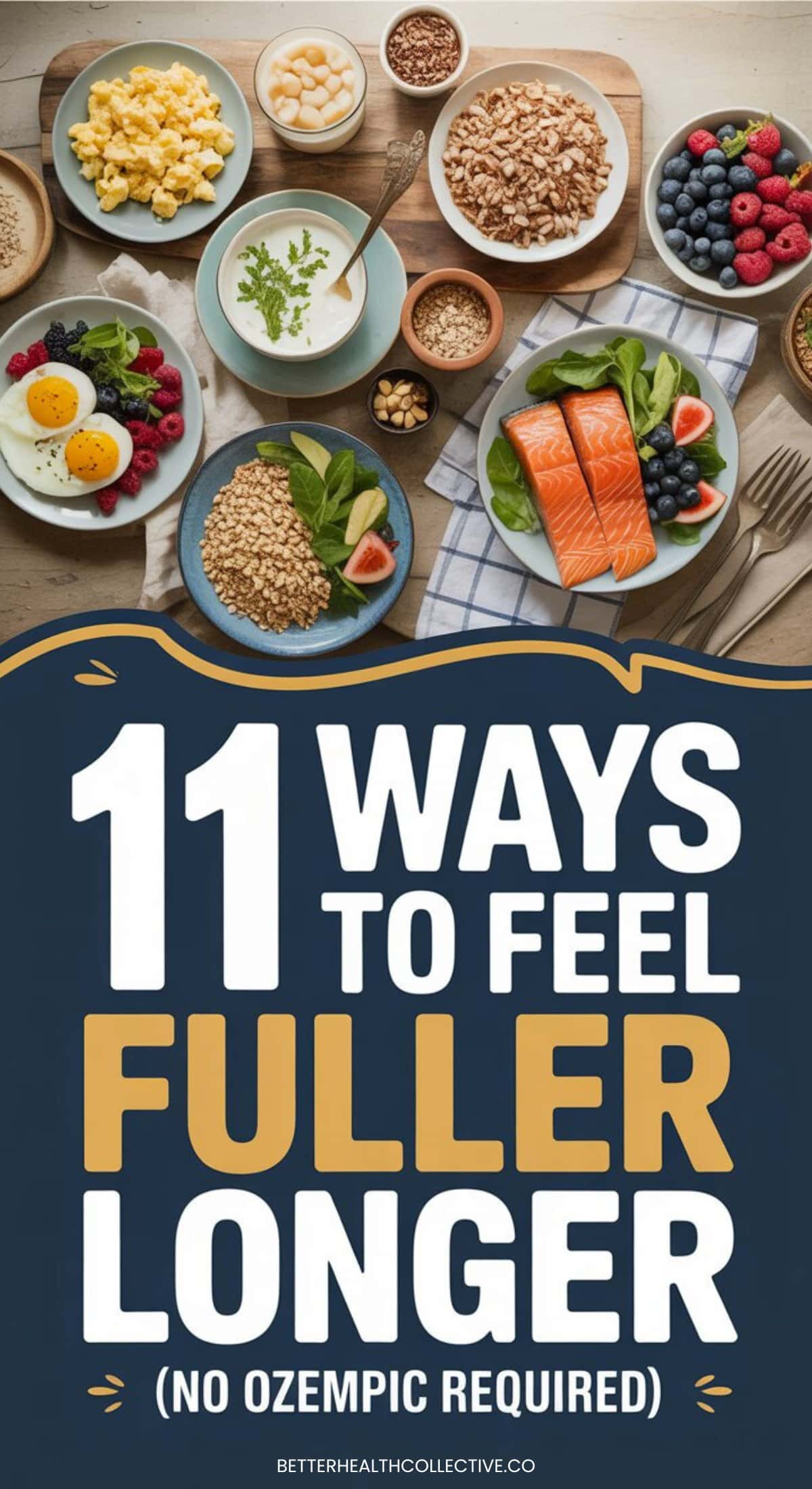
Here’s how to work with your body — not against it — to feel fuller longer in a way that actually lasts.
What You’ll Learn
- Why fullness is hormonal, not willpower-based
- How to naturally support GLP-1 and satiety hormones
- Why “eating less” often makes hunger worse
- Practical changes that quiet cravings without restriction
- How to build meals that feel satisfying, not just look healthy
1. Eat Protein First (Not Just More Protein)
Protein doesn’t just “fill you up” — it sends powerful chemical signals to your brain that say, we’re safe, we’re nourished, we can relax.
Studies show high-protein meals increase satiety hormones like GLP-1 and PYY and reduce hunger signals like ghrelin, helping you feel full longer. But timing matters just as much as amount.
When protein is the first bite, fullness arrives sooner and lasts longer.
Why this matters in real life:
If you start meals with carbs or snack foods, your blood sugar spikes before fullness hormones kick in. That’s why you can eat and still feel unsatisfied.
How to apply this gently:
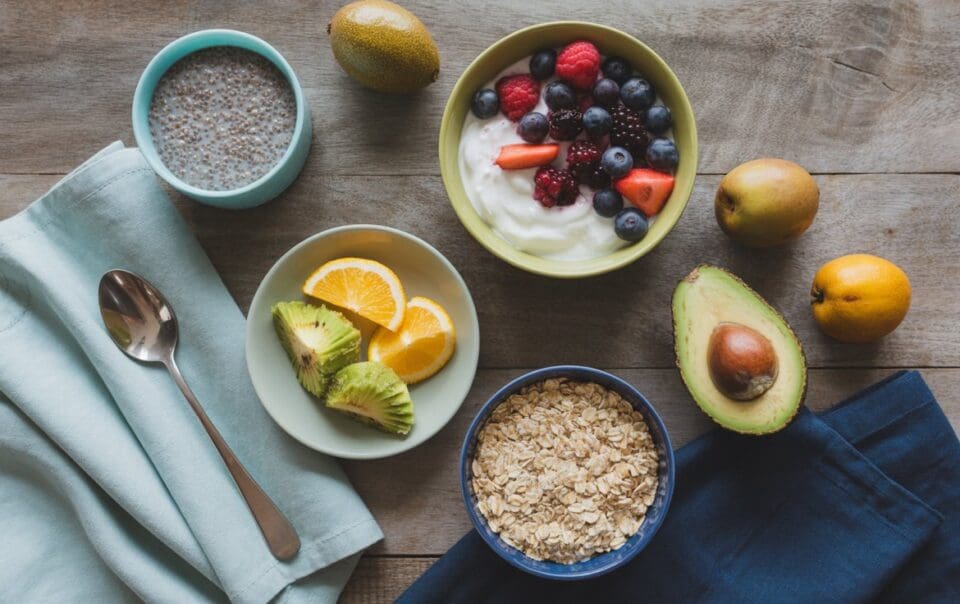
- Start meals with eggs, Greek yogurt, cottage cheese, fish, chicken, tofu, or beans
- Add protein before fruit, bread, or grains
- Aim for protein at every meal — not perfection, just consistency
This alone can dramatically quiet hunger.
2. Include Healthy Fats (They Slow Digestion on Purpose)
Fat is not the enemy of fullness — it’s one of its strongest allies.
Dietary fat slows gastric emptying, meaning food stays in your stomach longer. That slower digestion is exactly what keeps you satisfied between meals.
Why people struggle without fat:
Low-fat meals digest quickly. You might eat a “big” salad and feel hungry again 45 minutes later — not because you need more food, but because digestion was too fast.
Helpful fat sources:
- Avocado
- Olive oil
- Nuts and seeds
- Fatty fish
Fat works best when paired with protein. Together, they create a steady, calm fullness instead of a spike-and-crash cycle.
You may also like this article: Foods That Naturally Boost GLP-1 (No Injections, No Drama)
3. Use Fiber Strategically (More Isn’t Always Better)
Fiber supports fullness, gut health, and blood sugar — but only when added thoughtfully.
Soluble fiber slows digestion and feeds beneficial gut bacteria that help regulate appetite hormones. Insoluble fiber adds bulk, which can be helpful or overwhelming depending on your digestion.
Why fiber backfires for some people:
Jumping from low fiber to very high fiber can cause bloating, discomfort, and worse hunger signals.
Gentle ways to add fiber:
- Oats, chia, flax, lentils
- Cooked vegetables instead of raw
- Berries instead of juices
Fiber works best alongside protein, fat, and adequate hydration.
4. Slow Down Just Enough for Fullness Hormones to Respond
Your stomach can fill before your brain realizes it.
GLP-1, leptin, and peptide YY take time to signal fullness — usually about 15–20 minutes.
Why rushing meals causes overeating:
If you eat quickly, you can overshoot fullness before the signal arrives. Then you feel uncomfortably full after the fact.
Simple shifts that help:
- Put your fork down between bites
- Eat at least one meal per day without screens
- Notice when food stops tasting amazing — that’s often the first fullness cue
This isn’t about eating slowly all the time. It’s about giving your body enough time to communicate.
5. Hydrate Consistently (Not Just When You’re Thirsty)
Mild dehydration feels a lot like hunger.
When hydration is low:
- Digestion slows
- Cravings increase
- Energy dips
- Hunger signals get louder
Helpful hydration habits:
- Sip fluids throughout the day instead of chugging
- Add electrolytes if you feel fatigued or headachy (ideally a sugar-free or low sugar electrolyte)
- Drink water before caffeine in the morning
Hydration supports digestion and appetite regulation — especially important if you’re eating less.
Stay Hydrated

LMNT Electrolyte Powder Packets | No Sugar, No Artificial Ingredients
Shop on Amazon
$14.99
We earn a commission if you make a purchase, at no additional cost to you.
11/30/2025 05:34 am GMT

6. Build Meals That Keep Blood Sugar Steady
Blood sugar swings are one of the biggest drivers of hunger.
Spikes lead to crashes. Crashes lead to cravings. Cravings feel urgent and uncomfortable.
To support stable blood sugar:
- Pair carbs with protein and fat
- Avoid eating carbs alone
- Eat regularly — extreme gaps can backfire
When blood sugar is steady, hunger feels calm instead of desperate.
7. Don’t Undereat (Your Body Needs to Trust You)
This is one of the hardest lessons.
Eating too little tells your body that food is scarce. When that happens, your body protects itself by increasing hunger and conserving energy.
Signs you may be undereating:
- Strong evening cravings
- Obsessive food thoughts
- Low energy
- Feeling “out of control” later
Feeling full is not a failure. It’s a biological requirement.
8. Prioritize Sleep (Hunger Hormones Depend on It)
Sleep directly affects appetite regulation. Poor sleep:
- Increases ghrelin (hunger)
- Decreases leptin (fullness)
- Increases cravings for carbs and sugar
Even one bad night can shift appetite the next day.
If hunger feels louder than usual, check your sleep before changing your food.
9. Reduce Ultra-Processed Foods (They Bypass Fullness Signals)
Ultra-processed foods digest quickly and are designed to override satiety.
They don’t trigger the same hormonal responses as whole foods, even at similar calorie levels.
This doesn’t mean “never eat them.” It means don’t build your diet around them if fullness is the goal.
Whole foods naturally support appetite regulation.
10. Eat Earlier When Possible (Your Body Is More Responsive)
This isn’t about strict meal times or forcing yourself to eat when you’re not hungry. It’s about understanding how your body naturally processes food throughout the day.
Your metabolism, insulin sensitivity, and digestive efficiency are typically strongest earlier in the day. That means your body is better equipped to handle food in the morning and early afternoon than it is late at night.
In simple terms:
The same meal often “hits differently” at noon than it does at 9 p.m.
Why This Matters for Fullness and Hunger
When you eat earlier:
- Blood sugar tends to stay more stable
- Digestion feels easier
- Fullness signals arrive sooner
- Evening cravings are often reduced
When most of your calories are pushed late into the day, digestion slows, blood sugar control becomes less efficient, and hunger hormones can feel louder at night — even if you technically ate enough.
This is why many people say, “I’m not hungry all day, but I’m starving at night.” It’s not a lack of discipline — it’s timing.
What This Looks Like in Real Life
Eating earlier doesn’t mean skipping dinner or forcing a big breakfast. It means:
- Making breakfast or lunch your most nourishing meals
- Eating enough earlier so hunger doesn’t pile up by evening
- Keeping dinner lighter and easier to digest
For many people, this alone dramatically reduces nighttime snacking and “out-of-nowhere” cravings.
How to Apply This Gently (No Rules, No Guilt)
- If mornings are tough, start with a small protein-forward breakfast
- Make lunch your most complete, satisfying meal
- Aim to eat dinner a little earlier when possible — not perfectly
- If you work late or have a different schedule, simply avoid saving most of your food for the very end of the day
This isn’t about being rigid — it’s about giving your body fuel when it’s most responsive, so fullness lasts longer and hunger feels calmer.
11. Calm Your Nervous System (Stress = Hunger)
Chronic stress increases cortisol, which increases appetite and cravings.
Sometimes hunger isn’t about food at all — it’s about overwhelm.
Support your nervous system with:
- Gentle movement
- Time outside
- Slow breathing
- Calm eating environments
A regulated nervous system regulates appetite more easily.
What “Natural Ozempic” Can and Cannot Do
Foods and habits that support GLP-1 can:
- Improve fullness
- Reduce cravings
- Stabilize blood sugar
- Support appetite awareness
They cannot replicate medication-level appetite suppression — and that’s okay.
Natural approaches work best when the goal is support, not force.
Frequently Asked Questions About Feeling Fuller Longer Naturally
Why do I feel hungry again so soon after eating?
Feeling hungry shortly after meals is often a sign of blood sugar swings, low protein intake, or meals that digest too quickly. Meals high in refined carbs and low in protein or fat tend to spike blood sugar and then cause crashes, which can trigger hunger soon after eating. Supporting fullness hormones like GLP-1 requires balanced meals with protein, fiber, and healthy fats.
Can certain foods really help me feel full longer?
Yes. Foods rich in protein, soluble fiber, and healthy fats slow digestion and stimulate hormones that regulate appetite. While no food works like medication, consistent choices like protein-forward meals, fiber-rich foods, and balanced carbohydrates can significantly improve satiety and reduce cravings over time.
Is feeling hungry a sign that I’m doing something wrong?
Not at all. Hunger is a biological signal, not a failure of willpower. If hunger feels constant or urgent, it’s often a sign that your body needs more nourishment, better meal timing, or more stable blood sugar—not more restriction.
Do “natural Ozempic” foods actually work?
Foods and habits that support GLP-1 can help you feel fuller longer and reduce appetite fluctuations, but they do not replicate the strength of GLP-1 medications. Natural approaches work best as supportive tools that improve appetite awareness and metabolic health, not as quick fixes
Should I eat less if I’m trying to feel fuller longer?
Often, the opposite is true. Undereating can increase hunger hormones and lead to stronger cravings later. Eating enough—especially earlier in the day—and prioritizing protein and balanced meals helps your body feel safe and satisfied, which naturally supports fullness.
Does meal timing really make a difference for hunger?
Yes. Your body processes food more efficiently earlier in the day when insulin sensitivity and metabolism are higher. Eating nourishing meals earlier and lighter meals later can help reduce evening cravings and improve overall appetite control without strict rules.
Can stress really make me feel hungrier?
Absolutely. Chronic stress raises cortisol levels, which can increase appetite and cravings—especially for quick-energy foods. Supporting your nervous system through rest, gentle movement, and calmer eating environments can make hunger feel quieter and more manageable.
How long does it take to notice changes in fullness?
Many people notice improvements within a few days to a couple of weeks after consistently eating balanced meals and stabilizing hydration and sleep. Appetite regulation improves gradually as your body adapts to supportive habits.
Final Thoughts
Feeling fuller longer isn’t about tricks or discipline.
It’s about creating safety, stability, and nourishment in your body so hunger no longer feels like an emergency.
When you eat enough, hydrate well, manage stress, and support your hormones, fullness becomes quieter and more predictable — without drama.
Your body isn’t broken. It’s responding exactly as it was designed to.
Please note: This website contains affiliate links. As an Amazon Associate, we earn from qualifying purchases at no additional cost to you.