

Please note: This website contains affiliate links. As an Amazon Associate, we earn from qualifying purchases at no additional cost to you.
Have you ever had one of those weeks where your muscles feel tight, your sleep is off, and your energy just isn’t quite where you want it to be?
Sometimes we chalk those things up to stress, busy schedules, or not getting enough rest. But occasionally, your body might simply be asking for a little more of a nutrient it relies on every day — magnesium.
Magnesium quietly supports hundreds of functions in the body. It helps muscles relax, supports nerve function, plays a role in energy production, and even helps the body wind down at the end of the day.
The good news is that magnesium shows up naturally in a lot of everyday foods.
If you’re looking for simple ways to support your body, adding a few more magnesium rich foods to your meals can be an easy place to start.
How Much Magnesium Do You Need Per Day?
Before we dive into magnesium rich foods, it helps to have a general idea of how much magnesium your body actually needs each day.
According to the National Institutes of Health, recommended daily magnesium intake varies slightly depending on age and gender.
Here’s a quick overview:
| Group | Recommended Daily Magnesium |
|---|---|
| Adult Women | 310–320 mg per day |
| Adult Men | 400–420 mg per day |
| Pregnant Women | 350–360 mg per day |
| Teens (14–18) | 360–410 mg per day |
Magnesium supports a wide range of functions in the body — including muscle relaxation, nerve function, energy production, and sleep regulation — so getting enough on a regular basis can make a meaningful difference in how you feel.
The good news is that many everyday foods naturally contain magnesium. Adding a few more magnesium rich foods to your meals throughout the day can help you gradually work toward these recommended amounts.
And the list you’re about to see includes some of the easiest and most delicious options to start with.
Top 10 Magnesium Rich Foods (Highest to Lowest)
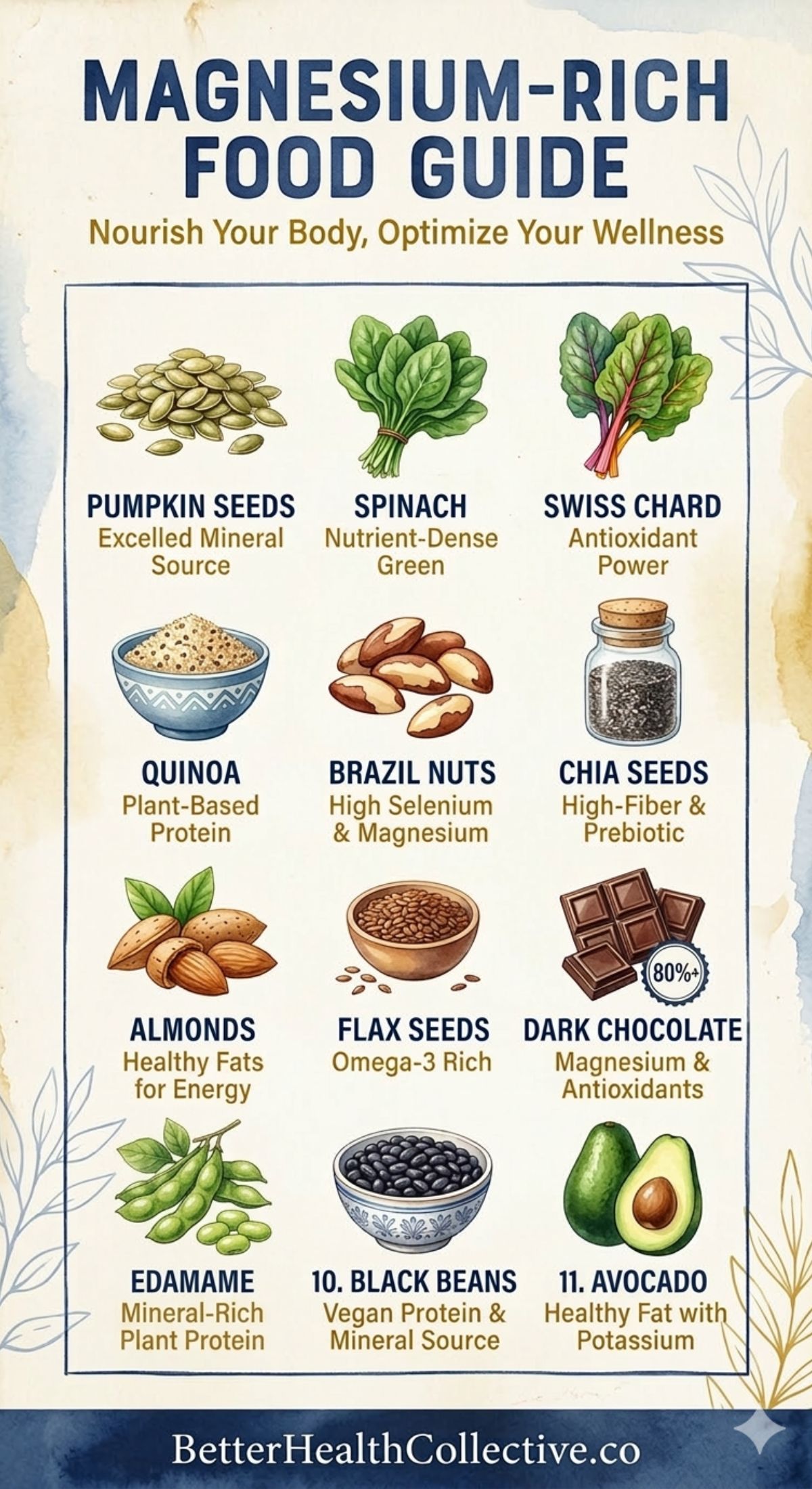
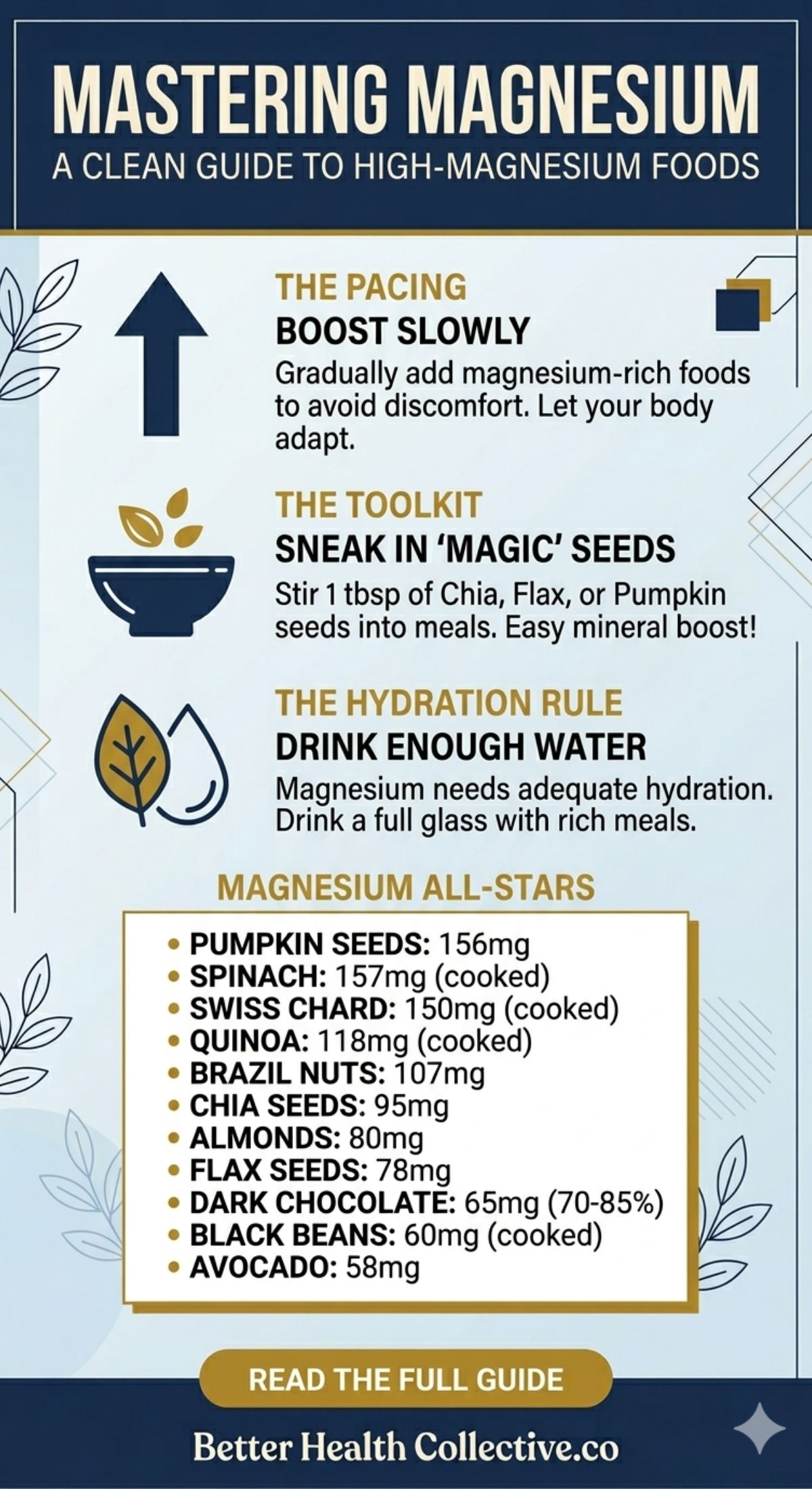
If you’re looking for the MVPs of Magnesium, here they are! We’ll go into more detail below, but we wanted to give you a sneak preview.
| Food | Serving Size | Magnesium (Approx.) |
|---|---|---|
| Pumpkin Seeds | 1 oz | 150 mg |
| Spinach (cooked) | 1 cup | 157 mg |
| Swiss Chard (cooked) | 1 cup | 150 mg |
| Quinoa (cooked) | 1 cup | 118 mg |
| Brazil Nuts | 1 oz | 107 mg |
| Chia Seeds | 2 tablespoons | 95 mg |
| Brown Rice (cooked) | 1 cup | 86 mg |
| Almonds | 1 oz | 80 mg |
| Cashews | 1 oz | 74 mg |
| Dark Chocolate (70–85%) | 1 oz | 64 mg |
25 Foods That Are Naturally High in Magnesium
Leafy Greens That Provide Magnesium
1. Spinach
Spinach is one of the most well-known magnesium rich foods. It’s incredibly versatile too — you can add it to smoothies, toss it into salads, sauté it with garlic, or stir it into soups. A single cup of cooked spinach contains roughly 150 mg of magnesium, making it one of the easiest ways to boost your intake.
2. Swiss Chard
Swiss chard is another leafy green that’s packed with magnesium. It has a slightly earthy flavor and works well sautéed with olive oil, garlic, and lemon. Many people also love adding chopped chard to pasta dishes or grain bowls.
3. Kale
Kale tends to get attention for vitamin K and antioxidants, but it also contains a good amount of magnesium.
Massage it with olive oil and lemon juice for a tender salad, or add it to smoothies for an extra nutrient boost.
Nuts That Are Naturally High in Magnesium
4. Almonds
Almonds are one of the easiest magnesium rich snacks to keep on hand. A small handful provides a nice dose of magnesium along with healthy fats and protein. Try adding sliced almonds to yogurt, oatmeal, or salads.
5. Cashews
Cashews are another nut that contains a healthy amount of magnesium. They also have a naturally creamy texture that works beautifully in sauces and dairy-free recipes. Cashew butter is also a delicious way to enjoy them.
6. Brazil Nuts
Brazil nuts are well known for their selenium content, but they also contain magnesium. Just one or two nuts can provide a surprising amount of nutrients.
Seeds That Pack a Magnesium Punch
7. Pumpkin Seeds
Pumpkin seeds are one of the most concentrated sources of magnesium.
A small serving can provide well over 100 mg of magnesium.
Sprinkle them on salads, yogurt, oatmeal, or roasted vegetables.
8. Chia Seeds
Chia seeds are tiny but powerful.
In addition to magnesium, they also contain fiber, omega-3 fatty acids, and plant protein. Try stirring them into smoothies or making chia pudding.
9. Flax Seeds
Flax seeds are another nutrient-dense seed that provides magnesium along with fiber and healthy fats. Ground flax works especially well in oatmeal, yogurt, protein bowls and baked goods.
Beans and Legumes That Provide Magnesium
10. Black Beans
Black beans are a wonderful plant-based source of magnesium. They’re also rich in fiber and protein, which makes them a filling addition to meals. Add them to tacos, salads, soups, or grain bowls.
11. Chickpeas
Chickpeas (also called garbanzo beans) contain a variety of important minerals including magnesium. They’re incredibly versatile and can be used in everything from hummus to roasted snacks.
12. Lentils
Lentils are one of the most affordable and nutritious pantry staples you can keep around. They provide magnesium along with protein and fiber. They’re perfect for soups, stews, and warm grain bowls.
Whole Grains That Contain Magnesium
13. Quinoa
Quinoa is often considered a superfood because it provides protein, fiber, and several minerals — including magnesium. It’s a great base for grain bowls and salads.
14. Brown Rice
Brown rice contains more magnesium than white rice because it still has the nutrient-rich outer layers intact. It’s a simple swap that can add more nutrients to everyday meals.
15. Oats
Oats provide magnesium along with soluble fiber, which helps support heart health. A bowl of oatmeal topped with nuts and seeds can be a great magnesium-rich breakfast.
Fruits That Contain Magnesium
16. Avocados
Avocados are famous for their healthy fats, but they also contain magnesium.
They’re perfect on toast, in salads, or blended into smoothies.
17. Bananas
Bananas are often associated with potassium, but they also provide magnesium.
They make a convenient snack and pair perfectly with nut butter.
18. Dried Figs
Dried figs are naturally sweet and contain a variety of minerals including magnesium. They’re delicious chopped into oatmeal or yogurt.
Other Surprising Magnesium Rich Foods
19. Dark Chocolate
Yes, dark chocolate contains magnesium.
Choosing chocolate with 70% cacao or higher provides more nutrients and less sugar. A small square can be a satisfying way to end a meal.
20. Tofu
Tofu is a plant-based protein that also provides magnesium. It works beautifully in stir-fries, grain bowls, and even smoothies.
21. Edamame
Edamame are young soybeans that contain protein, fiber, and magnesium. They make a great snack with a little sea salt.
22. Yogurt
Some varieties of yogurt provide magnesium along with protein and probiotics. Greek yogurt is especially popular for its high protein content.
23. Salmon
Salmon provides magnesium along with omega-3 fatty acids that support heart and brain health. It’s one of the most nutrient-dense proteins you can include in your meals.
24. Potatoes
Potatoes are surprisingly nutritious and contain magnesium along with potassium. PRO TIP: Leaving the skin on helps retain more nutrients.
25. Peanut Butter
Peanut butter contains magnesium along with protein and healthy fats. Spread it on toast, add it to smoothies, or enjoy it with sliced apples.
Magnesium Content of Common Magnesium Rich Foods
If you’re trying to add more magnesium rich foods to your meals, it can be helpful to see roughly how much magnesium different foods provide. Here’s a quick reference guide.
| Food | Serving Size | Magnesium (Approx.) |
|---|---|---|
| Spinach (cooked) | 1 cup | 157 mg |
| Swiss Chard (cooked) | 1 cup | 150 mg |
| Kale (cooked) | 1 cup | 30 mg |
| Almonds | 1 oz (about 23 almonds) | 80 mg |
| Cashews | 1 oz | 74 mg |
| Brazil Nuts | 1 oz (6–8 nuts) | 107 mg |
| Pumpkin Seeds | 1 oz | 150 mg |
| Chia Seeds | 2 tablespoons | 95 mg |
| Flax Seeds | 2 tablespoons | 80 mg |
| Black Beans (cooked) | ½ cup | 60 mg |
| Chickpeas (cooked) | ½ cup | 40 mg |
| Lentils (cooked) | ½ cup | 36 mg |
| Quinoa (cooked) | 1 cup | 118 mg |
| Brown Rice (cooked) | 1 cup | 86 mg |
| Oats (cooked) | 1 cup | 57 mg |
| Avocado | 1 medium | 58 mg |
| Banana | 1 medium | 32 mg |
| Dried Figs | ½ cup | 50 mg |
| Dark Chocolate (70–85%) | 1 oz | 64 mg |
| Tofu | ½ cup | 37 mg |
| Edamame | ½ cup | 50 mg |
| Yogurt (plain) | 1 cup | 45 mg |
| Salmon | 3 oz | 26 mg |
| Potato (with skin) | 1 medium | 48 mg |
| Peanut Butter | 2 tablespoons | 49 mg |
Simple Ways to Add More Magnesium Rich Foods to Your Diet
If you’re trying to increase magnesium naturally, you don’t have to overhaul your entire diet.
A few small changes can make a big difference:
• add nuts or seeds to breakfast
• include leafy greens in lunches and dinners
• snack on almonds or pumpkin seeds
• choose whole grains instead of refined grains
• enjoy a square of dark chocolate occasionally
These small habits can help you gradually add more magnesium rich foods into your routine.
Frequently Asked Questions About Magnesium
What food has the most magnesium?
Pumpkin seeds are often considered one of the foods highest in magnesium. Just a small one-ounce serving can provide around 150 mg of magnesium, which is a significant portion of the recommended daily intake.
What fruit is highest in magnesium?
Fruits aren’t usually the most concentrated sources of magnesium, but several still contribute helpful amounts. Some fruits that contain magnesium include: avocados, bananas, dried figs and papaya.
Avocados are one of the best options, providing around 50–60 mg of magnesium in a medium avocado.
Are there any drinks that are high in magnesium?
Some beverages naturally contain magnesium or can contribute to daily intake. A few examples include mineral water, smoothies made with leafy greens, almond milk, or dark chocolate drinks.
Green smoothies made with spinach or kale are an easy way to bump up your magnesium intake while also getting other beneficial nutrients.
Can cooking reduce magnesium in foods?
Some magnesium can be lost during cooking, particularly when foods are boiled in water. For example, leafy greens may lose some minerals if they’re boiled and the cooking water is discarded.
To help retain nutrients, many people prefer cooking methods like steaming, sautéing or roasting.
How quickly can magnesium levels improve with diet?
Improving magnesium intake through food can start supporting the body fairly quickly, but noticeable changes can take time depending on individual diet and overall health.
Consistently including magnesium rich foods in meals — along with balanced nutrition and hydration — can help support healthy magnesium levels over time.
Do You Need More Magnesium If You’re Taking a GLP-1 Medication?
If you’re taking a GLP-1 medication for weight loss or blood sugar support, you may be wondering whether your magnesium needs change. At the moment, there are no separate magnesium intake guidelines specifically for people taking GLP-1 medications. The general recommendations still apply:
- Women: about 310–320 mg per day
- Men: about 400–420 mg per day
However, some people on GLP-1 medications may find magnesium intake becomes more important for a few practical reasons.
- Appetite Changes: One of the main effects of GLP-1 medications is reduced appetite. While this can be very helpful for weight loss, it can also mean people are simply eating less food overall, which may make it harder to get enough vitamins and minerals — including magnesium. That’s why focusing on nutrient-dense foods becomes especially important.
- Digestive Side Effects: Some people experience digestive symptoms (i.e. nausea, diarrhea, etc) when starting GLP-1 medications. If those symptoms occur frequently, they can sometimes affect hydration and electrolyte balance, including magnesium levels.
If those symptoms occur frequently, they can sometimes affect hydration and electrolyte balance, including magnesium levels.
If you’re experiencing symptoms like persistent muscle cramps, fatigue, or headaches while taking GLP-1 medications, it’s always a good idea to discuss them with your healthcare provider.
Final Thoughts
Magnesium may not get as much attention as some other nutrients, but it plays a powerful role in how the body functions every day.
From supporting muscles and energy to helping the body relax, magnesium quietly works behind the scenes to keep things running smoothly.
Adding more magnesium rich foods to your meals is a simple and natural way to support your body — and many of these foods are already delicious everyday staples.
Sometimes the easiest changes are the ones that make the biggest difference.
Please note: This website contains affiliate links. As an Amazon Associate, we earn from qualifying purchases at no additional cost to you.