
Please note: This website contains affiliate links. As an Amazon Associate, we earn from qualifying purchases at no additional cost to you.
When people talk about GLP-1 medications, they usually focus on weight loss. Sometimes they mention side effects. Occasionally they talk about appetite.
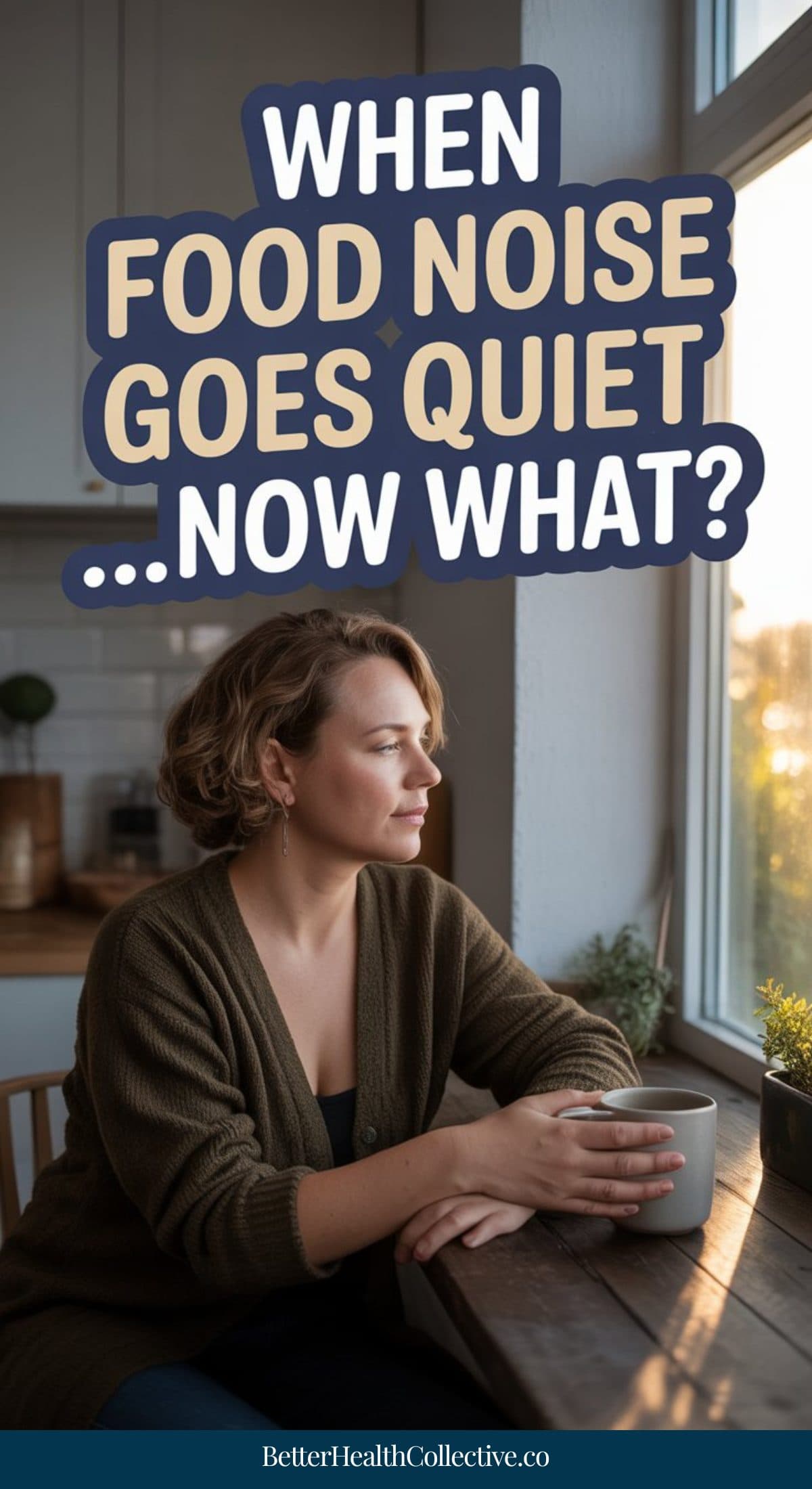
What they don’t talk about enough is what happens in your head when the food noise disappears.
Because when it does… it can feel amazing.
And confusing.
And oddly emotional — all at the same time.
If you’ve ever thought, “Why do I feel a little lost now that food isn’t running my life?” — you’re not alone.
When the Noise Finally Goes Quiet
For many of us, food noise wasn’t subtle.
It was the constant background hum:
- Thinking about the next meal while finishing the current one
- Cravings popping up when you were stressed, bored, tired, or emotional
- Food being the reward, the comfort, the distraction, the celebration
Starting a GLP-1 can feel like someone reached over and turned that noise way down — or off entirely.
At first, it’s a relief.
A deep exhale you didn’t realize you’d been holding for years.
And then… something else shows up.
Silence.
Who Am I Without Cravings?
This part catches a lot of people off guard.
Because food wasn’t just food — it was part of your identity.
Maybe you were:
- The snack person
- The stress eater
- The baker
- The one who planned trips around restaurants
- The person who used food to cope when life felt heavy
When food stops being the main emotional outlet, it can feel like losing an old friend — even if that friend wasn’t always good for you.
That sense of “something’s missing” doesn’t mean the medication isn’t working.
It means your brain is adjusting to a new reality.
The Dopamine Gap (Why Things Feel Flat Sometimes)
Food used to give quick comfort. A little hit of relief. A moment of pleasure.
When that’s gone, some people notice:
- Boredom
- Restlessness
- A low-level blah feeling
- Wanting something but not knowing what
Nothing is “wrong.”
Your brain just hasn’t found new ways to get that feel-good signal yet.
A gentle shift that helps:
Instead of waiting for motivation or joy to magically appear, intentionally build small non-food rewards into your day:
- A quick walk
- Music that boosts your mood
- A warm shower or brief cold rinse
- A short creative break
You’re teaching your brain that comfort and pleasure still exist — they just come from different places now.
When Boredom Eating Fades… and the Quiet Feels Awkward
Without food filling every pause, the quiet parts of the day can feel uncomfortable.
This is especially common:
- Late afternoon
- Evenings
- While watching TV
Not because you’re hungry — but because your brain is used to doing something.
Try this instead:
Create a short list of “default activities” for those moments:
- A 10-minute tidy
- A hands-on hobby
- Texting someone you care about
- Stretching or gentle movement
You’re not avoiding food — you’re rewriting a habit loop.
Yes, It’s Okay to Grieve Food
This part matters.
You can be grateful for the freedom GLP-1s give you and still miss the comfort food once provided.
That doesn’t make you weak or ungrateful.
It makes you human.
Naming the feeling — “I miss how food used to comfort me” — often keeps it from turning into mindless eating later. Suppressed emotions have a way of showing up sideways.
Social Situations Without Food as a Crutch
Food and drinks often act as social armor.
If you’re suddenly not interested, it can feel awkward — like you don’t know what to do with your hands or yourself.
A simple trick:
Always have a “prop.”
A sparkling water, tea, or mocktail gives you something to hold and signals participation — without pressure.
You don’t owe anyone an explanation for eating differently now.
Learning a New Language: Hunger Without the Drama
Hunger on GLP-1s is quieter. Subtler. Easier to miss.
Instead of big hunger pangs, you might notice:
- A deep breath or sigh during a meal
- Food suddenly tasting “just okay”
- Feeling low energy or foggy without feeling hungry
These are your new cues.
Stopping earlier, eating slower, and fueling gently — even when hunger isn’t loud — can prevent nausea, fatigue, and that “why do I feel awful?” feeling later.
Food Becomes Functional… and That’s an Adjustment
For many people, food shifts from emotional to practical.
That transition can feel strange. Even disappointing.
But something interesting often happens with time:
You start enjoying food again — just without the desperation.
Taste becomes clearer. Portions feel right. Meals feel calmer.
You’re no longer eating for relief.
You’re eating for nourishment and pleasure.
What If the Food Noise Comes Back?
Some people notice the noise creeping in:
- Near the end of the week
- If a dose is delayed
- During plateaus
That’s why this emotional work matters.
The medication quiets the noise — but you’re building the tools that last.
Think of this phase as practice.
Not perfection.
Not forever.
Just learning.
Final Thoughts: This Is a New Kind of Freedom
Life without food noise isn’t about willpower or discipline.
It’s about space.
Space to think.
Space to feel.
Space to choose.
And like any big change, it takes time to settle into.
If you feel relieved, confused, grateful, emotional, or all of the above — you’re doing this exactly right.
You’re not losing yourself.
You’re meeting a quieter version of you — and learning what she needs now.
** If you have more questions, please keep scrolling to see our readers commonly asked questions!
Frequently Asked Questions
Is it normal to feel emotional when food noise goes away?
Yes — very normal. Food often played a much bigger role than just fuel. It may have been comfort, stress relief, routine, or even part of your identity. When that disappears, it’s common to feel relief and sadness at the same time. Both can be true.
Why do I feel bored or “flat” now that I’m on a GLP-1?
Food used to provide small hits of pleasure throughout the day. When those stop, your brain hasn’t yet learned where to get that feel-good feeling elsewhere. This usually improves as you find new routines, small joys, and non-food ways to unwind or feel accomplished.
I don’t think about food much anymore — is that healthy?
For many people, yes. If food used to dominate your thoughts, this quiet can be a sign that your brain is finally getting a break. The key is making sure you’re still eating regularly and nourishing your body, even if hunger feels quieter than before.
What if I miss food even though I’m not hungry?
That’s very common. Missing food doesn’t always mean you want to eat — it often means you miss what food represented. Comfort, distraction, reward, or connection. Acknowledging that feeling helps you respond to it gently instead of automatically eating out of habit.
Sometimes I forget to eat. Is that a problem?
It can be. GLP-1 medications can make hunger cues very subtle, so it’s easy to go too long without eating. If you notice low energy, headaches, irritability, or brain fog, your body may need fuel even if your stomach doesn’t feel hungry. Gentle structure can help.
Will food noise come back if I miss a dose or stop the medication?
For many people, food noise does return when medication levels drop or stop. That’s why the time on a GLP-1 can be so valuable — it gives you space to build new habits, coping tools, and awareness that can help long-term.
Is it okay if food feels more “functional” now?
Absolutely. Many people find that food shifts from emotional to practical on GLP-1s. That doesn’t mean you’ll never enjoy food again — it often means you enjoy it differently, with less urgency and more intention.
Why do I still want to eat when I’m bored or stressed?
Even when physical cravings are quiet, habits can still be strong. If you’ve eaten during certain activities for years — watching TV, working late, feeling overwhelmed — your brain still expects that routine. This doesn’t mean the medication isn’t working; it just means habits take time to change.
Will I ever enjoy food the way I used to?
Most people say yes — but in a healthier way. The urgency and obsession tend to fade, but pleasure doesn’t disappear. Many people actually enjoy food more once they’re eating slowly, choosing what truly sounds good, and not feeling out of control around it.
What’s the biggest mindset shift to focus on during this phase?
Think of this time as practice, not perfection. You’re learning how to live without constant food noise — something many people never get to experience. Be curious, not critical, and allow yourself time to adjust to this new kind of quiet.
Please note: This website contains affiliate links. As an Amazon Associate, we earn from qualifying purchases at no additional cost to you.