



Please note: This website contains affiliate links. As an Amazon Associate, we earn from qualifying purchases at no additional cost to you.
You’re good all day. Focused. Busy. Maybe even feeling proud of your food choices.
And then 9:47 PM hits.
Suddenly you want cereal. Or cookies. Or something sweet and salty and crunchy at the same time. Welcome to late night cravings — the most persistent little gremlin in modern life.
If you struggle with late night cravings, you are not weak. You are not broken. And you definitely don’t lack willpower. There are real biological and emotional reasons why food cravings spike at night. Once you understand them, you can respond strategically instead of just feeling guilty.
What Causes Late Night Cravings?
Late night cravings are rarely just about hunger. They’re usually a mix of biology, blood sugar shifts, and emotional eating triggers.
Hunger Hormones Shift at Night
Your body regulates appetite through hormones — primarily ghrelin (the “I’m hungry” hormone) and leptin (the “I’m full” hormone). As the day goes on:
- Ghrelin naturally rises
- Leptin sensitivity can decrease
- Fatigue lowers impulse control
If you under-ate earlier in the day — especially protein — your body may simply be trying to catch up. This is particularly common when someone is trying to reduce appetite too aggressively during the day.
Blood Sugar Instability
If dinner was heavy in refined carbs and low in protein or fiber, your blood sugar may spike and crash a few hours later.
That crash often shows up as:
- Sugar cravings
- Urges for quick carbs
- “I need something sweet before bed” thoughts
Many midnight cravings are actually your brain asking for quick fuel because blood sugar stability wasn’t supported earlier.
Emotional Eating Triggers
Daytime keeps you distracted.
Nighttime gets quiet.
Stress, loneliness, boredom, and exhaustion become louder. Food becomes comfort, reward, or relief. Emotional eating triggers are strongest when we’re tired because decision-making and appetite control are weaker late in the evening.
Why Sugar Cravings Are Worse at Night
Sugar cravings tend to peak in the evening for a few reasons:
- Lower serotonin levels later in the day
- Mental fatigue reducing willpower
- Habit loops (dessert after dinner, snacks during TV time)
Your brain learns patterns quickly. If you consistently eat something sweet at night, your brain will begin to anticipate it. That anticipation alone can feel like intense hunger — even if you’re physically satisfied.
Simple Tips to Reduce Late Night Cravings
You don’t fight late night cravings with more restriction. You solve them earlier in the day.
#1 | Prioritize Protein During the Day
Protein is one of the most powerful tools for appetite control. It helps regulate hunger hormones and supports blood sugar stability.
Aim for:
- 25–40 grams of protein per meal
- Balanced meals that include fiber (8+ grams) and healthy fats
- A protein-forward dinner
When your body gets enough protein for fullness earlier in the day, nighttime food cravings often decrease dramatically.
#2 | Stabilize Blood Sugar at Dinner
A balanced dinner should include:
- Lean protein
- Fiber-rich vegetables
- A moderate portion of carbohydrates
- Healthy fats
This combination supports steady blood sugar instead of a spike-and-crash cycle that triggers midnight cravings.
#3 | Create a “Planned Snack” Strategy
Sometimes you truly are hungry at night. And that’s absolutely okay!
Instead of grazing mindlessly, plan a small, intentional snack built around protein.
Smart Protein Snacks for Late Night
- Greek yogurt with berries
- Veggies with cottage cheese ranch dip
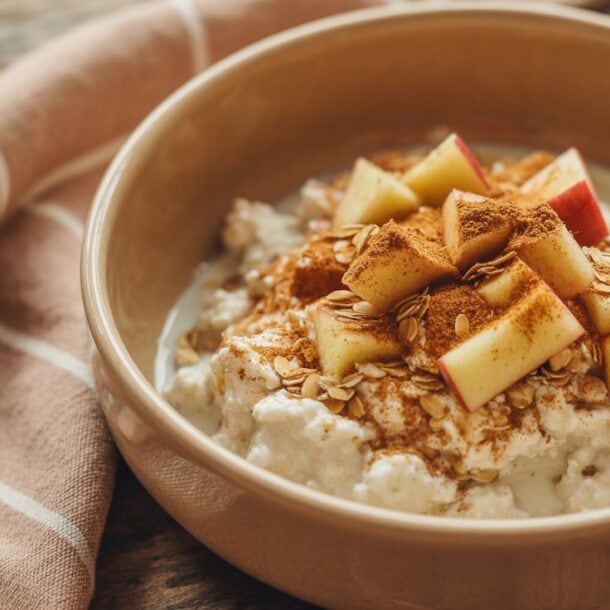
- Cottage cheese with cinnamon
- A protein smoothie with unsweetened almond milk
- Turkey slices and/or mozzarella cheese stick with a few whole-grain crackers
- Hard-boiled eggs with sea salt
- If you’d like some more ideas, check out: 21 Low Calorie High Protein Snack Ideas
High protein snacks help stabilize blood sugar and support appetite control without triggering a sugar spiral.
How to Tell If Your Cravings Are Truly Hunger or Just Habit
Before grabbing a snack, pause and ask yourself these questions:
- Would I eat eggs or chicken right now? (If yes, you may be truly hungry.)
- Am I stressed, bored, or procrastinating?
- Did I eat enough protein today?
- Did I drink enough water or electrolytes today?
If it’s true hunger, respond with nourishment.
If it’s emotional eating, consider alternatives like a short walk, journaling, a shower, or simply going to bed earlier. Sleep is one of the most powerful tools to reduce appetite and regulate hunger hormones.
What To Do Instead of Mindless Night Eating
If late night cravings are more about habit than hunger, try replacing the ritual instead of fighting it.
- Brush your teeth right after dinner
- Drink herbal tea in a favorite mug
- Move to a different room than the kitchen
- Create a calming nighttime routine
Often it’s the routine we crave — not the food itself.
Frequently Asked Questions About Late Night Cravings
Why do I only get late night cravings and not during the day?
Late night cravings are often a combination of rising hunger hormones, blood sugar dips, and mental fatigue. During the day, you’re distracted and busy. At night, things quiet down, willpower drops, and emotional eating triggers become louder. If you also under-ate or didn’t get enough protein earlier, your body may simply be catching up.
Are late night cravings a sign I’m not eating enough?
Sometimes, yes. If you’re consistently restricting calories or skipping meals, your body will eventually push back. Strong food cravings at night can signal that you need more protein for fullness, better blood sugar stability, or simply more overall nourishment during the day.
Why are sugar cravings worse at night?
Sugar cravings often peak at night because of lower serotonin levels, habit patterns (like dessert after dinner), and blood sugar crashes from carb-heavy meals. When you’re tired, your brain looks for quick energy — and sugar is the fastest option.
Should I ignore midnight cravings or eat something?
If you’re truly physically hungry, it’s okay to eat. The key is choosing a balanced, high protein snack rather than something purely sugary. Greek yogurt, cottage cheese, eggs, or turkey slices can help stabilize blood sugar and support appetite control without leading to overeating.
How can I reduce appetite at night naturally?
The most effective way to reduce appetite at night is to focus on what happens earlier in the day. Prioritize protein at meals, include fiber and healthy fats, and avoid large blood sugar swings. Getting adequate sleep also plays a major role in regulating hunger hormones and minimizing late night cravings.
Do late night cravings mean I have no willpower?
Absolutely not. Late night cravings are driven more by biology and habit than character. Hunger hormones rise, fatigue lowers impulse control, and emotional eating triggers become stronger at night. Understanding what’s happening gives you power — far more than relying on willpower alone.
The Bottom Line on Late Night Cravings
Late night cravings are incredibly common. They’re influenced by hunger hormones, blood sugar stability, emotional eating triggers, and simple habit loops.
The solution isn’t extreme restriction or more willpower. It’s:
- Eating enough protein for fullness during the day
- Supporting blood sugar stability
- Planning smart high protein snacks when needed
- Addressing emotional triggers with awareness
When you nourish your body properly and build intentional habits, those midnight cravings start to lose their power.
And you finally get to end your day feeling calm — not frustrated with yourself.
Please note: This website contains affiliate links. As an Amazon Associate, we earn from qualifying purchases at no additional cost to you.