


Please note: This website contains affiliate links. As an Amazon Associate, we earn from qualifying purchases at no additional cost to you.
Losing weight on a GLP-1 like Wegovy, Ozempic, or Zepbound can feel like you finally found the missing puzzle piece — the scale is moving, clothes fit better, and you’re celebrating real progress. But here’s the part no one warns you about: sometimes you’re losing more than just fat — and that includes muscle.
This article is here to help you keep the weight loss momentum while protecting your strength, metabolism, and long-term health.
Medical Disclaimer: This article is educational only and not medical advice. Always consult your doctor before making decisions about medication, nutrition, or fitness. Individual results vary.
Why Muscle Mass Matters During GLP-1 Weight Loss
GLP-1s work by calming appetite and slowing digestion, which makes eating less feel easier. But when you’re eating less — especially without enough protein — the body may tap into muscle stores for energy along with fat. Early weight loss can look impressive on the scale, but if a chunk of that loss is muscle, it can work against you in the long run.
And here’s the part that matters most: muscle is a metabolic engine.
It burns calories even at rest, keeps blood sugar stable, and helps your body use energy efficiently. When muscle decreases, your metabolism naturally slows, which means:
- You may burn fewer calories than before
- Weight loss might stall even if you’re eating less
- You could regain weight more easily if/when you stop GLP-1 therapy
- Maintenance becomes harder without strength + muscle support
Think of muscle as your body’s built-in calorie-burner — the more lean mass you have, the easier it is to maintain weight without strict dieting. This is especially important if you plan to reduce dosage later, switch medications, or eventually come off the medication entirely.
Maintaining (or even building) muscle helps:
- keep your metabolism humming
- support hormone and insulin sensitivity
- protect your bone density and joint health
- enhance strength, stamina, and everyday function
- improve long-term weight maintenance success
Bottom line — fat loss is great, but muscle is what keeps that success sustainable. Tracking it now protects you later.
What research says about lean mass changes
Studies show that weight loss often includes lean mass loss, regardless of method. Research suggests a portion of weight lost on GLP-1s may include muscle — especially without resistance training or adequate protein intake.
Source: PubMed clinical review on body composition changes during weight loss (NIH/PubMed)
How Much Muscle Loss Is Normal?
Some muscle loss is expected — this isn’t a GLP-1-only issue. It happens during dieting in general. Age, protein intake, strength training, and weight loss speed all play a role.
The goal isn’t zero lean-mass loss — the goal is to minimize it while maximizing fat loss.
How to Track Muscle Mass While on GLP-1s
Monitoring body composition helps you understand what type of weight you’re losing — not just how much. You don’t need expensive scans every month, but even simple tracking can give you valuable trends.
DEXA Scans (Most Accurate)
- Measures muscle, fat, and bone density
- Helpful every 3–6 months as a progress check-in
- Found in medical offices, sports clinics, and some gyms
- Most reliable option if you really want to see what’s changing internally
PRO TIP: Check out our FAQs section below for more information about DEXA scan pricing, insurance coverage and other possible options.
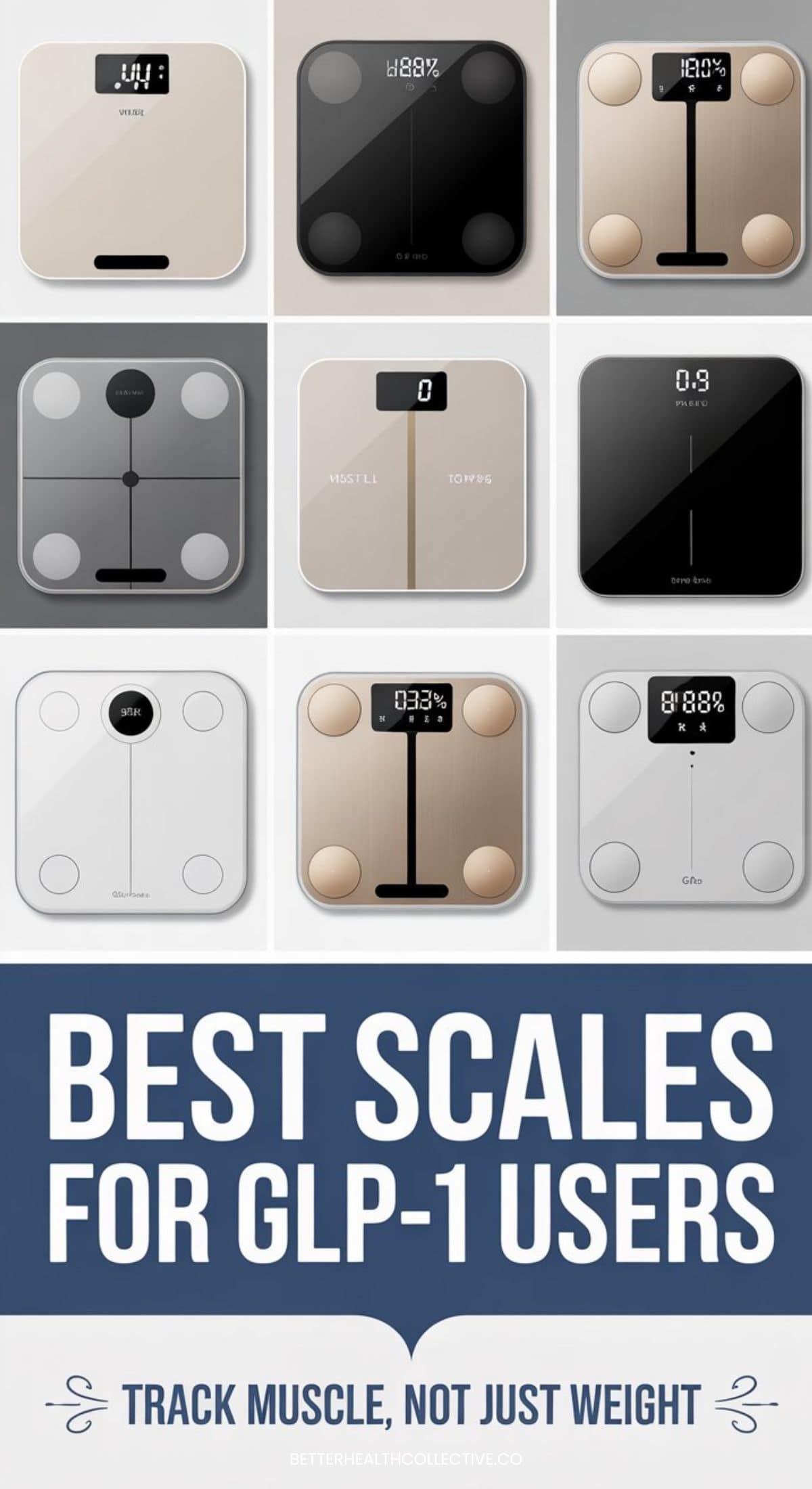
Smart Scales (Budget-Friendly & Easy to Use)
These use bioelectrical impedance (BIA) to estimate muscle vs. fat. They aren’t perfect — hydration, timing, and meals affect readings — but they’re great for tracking trends over time.
Budget picks (under $50):
- RENPHO Smart Body Fat Scale — popular, app-connected, tracks multiple metrics
Example: https://www.amazon.com/s?k=RENPHO+Smart+Body+Fat+Scale - Etekcity Smart Scale — affordable, easy-use app
Example: https://www.amazon.com/s?k=Etekcity+Smart+Scale - Lepulse F4 Pro — large display, body composition metrics
Example: https://www.amazon.com/s?k=Lepulse+F4+Pro
Mid-Range ($60–150):
- Omron Full Body Composition Monitor — measures visceral fat + muscle %
Example: https://www.amazon.com/s?k=Omron+HBF514C - Arboleaf CS10E Segmental Body Scale — segmental breakdown for more precision
Example: https://www.amazon.com/s?k=Arboleaf+CS10E
Premium / High-Accuracy Home Models:
- InBody H20N Analyzer — more consistent readings, trusted brand
Example: https://www.amazon.com/s?k=InBody+H20N - InBody Dial H30 — higher tier analytical feedback
Example: https://www.amazon.com/s?k=InBody+Dial+H30
Smart scales = great for ongoing tracking. DEXA = best for precision.
Lower-Cost Tracking Options
Even without a scale or scan, you can track changes by:
- Tape measurements (waist, hips, thighs, arms)
- Progress pictures every 2–4 weeks
- How clothing fits + strength changes
Sometimes your mirror tells the truth better than your scale.
When Should You Measure?
- For smart scale tracking: every 2–4 weeks works well
- For DEXA scans: every 3–6 months gives meaningful comparisons
- Try to measure under similar conditions each time (morning, same hydration level)
Not medical advice — but reasonable general monitoring patterns many people follow.
How to Protect Muscle While Losing Weight on GLP-1s
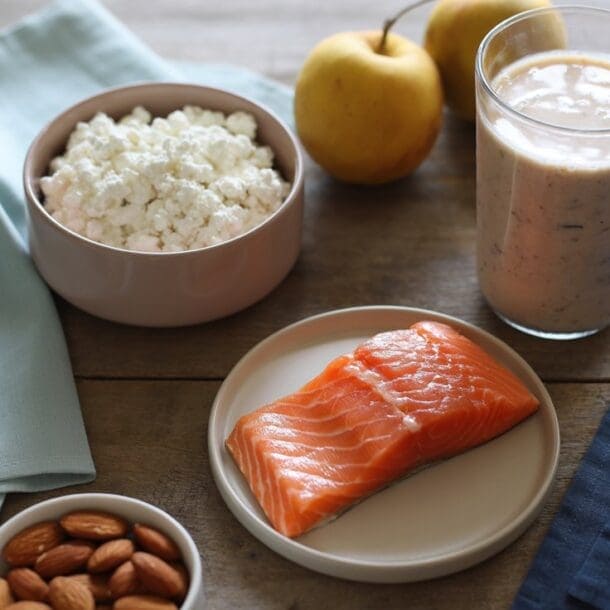
Prioritize protein
Many GLP-1 users report feeling full quickly, so protein needs to be intentional.
Examples: chicken, Greek yogurt, cottage cheese, protein shakes, tofu, eggs, beans, fish. Learn more about how much protein you should eat daily.
Build in strength training
You don’t have to lift heavy — resistance bands, bodyweight exercises, or short structured workouts help signal your body to preserve muscle.
Avoid going too low calorie
Extreme calorie cuts can accelerate muscle loss. Food = fuel, not the enemy.
The scale shouldn’t drop faster than your energy.
Safety Notes for GLP-1 Users
- Nausea may make protein intake harder — consider smaller protein-dense meals
- Hydration matters for accurate scale readings
- Speak to your healthcare provider if muscle weakness becomes noticeable
Final Thoughts
Weight loss on GLP-1s is empowering — but muscle is the foundation of strength and longevity. Monitoring it ensures you’re losing weight in a healthy, sustainable way. Whether you use a smart scale, a DEXA scan, or simple tape measurements, tracking lean mass helps you stay strong for the long haul.
You’re not just shrinking.
You’re rebuilding yourself — stronger, healthier, and more resilient.
FAQs: Track Muscle While Losing Weight
Is muscle loss guaranteed on GLP-1s like Ozempic and Semaglutide?
Not guaranteed, but possible — especially with low protein or minimal movement.
Can I build muscle while losing weight on GLP-1?
Some people do, especially with strength training and intentional nutrition.
Do I need a DEXA scan?
Not required, but helpful. Smart scales are fine for trends — DEXA for accuracy.
How often should I measure body composition?
Monthly smart scale check-ins + quarterly or semi-annual DEXA scans are common patterns.
Does insurance cover a DEXA scan?
Sometimes — but not always. Insurance coverage typically depends on why you’re getting the scan. Many plans cover DEXA scans for bone density evaluations, osteoporosis risk, or medically necessary conditions. However, body composition scans for fitness or weight-loss tracking are often not covered and may require out-of-pocket payment. It’s worth calling your provider to ask what qualifies under your plan.
What is another option if I can’t get a DEXA scan and want accuracy?
If a DEXA scan isn’t accessible or affordable, a bod pod test, InBody assessment, or a BIA scan at a gym or wellness center are strong alternatives. They aren’t quite as precise as DEXA, but they offer reliable trends and detailed metrics like skeletal muscle mass and body fat percentage. Many fitness studios, physical therapy clinics, and university sports labs offer these services without requiring a doctor’s visit.
How much does a DEXA scan cost?
Prices vary by region, but most DEXA body composition scans range between $50–$150 per session, depending on the clinic, city, and whether it’s bundled with a consultation. Some fitness centers run seasonal promotions or membership discounts, and mobile DEXA units at wellness events can occasionally offer lower pricing. Think of it like a periodic “progress snapshot” — once every few months, not weekly.
What if I’m older and worried about muscle loss?
Older adults benefit even more from protein + strength routines. Talk to your doctor about your plan.
Source References
- Mayo Clinic – Semaglutide (subcutaneous route) information: https://www.mayoclinic.org/drugs-supplements/semaglutide-subcutaneous-route/description/drg-20406730
- Cleveland Clinic – Semaglutide (GLP-1) information page: https://my.clevelandclinic.org/health/drugs/19011-semaglutide-injection
- NIH / PubMed – Study on accuracy of smart scales / body composition estimation: https://pmc.ncbi.nlm.nih.gov/articles/PMC8122302/
- Healthline – “How Do Body Scales Measure Fat?” article: https://www.healthline.com/health/weight-loss/how-do-body-scales-measure-fat
- LiveScience – “How do smart scales measure body composition … and how accurate are they?” article: https://www.livescience.com/health/how-do-smart-scales-measure-body-composition-and-how-accurate-are-they
Please note: This website contains affiliate links. As an Amazon Associate, we earn from qualifying purchases at no additional cost to you.