
Please note: This website contains affiliate links. As an Amazon Associate, we earn from qualifying purchases at no additional cost to you.
If you’ve ever slathered on lip balm only to feel like your lips are somehow drier an hour later, you’re not imagining things. A lot of conventional lip balms rely on fillers and waxes that sit on top of your lips instead of actually nourishing them.
That’s where tallow comes in.
Tallow-based lip balm is deeply moisturizing, surprisingly gentle, and incredibly simple to make. Because tallow closely mimics the natural oils in our skin, it absorbs beautifully instead of just coating your lips. When paired with the right oils, it creates a lip balm that actually helps dry, cracked lips recover — not just temporarily behave.
This DIY recipe is beginner-friendly, customizable, and uses just a few ingredients you can feel good about putting on your skin.
Why Tallow Works So Well for Lip Care
Tallow isn’t trendy skincare fluff — it’s old-school for a reason. When properly rendered and purified, beef tallow is rich in fat-soluble vitamins and nourishing fatty acids that support the skin barrier.
For lips specifically, tallow helps:
- Lock in moisture without feeling waxy
- Soften cracks and flakes instead of just smoothing over them
- Protect lips from cold, wind, and dry indoor air
- Absorb easily without constant reapplication
Unlike petroleum-based products, tallow actually feeds the skin instead of just sealing it off.
Ingredients You’ll Need
This recipe makes about 4–6 lip balm tubes, depending on size.
- 2 tablespoons grass-fed beef tallow (rendered and deodorized)
- 1 tablespoon beeswax pellets
- 1 tablespoon jojoba oil (or sweet almond oil)
- Optional: 5–10 drops skin-safe essential oil (peppermint, lavender, or vanilla-infused oil)
Why these ingredients work together:
- Tallow nourishes and repairs
- Beeswax adds structure and protection
- Jojoba oil improves glide and softness
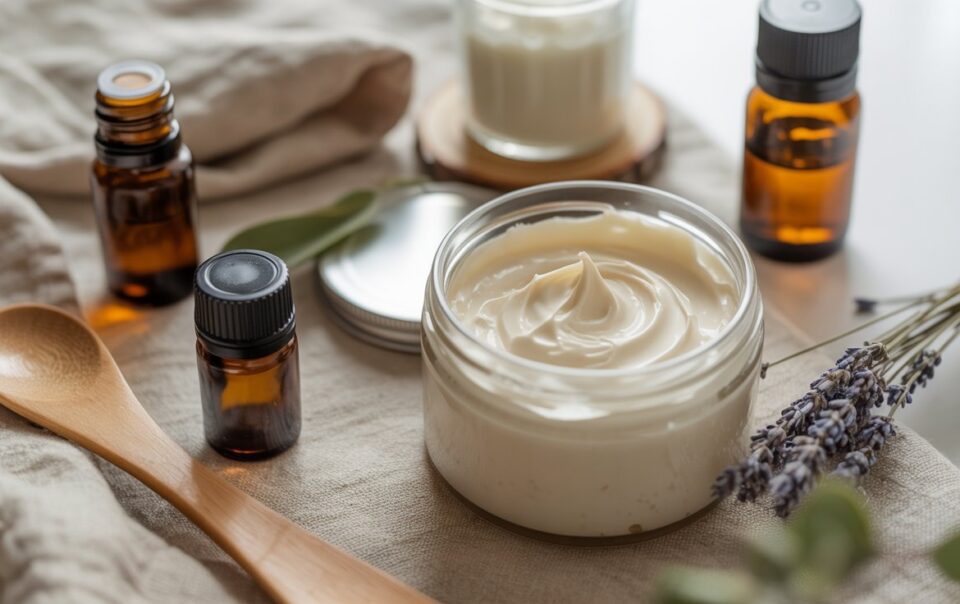
If you already made your whipped tallow cream, you likely have everything on hand.
How to Make DIY Tallow Lip Balm
- Create a double boiler
Add a few inches of water to a small saucepan and place a heat-safe glass jar or bowl inside. - Melt the ingredients
Add the tallow and beeswax to the jar. Heat gently, stirring occasionally, until fully melted. - Add the oil
Once melted, stir in the jojoba oil and remove from heat. - Optional scent
Let the mixture cool slightly, then add essential oils if using. Stir well. - Pour and set
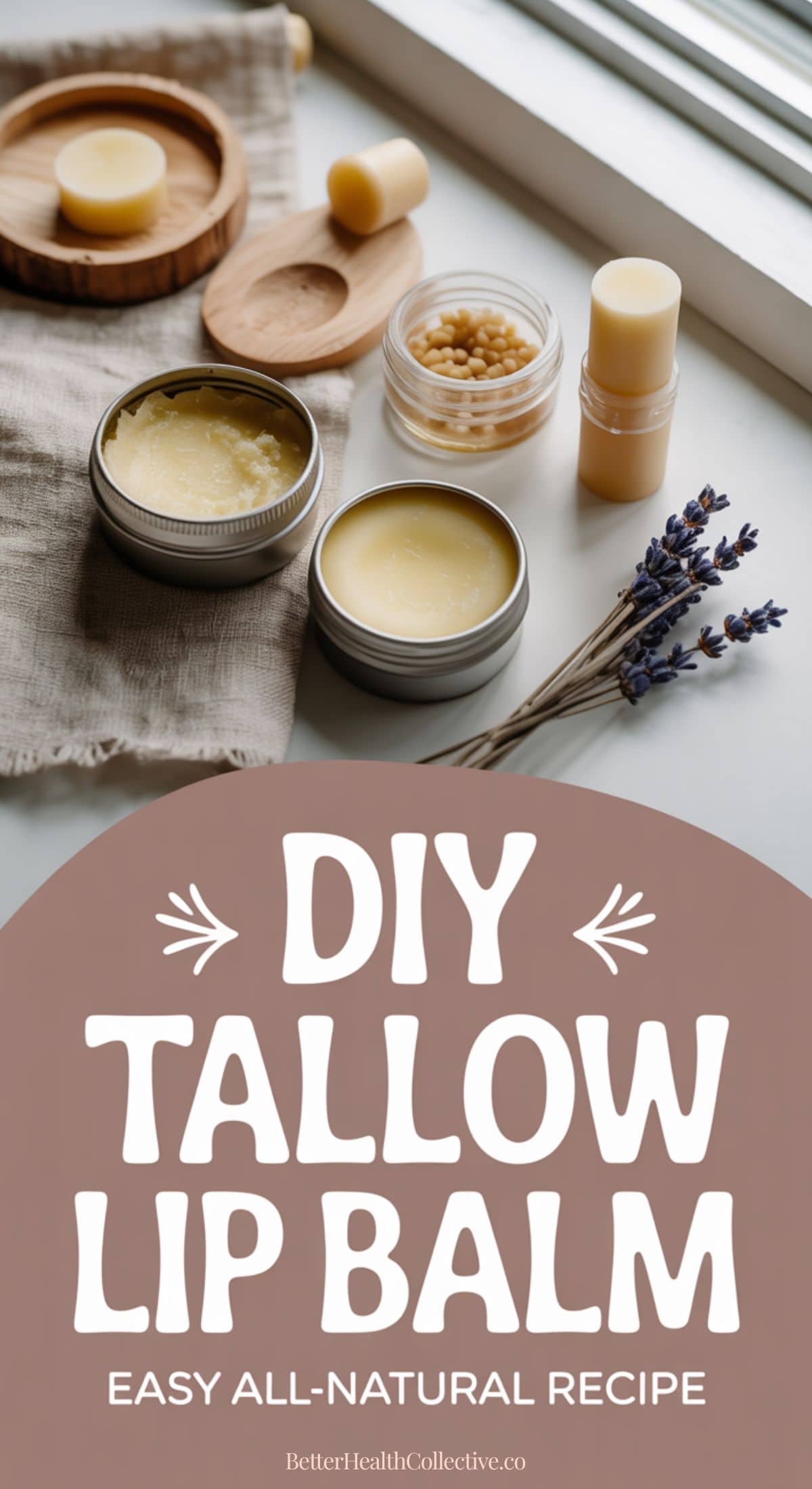
Carefully pour into lip balm tubes or small tins. Let cool completely at room temperature until solid.
That’s it. No preservatives, no stabilizers, no mystery ingredients.
FYI: If you have some tallow left over, you may also want to try our DIY Tallow Face & Body Cream with Jojoba Oil.
Customizing Your Tallow Lip Balm
One of the best parts of this recipe is how easy it is to tweak:
- For extra protection: Add a bit more beeswax
- For softer balm: Reduce beeswax slightly and increase oil
- For overnight lip repair: Add a few drops of castor oil
- For cooling relief: Peppermint essential oil (very sparingly)
If you’re sensitive, skip essential oils altogether — the balm works beautifully unscented.
How to Store Homemade Tallow Lip Balm
- Store at room temperature, away from direct heat
- Shelf life is typically 6–12 months when using clean tools and high-quality tallow
- If it smells “off,” discard and make a fresh batch
Tallow is naturally stable, which is one reason it works so well for DIY skincare.
Is Tallow Lip Balm Good for Sensitive or Dry Lips?
For many people, yes — especially those who struggle with:
- Chronically dry lips
- Lip balms that stop working over time
- Sensitivity to synthetic ingredients
That said, everyone’s skin is different. If you have allergies or a skin condition, test a small amount first and consult a healthcare professional if needed.
Final Thoughts
If you’ve been disappointed by store-bought lip balms that promise a lot but don’t seem to help, this homemade lip balm is a simple place to start. Tallow’s skin-compatible fats, combined with just a few thoughtfully chosen ingredients, create a balm that feels nourishing instead of waxy or temporary.
What makes homemade lip balm especially appealing is how customizable it is. You can keep it completely unscented, lightly scent it, adjust the texture, or make small batches so it’s always fresh. Once you’ve made it once, it becomes one of those easy recipes you’ll come back to again and again — especially during dry seasons or when your lips need extra care.
As always, listen to your skin, patch test if needed, and enjoy the process. Sometimes the simplest skincare routines are the ones that work best.
Please note: This website contains affiliate links. As an Amazon Associate, we earn from qualifying purchases at no additional cost to you.